




Best Tiles for Shopping Mall Flooring: What Works in High-Traffic Spaces
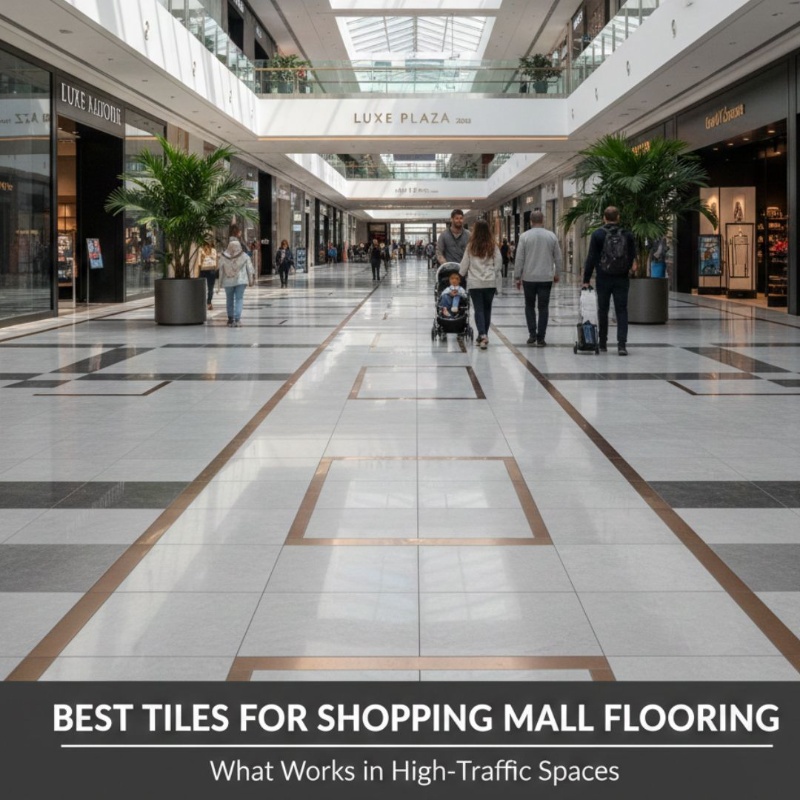
Shopping malls place much heavier demands on flooring than most other commercial spaces. Large volumes of visitors move through the same areas all day, from main entrances and corridors to food courts and retail walkways. On top of that, floors are constantly exposed to cleaning machines, service carts, merchandise displays, and regular maintenance activity.
Because of this, choosing the right tiles for shopping mall flooring goes far beyond visual design. The flooring system needs to perform reliably under continuous use, while maintaining safety standards and controlling long-term maintenance costs.
This guide looks at how mall flooring should be specified from a practical and technical perspective, and which performance factors matter most for architects, developers, and facility managers working on high-traffic commercial projects.
Why Shopping Mall Flooring Requires Special Consideration
Unlike residential or small office spaces, shopping malls operate under continuous load conditions. Flooring in these environments must handle:
- Extremely high foot traffic
- Movement of carts and trolleys
- Heavy retail fixtures
- Frequent cleaning cycles
- Long operational hours
Because of these factors, tiles for shopping mall flooring must meet much higher performance standards compared to conventional commercial spaces.
Using incorrect tile specifications often leads to surface wear, cracking, loss of finish, and increased maintenance costs.
Key Performance Requirements for Mall Flooring Tiles
High Structural Strength
Mall flooring must support constant dynamic loads without flexing or cracking. Tiles should have sufficient thickness and breaking strength to distribute stress evenly across the surface.
Low Water Absorption
Low porosity tiles prevent moisture penetration, reduce staining, and maintain structural stability in areas such as food courts and washrooms.
Abrasion and Wear Resistance
Surface durability is essential to prevent visible wear patterns, fading, or surface damage over time.
Slip Resistance
Safety regulations require flooring to offer adequate slip resistance, especially in high-risk areas such as entrances and wet zones.
These characteristics form the technical foundation of effective tiles for shopping mall flooring systems.
Best Tile Materials for Shopping Mall Applications
Porcelain Tiles
Porcelain tiles are the most commonly specified option for shopping malls due to their high density, low water absorption, and excellent abrasion resistance. They are suitable for both indoor and semi-outdoor commercial zones.
Vitrified Tiles
Vitrified tiles offer similar performance to porcelain and are often used in large-format installations for seamless aesthetics.
Natural Stone (Selective Use)
While visually appealing, natural stone requires higher maintenance and is generally limited to premium areas such as lobbies or feature spaces.
Among all options, porcelain and vitrified tiles remain the most practical choices for tiles for shopping mall flooring due to their long-term performance and lower lifecycle costs.
Tile Size and Layout Considerations
Tile size influences both structural performance and visual impact.
Large-format tiles:
- Reduce grout lines
- Create a cleaner, modern look
- Require higher structural strength
Smaller tiles:
- Offer better flexibility in curved layouts
- Are easier to replace in case of damage
For malls focused on contemporary design themes, large-format tiles are widely preferred, especially in open corridors and atrium areas.
Benefits of Using Quality Tiles in Shopping Malls
Long-Term Durability
High-performance tiles reduce the risk of cracking, chipping, and surface degradation.
Lower Maintenance Costs
Durable tiles require less frequent replacement and minimise downtime in commercial operations.
Safety Compliance
Proper slip resistance improves pedestrian safety and reduces liability risks.
Design Consistency
Modern tile finishes allow malls to maintain a premium appearance across different zones.
These benefits make high-quality tiles for shopping mall flooring a strategic investment rather than a cost-saving compromise.
Tile Size and Layout Considerations
Tile size influences both structural performance and visual impact.
Large-format tiles:
- Reduce grout lines
- Create a cleaner, modern look
- Require higher structural strength
Smaller tiles:
- Offer better flexibility in curved layouts
- Are easier to replace in case of damage
For malls focused on contemporary design themes, large-format tiles are widely preferred, especially in open corridors and atrium areas.
Benefits of Using Quality Tiles in Shopping Malls
Long-Term Durability
High-performance tiles reduce the risk of cracking, chipping, and surface degradation.
Lower Maintenance Costs
Durable tiles require less frequent replacement and minimise downtime in commercial operations.
Safety Compliance
Proper slip resistance improves pedestrian safety and reduces liability risks.
Design Consistency
Modern tile finishes allow malls to maintain a premium appearance across different zones.
These benefits make high-quality tiles for shopping mall flooring a strategic investment rather than a cost-saving compromise.
Common Mistakes in Mall Flooring Selection
Despite clear performance requirements, many projects encounter issues due to:
- Choosing tiles based on price only
- Using residential-grade tiles in high-traffic areas
- Ignoring technical data sheets
- Overlooking installation method compatibility
- Failing to account for future maintenance needs
Such mistakes often lead to premature failure and higher long-term expenses.
Shopping Mall Flooring vs Corporate Office Flooring
Although both are commercial spaces, malls and offices have different performance priorities.
Corporate office flooring tiles typically focus on:
- Moderate foot traffic
- Acoustic comfort
- Visual consistency
In contrast, mall flooring must handle:
- Higher structural loads
- More abrasion
- Greater cleaning frequency
This difference means tile specifications suitable for offices may not always perform well in shopping malls.
Role of Flooring in Modern Commercial Design
In today’s retail environments, flooring plays a major role in shaping user experience. It supports navigation flow, enhances lighting effects, and contributes to the overall visual identity of the space.
In modern office interiors, flooring is often used to create zoning and visual hierarchy. In malls, it must achieve both aesthetic appeal and structural reliability on a much larger scale.
This makes flooring one of the most influential design elements in large commercial developments.
Common Mistakes in Mall Flooring Selection
Despite clear performance requirements, many projects encounter issues due to:
- Choosing tiles based on price only
- Using residential-grade tiles in high-traffic areas
- Ignoring technical data sheets
- Overlooking installation method compatibility
- Failing to account for future maintenance needs
Such mistakes often lead to premature failure and higher long-term expenses.
Shopping Mall Flooring vs Corporate Office Flooring
Although both are commercial spaces, malls and offices have different performance priorities.
Corporate office flooring tiles typically focus on:
- Moderate foot traffic
- Acoustic comfort
- Visual consistency
In contrast, mall flooring must handle:
- Higher structural loads
- More abrasion
- Greater cleaning frequency
This difference means tile specifications suitable for offices may not always perform well in shopping malls.
Role of Flooring in Modern Commercial Design
In today’s retail environments, flooring plays a major role in shaping user experience. It supports navigation flow, enhances lighting effects, and contributes to the overall visual identity of the space.
In modern office interiors, flooring is often used to create zoning and visual hierarchy. In malls, it must achieve both aesthetic appeal and structural reliability on a much larger scale.
This makes flooring one of the most influential design elements in large commercial developments.
How to Specify Tiles for Shopping Mall Projects
A structured specification process ensures performance compliance:
- Identify traffic intensity
- Select appropriate tile material
- Verify thickness and breaking strength
- Review abrasion and slip resistance ratings
- Match tile size with layout design
- Ensure compatibility with installation system
Following this technical process ensures that tiles for shopping mall flooring meet real-world operational demands.
Choosing the Right Flooring for Long-Term Performance
In large commercial developments, flooring decisions should be based on performance data rather than visual preference alone. Factors such as durability, wear resistance, and maintenance requirements directly influence operational efficiency and lifecycle cost.
Understanding how tiles for shopping mall flooring perform under continuous use allows project teams to reduce long-term risks and maintain consistent quality across retail environments.
For developers, architects, and consultants seeking technically engineered tile solutions for high-traffic commercial projects, Volark Tiles offers product collections designed to meet structural, safety, and aesthetic requirements for modern shopping malls, corporate spaces, and large-scale developments.
Frequently Asked Questions (FAQs)
1. What are the best tiles for shopping mall flooring?
The best tiles for shopping mall flooring are typically porcelain or vitrified tiles, as they offer high structural strength, low water absorption, and strong resistance to wear and abrasion. These properties make them suitable for continuous foot traffic and heavy commercial use.
2. How do I choose the right thickness for shopping mall tiles?
Tile thickness should be selected based on traffic load and tile size. For most mall applications, tiles between 10mm and 12mm are recommended to ensure adequate load-bearing capacity and long-term durability.
3. Are porcelain tiles suitable for high-traffic shopping malls?
Yes. Porcelain tiles are one of the most suitable materials for shopping malls due to their dense structure, high abrasion resistance, and ability to maintain surface quality even under constant use.
4. Can corporate office flooring tiles be used in shopping malls?
While corporate office flooring tiles are designed for moderate foot traffic, they may not always meet the performance requirements of shopping malls. Mall flooring generally requires higher strength, better wear resistance, and stricter safety compliance.
5. How often do shopping mall tiles need replacement?
High-quality tiles for shopping mall flooring can last for many years if correctly specified and installed. Replacement frequency depends on traffic intensity, maintenance practices, and surface wear levels.
6. Do modern office interiors use the same tile standards as malls?
Not always. Modern office interiors typically prioritise aesthetics and acoustic comfort, while mall flooring must focus more on structural durability, abrasion resistance, and safety under heavy use.