



Majlis Tile Ideas: How to Floor a UAE Majlis That Actually Looks Right
Most majlis flooring decisions get made in about ten minutes. You walk into a showroom, the salesperson points at the warm beige porcelain everyone else is buying, you nod, you order it. Six months later the tiles are in, the seating is in, the room is finished — and something is just slightly off.
It's the floor. Almost always.
The majlis is one of the few rooms in a UAE home where flooring genuinely shapes how the space feels. Get it wrong and you'll feel it every time guests walk in. Get it right and the room works for the next fifteen years of family gatherings, formal hosting, and quiet evenings with your father after dinner.
This guide is the conversation I wish more homeowners had before they ordered the wrong tile. Eight directions that actually work in UAE villas right now, what to avoid, and how to think about the decision.
Why Majlis Flooring Isn't Just Another Floor
A majlis is a formal reception and seating space in Arab and Gulf homes — the room where guests are received, hosted, and entertained. In the UAE it's typically the largest, most decorated room in the house, often separated by gender (men's majlis and women's majlis) or by formality (formal majlis and family majlis).
That makes the flooring different from the rest of your home in four specific ways:
It hosts heavily. Tea trays, oud burners that drop ash, kids running barefoot during family Eids, twenty pairs of shoes during a wedding gathering. Majlis floors take real punishment and need to clean up without showing wear or staining.
It's a statement room. Guests notice the floor. People photograph in it. Bridal henna sessions happen on it. The floor is on display in a way bedroom flooring just isn't.
The scale is bigger. 30 to 60 square meters is normal for a UAE villa majlis. Small tiles fight that scale and make the room look choppy. Large formats work with it.
The seating is low. Floor cushions, low Arabic seating, sometimes a full mafraj setup. Eyes spend more time at floor level than in a Western living room with high sofas — so more of the floor is visible from where you're sitting.
Once you take these four things into account, the choices narrow fast. Here's what actually works.
8 Majlis Tile Ideas Working in UAE Homes Right Now
1. Large-Format Marble-Effect Porcelain
The default premium choice, and for good reason. 60x120, 80x160, or larger porcelain printed with Calacatta, Statuario, or Volakas marble veining gives you the look of natural stone without the maintenance — no sealing, no etching from spilled juice, no dulling under foot traffic.
The bigger format means fewer grout lines. Fewer grout lines means the room reads calmer, more expensive, and more like a hotel lobby than someone's villa. Which is the goal here.
Best for: formal Arabic majlis, large reception areas, the showpiece room of the house.
Pair with: brushed gold or brass accents, deep burgundy or emerald velvet seating, warm pendant lighting.
|
Going deeper on marble-effect porcelain? The colour, vein type, and finish you choose changes the entire room. Read our full breakdown of marble-effect porcelain — what looks expensive, what looks cheap, and how to tell the difference at the showroom. |
2. Tone-on-Tone Beige and Cream
Quietly luxurious. A warm beige porcelain in 60x60 or 60x120 with subtle veining, paired with majlis walls and ceiling in the same family — slightly lighter or slightly darker. The whole room becomes one envelope of soft neutral tone, and the furniture and accessories do the talking.
This is the antidote to the over-decorated majlis look. It's been gaining ground in UAE design circles for the last two years and it's not going anywhere. Restraint reads as confidence.
Best for: modern majlis design, designer-led villas, anyone who's tired of busy rooms.
One thing to watch — beige is hard to get right. Cheap beige tiles look yellow or pink under UAE evening lighting. Always check tile samples in the actual room and at the actual time of day you'll be using the majlis.
3. Travertine-Look Porcelain
Travertine is having a moment globally and the UAE is in on it. The honey, walnut, and silver tones suit Gulf design instinctively — it's the look of old hotels in Lebanon and Jordan, transplanted into modern villas.
Real travertine is porous and high-maintenance. Porcelain travertine gives you the texture and warmth without the sealing schedule or stain issues. Look for filled-finish prints rather than open-pore — they read more refined in a majlis.
Best for: villas with a traditional Arabic palette, majlis spaces with carved wood detailing, anyone who wants warmth without going dark.
4. Light Grey Contemporary
For the modern majlis. Light grey porcelain in 80x80 or 60x120 reads architectural and clean. Pairs with white walls, pale wood furniture, and the sleeker low seating styles that have moved into UAE homes in the last five years. Less traditional, more design-magazine.
It's also the most photograph-friendly floor color in the UAE. Doesn't get washed out under the kind of strong daylight that pours in through full-height majlis windows. If your wife or daughter posts the room on Instagram, light grey is the floor that survives the photo.
Best for: contemporary villa builds, apartment majlis, design-conscious homeowners.
|
Light grey is the most flexible tile colour in the catalogue. It works in almost every room — kitchens, bathrooms, living areas, and majlis. We did a full guide on where light grey tiles work, where they don't, and how to avoid the common mistakes. |
5. Wood-Look Plank for the Casual Majlis
Not every majlis is formal. The casual family majlis — sometimes called the day-to-day majlis or the men's evening majlis — handles real life. TV nights, kids' homework, late dinners with cousins. It needs to be warm and durable, not formal.
Wood-look porcelain plank in 20x120 or 23x120 gives you the warmth without the headache. Real timber doesn't survive UAE conditions well — humidity, AC cycling, and the occasional spill destroy it. Wood-look porcelain looks the same and lasts.
Choose mid to dark tones for a more grounded, cozy feel. Light oak prints work too but tend to read more apartment than villa.
Best for: family majlis, casual second majlis, mountain or desert-themed villa concepts.
|
Worried about wood-look porcelain in UAE conditions? It's the question we get asked most. Real timber struggles here — but porcelain wood doesn't. We did a full guide on how it holds up, the difference between cheap and good wood-look prints, and where it works in a UAE home. |
6. Statement Central Medallion
The classic Arabic majlis move — updated. A central tile medallion or geometric inlay anchors the room, and the rest of the floor stays calm in plain large-format porcelain around it. Done well, it nods to traditional Gulf design without feeling dated.
The trick is restraint. One central feature, surrounded by quiet flooring. Not a busy bordered floor with patterns competing across the whole room. That's the dated version, and you've seen it in older villas built in the 90s.
Best for: traditional Arabic majlis, formal reception spaces, larger villas where the central seating arrangement deserves a visual anchor.
7. Dark Marble-Effect with Gold Veining
For drama. Dark Emperador, Marquina, or Sahara Noir marble-effect porcelain creates a cinematic majlis floor — especially when the veining picks up gold rather than cool white. Pair with cream walls, brass accessories, and warm pendant lighting and the room takes on an evening-mode atmosphere even at 2pm.
Use this in moderation. A dark majlis floor needs proper natural light during the day or it tips into heavy. If your majlis faces north, or has small windows, this is not the floor for you. If you have full-height windows or a strong overhead lighting plan, it's spectacular.
Best for: statement formal majlis, evening-use spaces, design-forward homeowners who don't want another beige room.
8. Slab Format for a Seamless Floor
The luxury option. 120x240 or 160x320 porcelain slabs reduce grout lines to almost nothing — the floor reads as one continuous surface. Hard to install. Requires specialist contractors with suction frames and proper subfloor preparation. The result is the cleanest, most premium-looking majlis floor you can build.
Marble-effect, travertine-look, or solid neutral all work in slab format. The format is the design feature; the print is secondary.
Best for: luxury villa builds, architect-designed homes, any majlis where the budget supports a single dramatic flooring move.
One real warning here. Slab installation is genuinely specialist work. A poorly installed 120x240 floor looks worse than a well-installed 60x60. Don't let your contractor figure it out on your project. Ask to see slab work they've already completed before you commit.
|
Considering slab format for your majlis? We stock the large-format slab range our customers use most often — visit the showroom on Maliha Road, Sharjah to see full slabs displayed. Or message us on WhatsApp and we'll send you the available designs. |
How to Choose the Right Majlis Tile: A Quick Framework
Four decisions, in this order. Get them right and the rest follows.
1. Format and Size
For majlis rooms over 25 square meters, default to 60x120 or larger. 60x60 starts to look busy in a big room because the grout grid takes over visually. For majlis under 20 square meters (apartments, smaller villas), 60x60 to 80x80 hits the right balance. Slab formats only make sense if your installer has done them before — and you've seen the work.
2. Finish
Polished gives you formal, glossy, traditional. Reflects light, shows scratches over time, and can be slippery — worth thinking about if elderly family members use the majlis daily or you have toddlers running around. Matte gives you contemporary, calm, forgiving. Lappato (semi-polished) sits in between and is genuinely the most underrated finish for majlis flooring. It has the presence of polished without the slip risk or scuff issues.
3. Color Tone
Match the daylight your majlis gets. North-facing or shaded majlis rooms benefit from warmer beige and cream tones — they push light back into the room. South or west-facing majlis rooms with strong sun can handle cooler greys, darker marbles, and more dramatic palettes without feeling gloomy.
If you don't know which direction your majlis faces, stand in the room at 4pm. If it's bright, you can go darker. If it's already dim at 4pm, stay light and warm.
4. Pattern and Veining
The bigger the room, the bolder the veining can be. Small majlis rooms need calmer prints — strong dramatic veining at small scale fights the eye and makes the room feel busier than it is. In larger rooms, dramatic veining works as a feature in itself.
Common Majlis Tile Mistakes (And How to Avoid Them)
Going too small with the format. 30x30 or 40x40 in a 40 sqm majlis dates the room instantly. Stick to 60x60 minimum for any majlis larger than a small apartment reception. This is the single most common mistake — and it's not even a budget thing, it's an out-of-date showroom recommendation.
Polished surfaces in a heavy-use majlis. A high-traffic family majlis with a polished floor will show scuffs and traffic patterns within two years. Lappato or matte holds up far better and looks more current anyway.
Dark floors without enough light. A dramatic Marquina marble-effect floor needs daylight or strong evening lighting to read luxurious rather than oppressive. Check your light levels before committing — sit in the room with the lights you'll actually use, not just the construction lighting.
Mixing too many materials. A wood-look border around a marble field, plus a medallion in the centre, plus contrast trims around the room — too much. Pick one strong move and let it lead. The 90s-villa look isn't coming back.
Ignoring how the majlis connects to the rest of the house. If your hallway is in cool grey 60x60 and your majlis is suddenly warm beige in a different format, the transition feels abrupt. Plan flooring across rooms together — even if the tiles are different, the tones should be in the same family.
Not ordering enough. Always order at least 10% extra for cuts and breakages, and another 5% on top of that for spare tiles. Tile production batches change. If you damage a tile in three years and need to replace it, the same SKU will look different. The only way to match exactly is to keep spare boxes from the original delivery.
Traditional Majlis vs Modern Majlis: Different Tile Approach
The traditional Arabic majlis leans warm. Beige, cream, travertine, marble with classical veining, often with a central feature pattern. Furniture is ornate, fabrics are rich, and the floor supports that with warmth and a sense of formality.
The modern UAE majlis goes minimal. Cooler greys, large-format porcelain with subtle movement, clean grout lines, often slab format. Furniture is low-slung and architectural, and the floor reinforces that calm, considered feel.
Both approaches work. Both are correct. The mistake is mixing the language — modern minimalist seating on an ornate bordered floor, or carved Arabic furniture on a stark light grey slab. Pick a direction and stay with it.
If you're not sure which direction is right for your home, look at the architecture. Traditional villa with arched openings, carved doors, and ornate ceiling work? Lean traditional. Modern villa with large glass panels, flat ceilings, and minimal architectural detail? Lean modern. The floor should support the building, not fight it.
Frequently Asked Questions
What is the best tile for a majlis in UAE?
Large-format porcelain in 60x120 or larger is the most popular and most successful choice for majlis flooring in UAE villas — typically in marble-effect, travertine, or warm neutral tones. The bigger format suits the larger room scale, handles heavy hosting use, and gives a more refined finish than smaller tile sizes.
Should majlis tiles be polished or matte?
Polished tiles give a formal, traditional majlis look but can scuff and show wear in heavy-use rooms. Matte and lappato (semi-polished) finishes are more practical for daily-use family majlis spaces and are increasingly chosen for modern UAE villas. For most homeowners, lappato is the best balance — it has the visual presence of polished without the scuff and slip issues.
What size tile is best for a UAE majlis?
For a majlis larger than 25 square meters, 60x120 or 80x80 porcelain is the recommended minimum. Smaller majlis spaces (under 20 sqm) work well with 60x60 or 80x80. Slab formats (120x240 and larger) suit luxury builds where the budget allows for specialist installation.
What color tile suits a traditional Arabic majlis?
Warm beige, cream, and travertine tones are the classic choices for traditional Arabic majlis design. Marble-effect porcelain with classical veining (Crema Marfil, Botticino, Calacatta) pairs naturally with carved wood, rich upholstery, and ornate accessories.
What tiles work for a modern minimalist majlis?
Light grey large-format porcelain, tone-on-tone beige, and slab-format flooring all suit a contemporary majlis. The aim is fewer grout lines, calmer surfaces, and a quieter floor that lets architectural features and considered furniture stand out.
Are wood-look tiles suitable for a majlis?
Wood-look porcelain works best in casual family majlis spaces rather than formal Arabic majlis rooms. The warmth suits everyday use, kids' play areas, and TV-room layouts. Mid to dark wood prints feel more substantial in larger rooms; light oak suits apartment-scale majlis spaces.
Can I mix marble and wood-look tiles in a majlis?
Mixing two flooring materials in a single majlis usually weakens the design. A cleaner approach is to use one strong floor — marble-effect or wood-look — and bring the second material in through walls, joinery, or furniture. Where mixing does work, it's typically a wood-look casual seating zone clearly separated from a marble formal section by an architectural change in the room.
How do I match majlis flooring to the rest of my villa?
Plan flooring across rooms together rather than choosing the majlis in isolation. Either run the same tile through the majlis and adjacent living areas for continuity, or step up to a more premium tile in the majlis only — keeping the tones in the same family so the transition reads intentional rather than abrupt.
What is the most popular majlis floor color in UAE?
Warm beige and cream marble-effect porcelain remains the most popular majlis flooring choice across UAE villas, followed by light grey contemporary tones for modern builds. Both work well with traditional and modern furniture and pair easily with the warm lighting most majlis rooms use in the evening.
How much wastage should I order for majlis tiles?
Order at least 10% extra wastage for standard straight-lay layouts, and 12 to 15% for diagonal patterns or rooms with many cuts. Always keep spare boxes after installation — production batches change over time, and matching colours later is rarely possible.
Final Thought, and an Invitation
The majlis is a room you'll host in for decades. The floor under it shouldn't be the thing you regret. Take the extra time at the showroom. Bring samples home. Sit them on the floor in the actual room at the actual time of day you'll be using it. Look at them with the lights on and the lights off. The tile that looks perfect under bright showroom halogen often looks completely different at home.
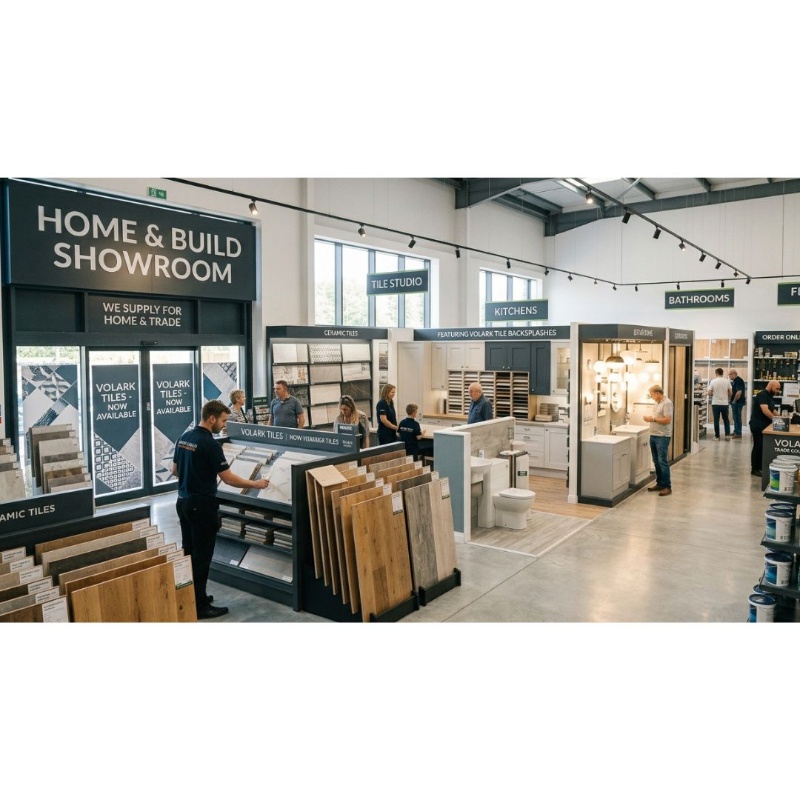
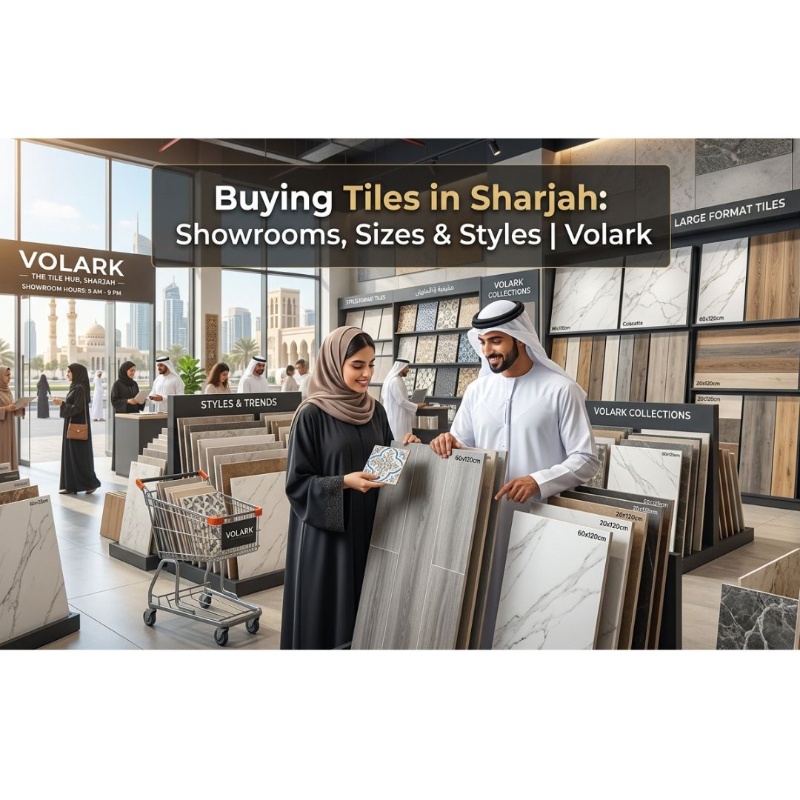
If you'd like to see large-format majlis tile options in person — marble-effect, travertine-look, light grey, slab format, wood-look — visit the Volark Tiles showroom on Maliha Road, Industrial Area 18, Sharjah. We deliver across all UAE emirates. Walk-ins are welcome, but messaging ahead means we can pull the specific samples and slabs you want to see.
|
Visit the Volark Tiles Showroom See full majlis tile collections in person — marble-effect, travertine, light grey, large-format slabs, and wood-look porcelain. UAE-wide delivery from Sharjah. Maliha Road, Industrial Area 18, Sharjah |