






Porcelain Tile Durability for High Traffic Areas: A Practical Guide for Commercial Projects
In commercial construction and large-scale interior projects, material performance is just as important as visual appeal. While design defines the first impression, long-term success depends on how well surfaces withstand daily use. This is especially true for flooring, where durability directly affects maintenance costs, safety, and lifecycle value.
This guide focuses on porcelain tile durability for high traffic areas and explains how to evaluate performance, what technical standards matter, and why porcelain tiles are widely preferred for demanding commercial environments.
Key Takeaways
- Porcelain tile durability for high-traffic areas makes it one of the most reliable flooring options for commercial projects.
- PEI rating and wear resistance are critical indicators for selecting tiles suitable for heavy-use environments.
- Porcelain tiles offer better strength, lower maintenance, and a longer lifespan compared to most alternative flooring materials.
- For UAE projects, choosing durable porcelain tiles helps ensure long-term performance and cost efficiency.
Why Durability Matters in High-Traffic Spaces
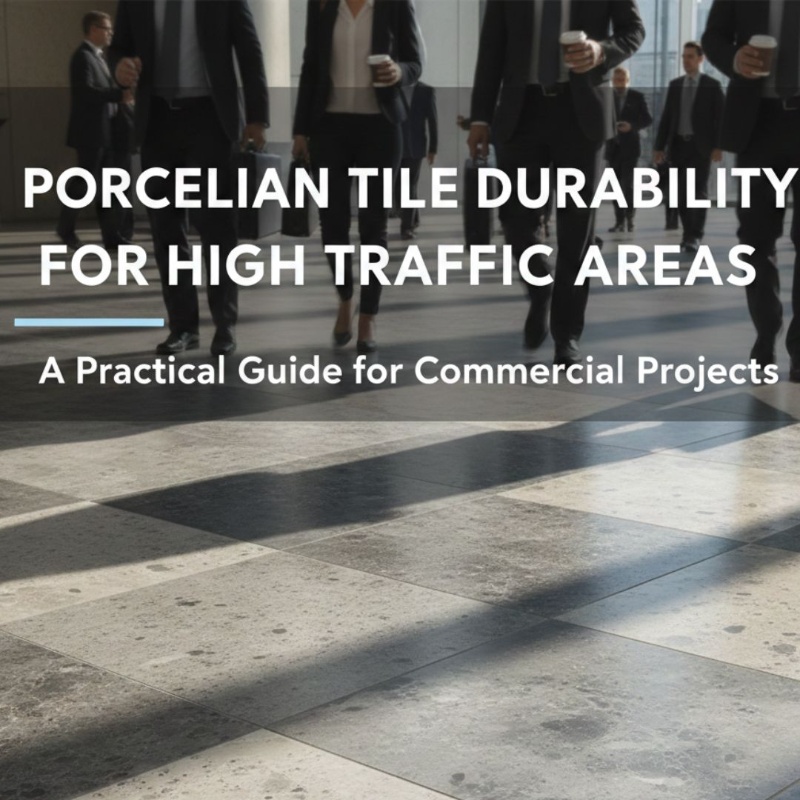
High-traffic areas such as shopping malls, airports, hospitals, hotels, office corridors, and retail stores experience constant mechanical stress. These environments expose flooring to:
- Continuous footfall
- Movement of trolleys and carts
- Furniture loads
- Regular cleaning and chemical exposure
- Abrasion from dust and debris
In such conditions, poor material selection leads to surface wear, cracking, loss of finish, and frequent replacements. This is why porcelain tile durability for high traffic areas is considered a core technical requirement in commercial specifications.
What Makes Porcelain Tiles Highly Durable?
Porcelain tiles are manufactured using refined clay fired at very high temperatures. This process creates a dense, low-porosity structure that offers several performance advantages:
- High mechanical strength
- Low water absorption
- Excellent surface hardness
- Strong resistance to abrasion and chemicals
Compared to standard ceramic tiles, porcelain tiles provide significantly better structural stability, making them suitable for heavy-use applications.
This structural composition is the primary reason porcelain tile durability for high traffic areas outperforms most alternative flooring materials.
Key Performance Factors That Define Tile Durability
Material Density and Composition
Porcelain tiles have a compact microstructure with minimal internal air pockets. This improves load distribution and reduces fracture risk under pressure.
Surface Hardness
Harder surfaces resist scratches, dents, and abrasion caused by constant movement.
Water Absorption Rate
Lower water absorption reduces moisture penetration, which improves structural integrity and prevents long-term damage.
Installation Quality
Even the most durable tile will fail if installed incorrectly. Substrate preparation, adhesive selection, and joint spacing all affect long-term performance.
PEI Rating and Wear Resistance Explained
Two of the most important technical indicators of tile durability are PEI rating and wear resistance.
What Is PEI Rating?
The PEI (Porcelain Enamel Institute) rating measures how well a glazed tile resists surface abrasion. It classifies tiles from Class 1 (light use) to Class 5 (heavy commercial use).
|
PEI Class |
Recommended Use |
|
Class 1 |
Residential walls |
|
Class 2 |
Light residential floors |
|
Class 3 |
Moderate residential |
|
Class 4 |
Commercial floors |
|
Class 5 |
Heavy traffic public areas |
For high-traffic commercial spaces, tiles with a PEI rating of Class 4 or Class 5 are strongly recommended.
Wear Resistance
Wear resistance refers to how well the tile surface maintains its finish under repeated friction. High wear resistance ensures the tile does not lose texture, colour, or protective coating over time.
Both PEI rating and wear resistance are critical for evaluating porcelain tile durability for high traffic areas.
Advantages of Using Porcelain Tiles in Commercial Projects
1. Long-Term Performance
Porcelain tiles maintain structural stability and surface quality even after years of continuous use.
2. Lower Maintenance Costs
Their resistance to abrasion, staining, and chemicals reduces cleaning effort and repair frequency.
3. Safety and Hygiene
Low porosity prevents moisture absorption, reducing bacterial growth and improving hygiene.
4. Design Flexibility
Modern porcelain tiles offer a wide range of finishes including stone, concrete, marble, and wood effects without compromising durability.
Durable Tiles for Projects UAE: Why Porcelain Is Preferred
In the UAE, commercial buildings face additional challenges such as high footfall, temperature variation, and frequent cleaning cycles. This makes material selection even more critical.
Durable tiles for projects in UAE must meet:
- High structural load requirements
- Moisture and heat resistance
- International performance standards
- Long-term cost efficiency
Porcelain tiles are widely specified across hospitality, retail, healthcare, and infrastructure projects in the region because they meet all these conditions reliably.
Key Mistakes to Avoid in High-Traffic Tile Selection
Despite clear technical standards, some project failures occur due to:
- Choosing tiles based on appearance only
- Ignoring PEI classification
- Using residential-grade tiles in commercial zones
- Overlooking wear resistance test data
- Underestimating traffic intensity
These mistakes often result in premature surface failure and costly replacements.
How to Specify Porcelain Tiles for High-Traffic Projects
A structured specification approach ensures performance compliance:
- Identify traffic category
- Verify PEI rating and abrasion class
- Check water absorption data
- Confirm thickness and load capacity
- Review installation method compatibility
This technical process ensures alignment with porcelain tile durability for high traffic areas requirements.
Porcelain vs Other Flooring Materials
| Material |
Durability |
Maintenance |
Suitability for High Traffic |
|
Porcelain tile |
Very high |
Low |
Excellent |
|
Ceramic tile |
Moderate |
Medium |
Limited |
|
Vinyl |
Moderate |
Low |
Medium |
|
Natural stone |
High |
High |
Medium |
|
Carpet |
Low |
Hign | Poor |
From a lifecycle perspective, porcelain tiles consistently outperform most alternatives for commercial environments.
Performance Considerations for Commercial Tile Selection
In commercial spaces, flooring choices usually come down to how well the material holds up in real conditions, daily foot traffic, regular cleaning, and long-term use. Over time, these factors matter far more than initial appearance.
This is where understanding porcelain tile durability for high traffic areas becomes important. Instead of relying only on design preferences, project teams can make better decisions by looking at practical indicators such as surface strength, abrasion resistance, and expected maintenance levels.
For projects that require reliable and consistent performance, Volark Tiles offers porcelain tile collections developed specifically for commercial use. Their collections are designed to meet technical requirements across different environments, including retail, hospitality, healthcare, and large commercial developments, while maintaining quality and long-term durability.