





Why Natural Stone Outdoor Tiles Are Ideal for Patios & Paving
Outdoor spaces are no longer an afterthought. Patios have become extensions of living rooms, pathways guide the design flow of gardens, and paving sets the tone for the entire exterior. When homeowners want outdoor areas that feel timeless, grounded, and built to last, natural stone outdoor tiles often become the top choice, and for good reason.
Stone has been used in outdoor construction for centuries because it works well. It ages beautifully, blends effortlessly with nature, and holds up against weather better than most man-made materials. Whether you’re designing a winding garden path or a durable paved area, natural stone brings both function and character to outdoor spaces.
Let’s explore why stone continues to be a favourite and where it truly shines.
What is Natural Stone and Why It is Ideal for Outdoor Use
Natural stone is formed over time through geological processes, which gives it inherent strength and durability. Unlike synthetic materials, stone doesn’t rely on coatings or surface treatments to perform well outdoors.
Each stone slab carries subtle variations in texture and colour, creating a surface that feels organic rather than manufactured. This natural variation is one of the reasons stone outdoor tiles never look dated or repetitive, even across large areas.
Popular Types of Natural Stone for Outdoor Tiles
Different stones offer different looks and performance benefits. Choosing the right one depends on your climate, design style, and usage.
Sandstone
Warm, earthy, and naturally textured, sandstone is popular for patios and garden areas. It blends beautifully with greenery and creates a relaxed outdoor feel.
Limestone
Limestone offers a softer, more uniform appearance. It works well in contemporary patios and courtyards where subtle elegance is preferred.
Slate
Slate has a rich, layered texture and excellent slip resistance. It’s ideal for pathways and areas exposed to moisture.
Granite
Extremely durable and dense, granite is suitable for high-traffic paving and driveways. Its strength makes it one of the longest-lasting stone options.
Why Homeowners Prefer Natural Stone for Outdoor Spaces
Built for Weather and Wear
Outdoor areas face sun, rain, temperature changes, and foot traffic daily. Natural stone handles these conditions exceptionally well. Many stones resist fading, cracking, and surface wear, making them suitable for year-round outdoor exposure.
Naturally Slip-Resistant
Most outdoor stone tiles have textured or riven surfaces that provide natural grip. This makes them safer for patios, poolside paths, and walkways, especially when compared to overly smooth materials.
Low Visual Maintenance
Stone doesn’t show dirt, dust, or wear easily. Minor marks often blend into the stone’s natural texture, which means outdoor areas look good even between cleanings.
Timeless Aesthetic
Unlike design trends that change every few years, stone has a timeless quality. It complements greenery, wood, water features, and modern architecture just as easily as traditional landscapes.
Best Outdoor Areas to Use Natural Stone Tiles
Natural stone adapts beautifully to different outdoor applications, each with its own functional and visual benefits.
Patios: Where Comfort Meets Character
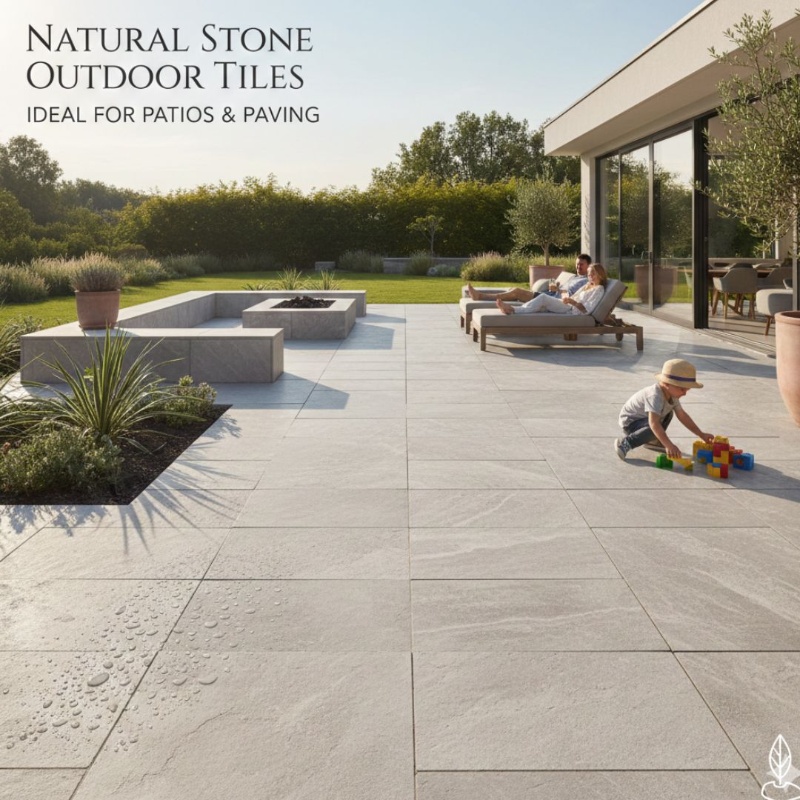
Patios are meant for relaxation, gatherings, and everyday outdoor living. Natural stone tiles create a solid, grounded surface that feels comfortable underfoot and visually inviting.
Stone patios work especially well because they stay cooler than many synthetic materials under direct sunlight. Their texture also prevents slipping, making them suitable for family use. Over time, stone patios develop a subtle patina that adds to their charm rather than detracting from it.
Pathways That Feel Natural, Not Forced
Garden and walkway paths should guide movement gently, not dominate the landscape. Natural stone tiles blend into outdoor surroundings effortlessly, whether laid in straight lines or organic patterns.
Irregular edges, soft colour shifts, and textured finishes help stone paths feel like part of the landscape rather than an artificial addition. This makes them ideal for gardens, courtyards, and villa walkways.
Paving That Balances Strength and Style
Outdoor paving needs to handle weight, movement, and frequent use. Natural stone paving tiles are strong enough for driveways, courtyards, and large open areas while still offering visual appeal.
Because stone distributes weight evenly and remains stable over time, it reduces the risk of sinking or uneven surfaces when installed correctly.
Natural Stone Vs Concrete Pavers
|
Feature |
Natural Stone |
Concrete Pavers |
|
Durability |
Very high |
Moderate |
|
Slip resistance |
Naturally textured |
Moderate |
|
Aesthetic |
Organic and Timeless |
Plain |
|
Heat resistance |
Excellent |
Can retain heat |
|
Maintenance |
Moderate |
Moderate |
|
Ageing |
Improves with time |
Can wear |
How Natural Stone Enhances Outdoor Design
Blends Seamlessly with Nature
Stone complements plants, water features, and wooden elements effortlessly. It doesn’t compete with the landscape; it enhances it.
Works Across Design Styles
Whether your home is rustic, contemporary, or traditional, natural stone adapts. Its versatility allows it to work with both minimal and layered outdoor designs.
Creates Visual Continuity
Using the same stone across patios, paths, and paving helps outdoor spaces feel connected rather than fragmented.
Installation and Care: What to Expect
Natural stone outdoor tiles require proper installation to perform at their best. A stable base, correct drainage, and suitable jointing materials are essential.
Maintenance is simple but important. Occasional sweeping and washing keep the surface clean, while sealing helps protect against stains and moisture. Unlike many materials, stone doesn’t lose its appeal if it shows signs of age, it gains character.
Key Takeaways
- Natural stone outdoor tiles offer durability, safety, and timeless beauty
- Ideal for patios, pathways, and paving areas
- Naturally slip-resistant and weather-resilient
- Blend seamlessly with landscapes and architecture
- Age gracefully, adding character over time
FAQ
1. Are natural stone tiles suitable for all climates?
Yes, but the stone type should be chosen based on local weather conditions and usage.
2. Do outdoor stone tiles get slippery when wet?
Most natural stones have textured surfaces that provide good grip, making them safer than smooth tiles.
3. Is sealing necessary for natural stone outdoors?
Some stones benefit from sealing to protect against stains and moisture, especially in high-use areas.
4. How long do natural stone outdoor tiles last?
With proper installation and basic maintenance, they can last for decades.
5. Are natural stone tiles expensive to maintain?
Maintenance is moderate and mostly involves regular cleaning. Long lifespan offsets upkeep costs.
If you’re designing a patio, pathway, or paved outdoor area, choose materials that age beautifully and perform naturally. Explore outdoor tile options at Volark Tiles and build spaces that feel timeless, durable, and connected to nature.