

Wall Tile Design
Wall Tiles Design: Ideas That Actually Transform UAE Homes (Not Just Bathrooms)
Here's something that always surprises people: the walls in your home have about three times more visible surface area than the floor. Three times. And yet most homeowners agonise over their floor tile choice for weeks, then slap some paint on the walls and call it done.
That's a missed opportunity. A single well-tiled wall can completely shift how a room feels. It can make a compact bathroom in a Sharjah apartment feel like a hotel spa. It can turn a bland living room into something guests actually comment on. And in the UAE — where humidity, cooking steam, and AC cycling take a toll on painted surfaces — tiles on walls aren't just decorative. They're practical.
This guide covers wall tiles design for every room in the house. Not the usual "here are 50 pretty pictures" approach, but the actual decisions you need to make: which material, which size, which finish, where to tile and where not to, what it costs, and what mistakes to avoid. We'll keep it specific to UAE homes because that's what we know.
Why Wall Tiles Are Replacing Paint in More UAE Homes
Paint looks great for about 18 months. Then it starts. Scuff marks behind the sofa. Yellow staining near the stove. Humidity bubbles in the bathroom. Cracks from the building settling. You repaint, it looks fresh for another year and a half, and the cycle repeats.
Wall tiles don't have that problem. Once they're up, they stay looking the same for decades. No repainting. No touch-ups. A wipe with a damp cloth and they're clean. In a country where AC runs 8+ months a year and the temperature difference between inside and outside can hit 25 degrees, that stability matters.
But here's the real reason wall tiles are gaining ground in 2026: the designs have caught up. Five years ago, "wall tiles" meant either a white ceramic rectangle in the bathroom or a bland beige in the kitchen. Now? You've got 3D textured tiles that create shadow patterns as the light moves. Marble-look porcelain slabs that go floor-to-ceiling with almost no grout lines. Wood-look planks for feature walls. Patterned tiles that look like handmade Moroccan zellij. The game has completely changed.
Wall Tile Design Trends Worth Your Attention in 2026
Feature Walls Are the New Focal Point
The days of tiling every wall in a room are mostly over (bathrooms aside). The 2026 approach is targeted: pick one wall — behind the bed, behind the TV, the fireplace surround — and make it count. One tiled wall with the right texture, pattern, or material becomes the anchor of the entire room. The other three walls stay painted. The contrast is what makes it work.
We see this constantly at our showroom in Sharjah. Customers come in thinking they need to tile an entire living room. We show them what a single large-format marble-effect wall looks like opposite three painted walls, and the reaction is always the same: "Oh. That's all it needs."
3D and Textured Tiles
This is the trend that photographs brilliantly and looks even better in person. 3D wall tiles — fluted, wavy, geometric, rippled — create light and shadow patterns that shift as the sun moves through the room. At 10am they look one way. At 4pm, completely different. It's alive in a way that flat tiles or paint can never be.
They work best in white or neutral tones because the texture itself is the design element. Put them behind the sofa, in a hallway niche, or as a shower feature wall. One caution: don't use them behind the stove. Grease gets into the ridges and cleaning textured tiles in a cooking zone is genuinely annoying.
Colour Drenching
This is a bold one. Colour drenching means tiling both the floor and walls in the same tile — same colour, same material, sometimes even the ceiling. The room becomes an immersive block of colour. Deep green bathrooms. Warm terracotta powder rooms. Charcoal grey showers from floor to ceiling.
It works best in small rooms where the effect wraps around you. A large living room drenched in one colour would feel oppressive. A 4-square-metre powder room drenched in deep emerald green? That's a moment.
Vertical Subway Tile
Subway tile has been around forever, and honestly, it's been done to death in its standard horizontal layout. But flip it vertical and something shifts. The room feels taller. The lines draw the eye upward instead of across. It's the same tile, the same cost, but the perception changes entirely.
Vertical subway works particularly well in kitchens and bathrooms with lower ceilings — common in many UAE apartments where ceiling height sits around 2.7 to 2.9 metres. That upward visual pull counteracts the slightly compressed feeling.
Large Format Wall Slabs
The big tile trend isn't just for floors anymore. Wall-mounted porcelain slabs in 60×120cm and even 120×240cm are everywhere in 2026. The appeal is the same as on floors — fewer grout lines, cleaner surface, more modern feel. A bathroom with floor-to-ceiling large-format marble-look porcelain reads as high-end, even when the tile itself is mid-range in price.
Installation on walls is trickier than floors though. Big slabs are heavy, and gravity is working against you. You need an experienced installer, proper adhesive, and sometimes mechanical fixing for the larger pieces. Worth it for the look — but don't try to save money by hiring a cheap tiler for this one.
Wall Tiles Design Ideas Room by Room
Kitchen Wall Tiles Design
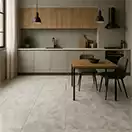
Let's be specific about where tiles go in a kitchen. The backsplash — that stretch of wall between the counter and the upper cabinets — is the minimum. Most UAE kitchens tile this area as standard. It's where water, oil, and cooking splatter hit hardest, and paint won't survive there.
But the design opportunity goes further. Tiling the full wall behind the stove from counter to ceiling creates a focal point. If you have an open shelving section, tiling the wall behind the shelves adds depth and contrast. If your kitchen has a window, tiling the reveals (the sides of the window opening) gives a clean, finished look.
Material-wise, glazed ceramic tiles and porcelain are both great for kitchens. Glossy finishes wipe clean more easily than matte. For patterns, subway tile (horizontal or vertical) remains a safe classic. If you want something with more personality, try a patterned tile behind the hob with plain tiles elsewhere — same trick that works on floor tiles design, but on the vertical plane.
For smaller kitchens, our small kitchen tile ideas guide has layout-specific advice that applies to walls as much as floors.
Bathroom Wall Tiles Design
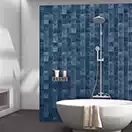
Bathrooms are where wall tiles earn their keep. Moisture, steam, water splash — every surface in a bathroom takes a beating. Full tiling from floor to ceiling is standard in UAE bathrooms, and for good reason. The humidity here means that even painted ceilings in bathrooms eventually develop mould spots. Tile eliminates that problem.
Design-wise, the 2026 move is layering. Instead of tiling every wall in the same tile, use a primary tile for most surfaces and a feature tile for one accent zone — inside the shower niche, behind the mirror, or a vertical stripe behind the vanity. That layered approach gives the bathroom personality without the visual chaos of three or four different tiles competing for attention.
For smaller bathrooms, large format tiles (30×60 or 60×120cm) with thin grout lines make the space feel bigger. Light colours help too — white, off-white, soft grey. Dark tiles in a tiny bathroom can look dramatic or claustrophobic, and the line between those two is thinner than you'd think.
Slip resistance matters less on walls than floors, obviously. So this is where you can use glossy, polished, or even glass tiles that you'd never put underfoot. If you want to understand how anti slip tiles work on the floor side of the bathroom equation, that guide fills in the details.
Living Room Wall Tiles Design
Most living rooms in the UAE have painted walls. That's fine. But one tiled feature wall can transform the entire room from "nice" to "this looks like it was designed by someone who knows what they're doing."
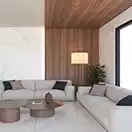
The TV wall is the most common spot. A large-format marble-effect or stone-look porcelain tile behind a wall-mounted TV creates instant impact. You don't even need to tile the full wall — tiling a recessed or protruding section where the TV sits is often enough.
Fireplace surrounds are another natural home for wall tiles in living rooms. Porcelain, natural stone, and ceramic are all heat-safe options. Just make sure whatever you choose is rated for the temperature range if it's close to a real fire.
3D textured tiles behind the sofa or in a niche add depth and architectural interest. These work particularly well in open-plan spaces where the living area needs to feel visually distinct from the dining or kitchen zone.
We did a full guide on living room floor tiles that also touches on coordinating wall and floor tile choices for open-plan layouts. Worth reading if you're doing both surfaces.
Bedroom Wall Tiles Design
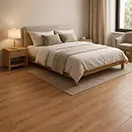
Tiles in a bedroom? Sounds cold. But it doesn't have to be. The headboard wall — that single wall behind the bed — is all you need. Tile it right and it becomes the most striking element in the room. Leave the other three walls painted in a complementary tone.
What works: wood-look porcelain planks arranged vertically or in a herringbone pattern. The wood texture brings warmth, and the porcelain means zero maintenance. Fluted or ribbed 3D tiles in a warm white or cream create a textured backdrop that looks incredible with the right lighting. Stone-look tiles in soft beige or travertine tones feel organic and calming — exactly the vibe you want in a bedroom.
What doesn't work: high-gloss tiles reflecting your bedside lamp back into your eyes at 11pm. Or cold grey stone-look tiles that make the room feel like a bathroom. Bedrooms need warmth and softness. Pick your materials accordingly.
If you're drawn to warm, neutral tones for the bedroom, our plain ivory tiles guide explains why lighter tones work so well as a backdrop for sleep spaces.
Outdoor Wall Tiles
Exterior walls in the UAE take serious punishment — direct UV, sand storms, extreme heat, occasional rain. Any tile you put on an outdoor wall needs to handle all of that without fading, cracking, or delaminating from the substrate.
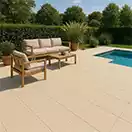
Porcelain is the safest choice. Low water absorption (under 0.5%), UV-stable colours, and high bond strength when installed with the right adhesive. Stone-look elevation tiles in sandy or earthy tones are popular for villa facades and compound walls. They add character without the maintenance headaches of real stone.
For covered outdoor areas — like a patio back wall or a barbecue zone — you have more flexibility. Decorative patterned tiles or Islamic geometric tiles can create a stunning feature wall in a courtyard or outdoor seating area. The earthy tone outdoor tiles guide covers colour choices that work specifically for the Gulf climate.
Wall Tile Materials — Honest Comparison
Not all wall tiles are created equal. Here's what actually matters when you're choosing between materials:
| Ceramic | Porcelain | Glass | Natural Stone | |
|---|---|---|---|---|
| Weight | Light. Easy on walls. | Heavier. Needs good adhesive. | Light to medium. | Heavy. May need mechanical fixing. |
| Water resistance | Good when glazed. | Excellent. Under 0.5% absorption. | Waterproof. | Variable. Needs sealing. |
| Best rooms | Kitchens, bathrooms, any wall. | Everywhere including outdoors. | Backsplashes, shower niches, accents. | Feature walls, fireplace surrounds. |
| Design range | Huge. Every colour and pattern. | Huge. Can mimic any material. | Limited but unique. Shimmer effect. | Natural variation. Each piece unique. |
| UAE price (AED/sqm) | 12 – 50 | 25 – 100 | 60 – 200 | 80 – 250+ |
| Maintenance | Wipe clean. Zero drama. | Same. Zero drama. | Shows water spots. Needs glass cleaner. | Seal annually. pH-neutral cleaners only. |
For full detail on tile materials including ceramic, porcelain, and vitrified tiles, our types of tiles explained guide covers everything.
Quick advice: for most wall applications in UAE homes, glazed ceramic or porcelain is the right call. Glass tiles are beautiful as small accent pieces — a mosaic strip in the shower, a backsplash highlight — but expensive if you're covering large areas. Natural stone is stunning on a single feature wall, but you need to accept the maintenance commitment. If you want the stone look without the upkeep, stone-look porcelain gets you 90% of the way there.
Wall Tile Sizes — What Works Where
Tile size on walls matters just as much as it does on floors. Maybe more, actually, because wall tiles are at eye level. You notice proportions immediately.
Small tiles (mosaics, 10×10cm, 15×15cm): Great for accents. Shower niches, backsplash details, decorative borders. Avoid covering entire walls in small tiles unless it's a deliberately designed pattern — too many grout lines make the surface look busy and are harder to keep clean.
Medium tiles (20×20, 30×60cm, subway formats): The all-rounders. Kitchen backsplashes, bathroom walls, feature panels. These sizes offer the widest range of designs, colours, and finishes. 30×60 is particularly popular in UAE bathrooms — big enough to reduce grout, small enough to handle curves and cuts around plumbing.
Large format (60×120, 120×240cm): The modern luxury move. Fewer grout lines, seamless look, contemporary feel. Best for feature walls, full-height bathroom tiling, and living room accent walls. Installation costs more because the tiles are heavier and need precision alignment. But the result is worth it — a 120×240 marble-look slab on a wall genuinely looks like a solid stone surface.
Mistakes People Make with Wall Tiles
Tiling too many walls. This is the number one mistake and it's driven by enthusiasm. Someone finds a tile they love, gets excited, and tiles every wall in the room. Two months later the room feels like a cave. Or a public toilet. One feature wall. Maybe two in a bathroom. That's usually the sweet spot.
Ignoring lighting. Textured and 3D tiles look incredible with directional lighting — a recessed downlight or a wall-wash light that rakes across the surface. Under flat ceiling light, those same tiles look completely flat and the whole point is lost. Plan your lighting before you tile, not after.
Mixing too many tile types. One feature tile, one base tile — maximum. Three different decorative tiles on three different walls in one bathroom is not "eclectic." It's a headache. Keep it simple. Contrast works. Chaos doesn't.
Wrong adhesive for the tile weight. Large format porcelain on walls needs a flexible, high-grab adhesive — not the same stuff you'd use for a lightweight 20×20 ceramic. If the wrong adhesive is used, tiles can slide during installation or, worse, fall off the wall months later. We've seen it happen. Make sure your installer knows the tile weight and chooses accordingly.
Forgetting the grout colour. Same rule as floors: match the grout to the tile for a seamless look, or deliberately contrast it for a graphic effect. What you don't want is accidental mismatch — a slightly off-white grout with a pure white tile, for example, makes the whole wall look dirty. It's a small detail that ruins the entire job.
Wall Tiles Price Guide — UAE 2026
| What You're Buying | Price (AED/sqm) | Context |
|---|---|---|
| Basic ceramic (20×20, 20×30) | 12 – 35 | Budget option. Bathrooms and kitchens. |
| Glazed ceramic (30×60) | 20 – 55 | Most common UAE bathroom wall tile. |
| Porcelain wall tile | 25 – 100 | More durable. Wider design range. |
| 3D / textured tiles | 40 – 120 | Feature walls. Premium look. |
| Large format slab (60×120+) | 60 – 160 | Modern luxury. Needs expert installation. |
| Glass mosaic / accent tiles | 60 – 200 | Accent use only — small areas. |
| Natural stone | 80 – 250+ | Feature walls. Needs sealing. |
| Installation (walls) | 40 – 75/sqm | Higher for large format and patterns. |
Wall tile installation costs slightly less than floor installation because there's no screeding involved. But large format wall tiles and complex patterns push the price up. Always get a quote that includes adhesive, grout, trims, and any waterproofing needed (essential behind showers).
For pricing on specific tiles in our collection, visit our Sharjah showroom or message us on WhatsApp. We quote same-day.
Come See Wall Tiles at Real Scale
We keep saying it because it's true: tile looks different in person than on screen. A textured white tile that looks boring in a JPEG can feel genuinely beautiful when you run your hand across it in the showroom. A marble-effect slab that seems perfect online might have a tone that clashes with your bathroom fixtures. You need to see it, touch it, hold it against your paint swatch.
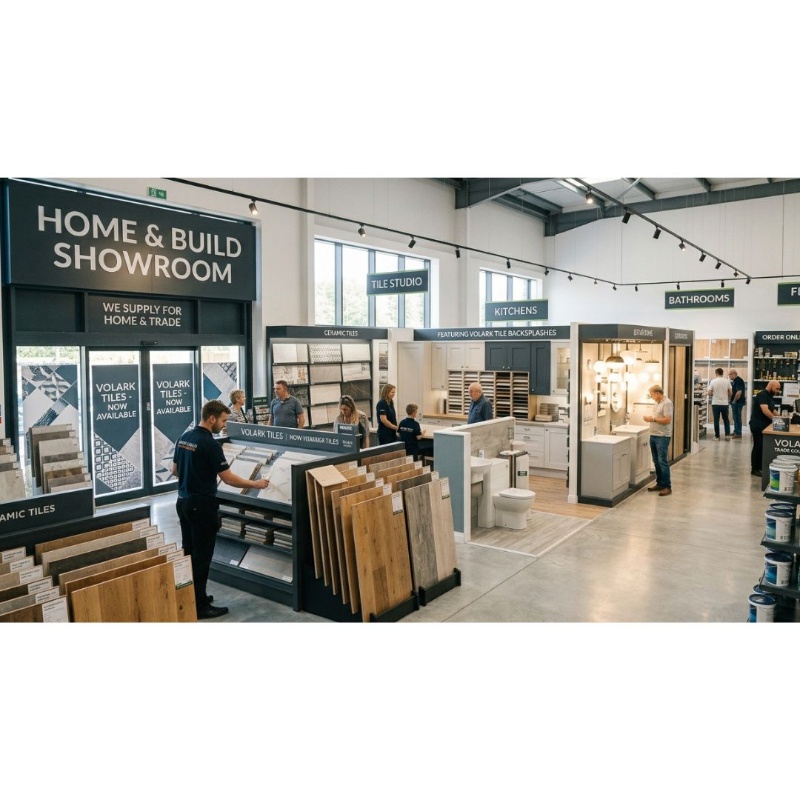
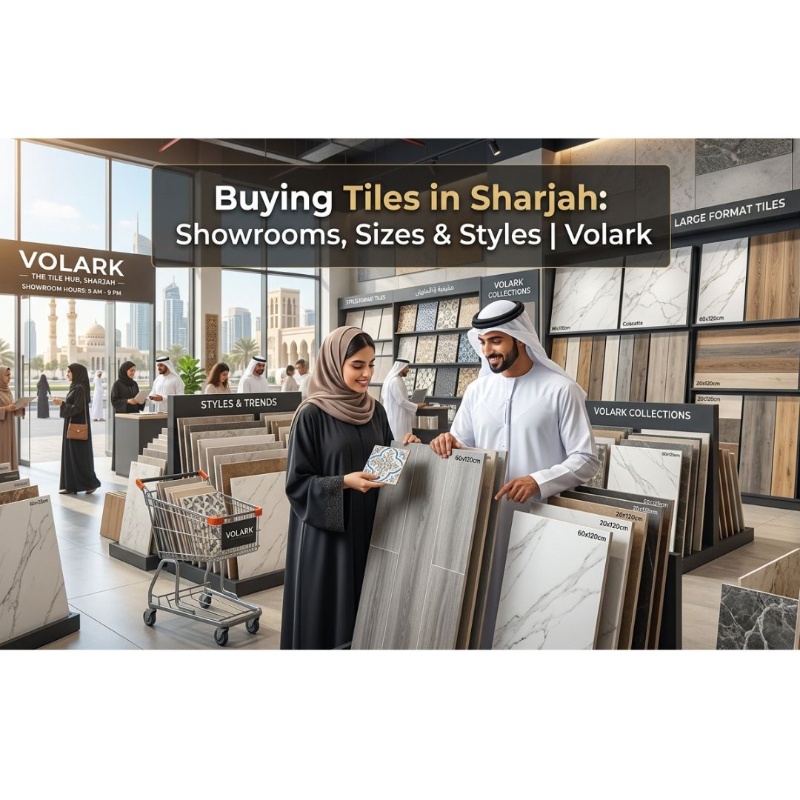
At Volark Tiles, the Sharjah showroom has wall tiles installed at full room scale. Not a row of tiny chips on a sample board — actual walls, tiled floor to ceiling, so you can stand in front of them and see exactly what the finished result looks like.
We carry ceramic, porcelain, decorative, 3D, and large format wall tiles in sizes from small mosaics to 120×240cm slabs. We work with homeowners, interior designers, contractors, and developers across Dubai, Abu Dhabi, Sharjah, Ajman, and all the Emirates. As a trusted tiles supplier in Dubai and the wider UAE, we're here to help you get the walls right — not just the floors.
Browse at volarktiles.com or come in. We'll show you what's possible.
Wall Tiles Design — Your Questions Answered
What wall tile design works best in a living room?
A single accent wall in large format porcelain — marble-look, stone-look, or 3D textured — does more for a living room than tiling the whole space. Put it behind the TV or the sofa. Use matte or soft-textured finishes. Keep the other walls painted in a tone that complements the tile. That's it. That's the whole formula, and it works every time.
Can I put tiles on my bedroom walls?
The headboard wall — yes, absolutely. Wood-look porcelain planks or soft-textured stone-look tiles create a warm backdrop that makes the bed area feel intentionally designed. Just don't tile all four walls. A bedroom needs warmth, and too much tile makes it feel like you're sleeping in a showroom.
What's the best wall tile material for a kitchen?
Glazed ceramic or porcelain. Both resist heat and grease, and both wipe clean in seconds. Glazed ceramic is more budget-friendly. Porcelain gives you more design options and slightly better durability. Avoid porous natural stone on kitchen walls near the stove — oil splatter will stain it and you'll spend your life trying to clean it.
How do I make a small bathroom feel bigger with wall tiles?
Three things. First, use large tiles — 30×60cm or bigger — because fewer grout lines mean fewer visual interruptions. Second, keep it light — white, cream, soft grey. Third, consider running the same tile on the floor and up the walls. That continuity tricks the eye into not seeing where the floor ends and the wall begins, and the room feels bigger than it is.
What's the difference between wall tiles and floor tiles?
Thickness and density. Wall tiles are lighter and thinner because they don't need to bear weight or resist foot traffic. Floor tiles are thicker and denser — they have to survive people walking on them every day without cracking. You can always put a floor tile on a wall (it's overbuilt for the job, but it'll work). Never put a wall tile on a floor — it'll crack, chip, and get slippery.
Are 3D textured wall tiles worth it?
On the right wall, yes. Behind the sofa, in a hallway, as a shower feature — they're stunning. The shadow play changes through the day, which keeps the wall interesting in a way flat tiles can't match. Two warnings though: don't put them behind the kitchen stove (grease nightmare), and install directional lighting to show off the texture. Without the right light, 3D tiles look flat and you've wasted the premium.
How much should I budget for wall tiles in the UAE?
Depends on what you're doing. A basic bathroom retile with glazed ceramic: AED 20–50/sqm for tiles plus AED 40–60/sqm for installation. A feature wall in the living room with premium large-format porcelain: AED 60–150/sqm for tiles plus AED 60–75/sqm for installation. A small accent like a kitchen backsplash can be done for AED 500–2,000 total depending on size and tile choice.
Should I pick glossy or matte wall tiles?
Glossy bounces light around — good for dark, small bathrooms. But it shows every fingerprint and water spot. Matte hides the everyday mess and feels more current in 2026. For kitchens, glossy is easier to clean behind the stove. For living room feature walls and bedrooms, matte or textured looks more natural and less "bathroom-like." Pick based on where it's going, not what's on trend.
Can I tile over old wall tiles instead of removing them?
Technically possible. Practically risky. The old tiles need to be perfectly bonded — if any are hollow or loose, the new layer will fail. The wall gets thicker, which creates problems around sockets, light switches, window frames, and door trims. And if the old adhesive fails later, both layers come down together. Our advice: remove the old tiles. Yes, it's more work and more dust. But the result is better and lasts longer.
Where can I see wall tiles installed at full scale in the UAE?
Volark Tiles showroom, Sharjah. We've done full wall-to-ceiling installations so you're looking at finished rooms, not sample boards. Bring your floor tile sample, your paint swatch, your bathroom fixture photos — we'll help you match everything. Walk-ins welcome, and we serve all Emirates.