


Islamic Geometric Outdoor Tiles: How to Style Your Landscape with Arabic-Inspired Designs
In the UAE, homeowners are beginning to rediscover the artistry of traditional Arabic art. One design trend that’s taking over courtyards, garden paths, entryways, and patios is the use of Islamic Geometric Outdoor Tiles.
These tiles blend ancient craftsmanship with modern architectural needs, turning everyday outdoor spaces into culturally rich, visually captivating vacation-like environments.
Whether you are renovating a villa in Dubai, building a courtyard in Sharjah, or designing a rooftop terrace in Abu Dhabi, Islamic geometric tiles offer something no plain tile can—a sense of meaning. Each pattern carries centuries of mathematical precision and spiritual symbolism, and when laid outdoors under the Gulf sun, the effect is nothing short of breathtaking. This guide covers everything from pattern styles and material choices to installation tips and where to buy Islamic pattern tiles in the UAE.
What is Islamic geometric art?
Islamic geometric design is one of the most sophisticated visual traditions in the world. Since figurative imagery was often avoided in Islamic art, designers began expressing their creativity through geometry. Over time, this led to detailed, meaningful patterns that are both decorative and symbolic.
At their core, these patterns are built on simple geometric foundations: everything starts with a circle. The circle represents unity and the beginning of all creation. By dividing it using only a compass and a straightedge, artisans create polygons and grids that eventually form the intricate patterns we see today.
This method reflects the belief that geometry reveals the hidden order and harmony of the universe.
Classic Islamic Tile Pattern Styles You Should Know
Not all Islamic geometric patterns are the same. Walk through any souk in Sharjah or visit the Sheikh Zayed Grand Mosque, and you will notice distinctly different traditions at work. Here are the main styles used on outdoor tiles today:
•Arabesque — Flowing, vine-like curves interlocked with geometric shapes. Think of the patterns you see on the walls of the Alhambra in Granada. Arabesque works well as a border pattern around courtyards and garden edges.
•Zellige (also spelled Zellij) — Hand-cut mosaic tiles arranged into star and cross patterns. Originating from Fez, Morocco, zellige tiles are traditionally glazed in rich cobalt blue, emerald green, and white. They suit fountain surrounds and pool borders.
•Muqarnas — Three-dimensional honeycomb-like patterns that create a cascading visual effect. While muqarnas are most famous in domed ceilings, the flat interpretations printed on porcelain outdoor tiles give walls and columns a dramatic sculptural quality.
•Girih — Interlacing strapwork patterns built from five specific tile shapes (decagon, pentagon, hexagon, bowtie, and rhombus). Girih patterns are mathematically precise and can be scaled to cover large patio surfaces without a single break in symmetry.
•Eight-Pointed Star (Rub el Hizb) — Two overlapping squares rotated at 45 degrees, creating the iconic Islamic star. This is the most recognizable motif and arguably the safest choice for homeowners who want an instantly cultural look without overwhelming the space.
Understanding these styles helps you match the right pattern to the right area of your outdoor space. A zellige border around a swimming pool feels very different from a girih-patterned patio floor, even though both are technically Islamic geometric tiles.
Why Islamic Geometric Tiles Work So Well Outdoors
1. They Create Visual Harmony
Repetition and symmetry naturally draw the eye. In outdoor spaces, geometric tiles help define movement zones while maintaining balance.
Whether placed on walkways or walls, they add a continuous visual rhythm that feels sophisticated and intentional.
2. They Pair Well with Modern Minimal Architecture
Islamic geometries complement Dubai’s clean-lined contemporary villas. Their structured patterns break the monotony of large surfaces, adding elegance without overwhelming the space.
3. They Bring Cultural Identity to Your Home
Using Islamic geometric outdoor tiles is a way to pay homage to the region’s heritage. This blend of culture and design elevates the authenticity of outdoor living areas.
4. They Handle the UAE Climate Better Than You Think
Porcelain tiles printed with Islamic geometric patterns are fired at temperatures above 1200°C. That makes them dense, non-porous, and resistant to the UV exposure, sandstorms, and temperature swings that define outdoor life in the Gulf. Unlike hand-painted ceramic or natural stone, digital inkjet printing on porcelain locks the pattern into the tile body—so colors stay vivid even after years of direct sun.
5. They Work Equally Well on Floors and Walls
One advantage over plain tiles is versatility. The same Islamic patterned tile can go on a courtyard floor, a garden boundary wall, a fountain backdrop, or a villa facade column. This allows designers to create a unified visual language across the entire outdoor space without switching materials.
Styling Ideas Using Islamic Geometric Outdoor Tiles
1. Geometric Courtyards
Courtyards have always been central to Arabic homes. Today, they serve as serene seating areas, family gathering spots, or dining spaces.
Geometric tiles bring the courtyard to life by adding symmetry to the flooring and creating a visually grounded focal point. When sunlight shifts throughout the day, the patterns produce subtle shadows that make the space feel dynamic and artistic.
Pro tip: For courtyards in UAE villas, use a 600x600mm eight-pointed star porcelain tile as the centre medallion, then frame it with a plain stone-look border. This creates a focal point without making the pattern feel overwhelming in a large courtyard.
2. Feature Garden Pathways
The repetitive nature of Islamic patterns makes them ideal for pathway applications, establishing rhythm and visual interest along garden paths or entrance walkways.
For added impact, consider creating a "carpet" effect with border patterns framing a central design, transforming a simple walkway into a ceremonial passage.
3. Water Features & Fountain Backdrops
Islamic motifs have always belonged beside water. Geometric tile designs for landscaping around pools or fountains create stunning reflections that double the visual impact of the patterns
Luxury Arabic tile designs, especially deep blues, soft whites, and muted greys, work beautifully in these areas.
If earthy, warm-toned patterns appeal to you more than blues and whites, have a look at our earthy tone outdoor tiles guide for complementary colour ideas.
4. Patio Sitting Zones
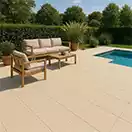
Patios often need something to visually differentiate them from the rest of the outdoor area. Geometric tiles add this distinction naturally by creating a “designed zone” that feels more like an outdoor living room.
Paired with earthy outdoor furniture, neutral cushions, and ambient lighting, the area becomes warm, cultural, and inviting.
5. Villa Entrances & Walk-Up Areas
First impressions matter. A geometric-tiled entrance walkway creates an immediate wow factor. The intricate patterns introduce visitors to the home’s style before they even walk through the door.
6. Rooftop Terraces & Balconies
Rooftops are underused in most UAE homes, but they have massive potential. Laying Islamic geometric tiles on a rooftop floor instantly transforms a plain concrete slab into a private retreat. Pick a lighter colour palette — sand, cream, soft turquoise — to reflect heat and keep surfaces cooler underfoot. Combine with a pergola, some potted palms, and low Arabic seating, and you have a majlis with a skyline view.
Choosing the Best Islamic Geometric Tiles for Landscaping
Selecting the right material is important for ensuring the Islamic pattern tiles withstand outdoor conditions. Not all beautiful tiles are created equal when it comes to exterior applications.
Comparison of Outdoor Tile Materials Suitable for Islamic Geometric Patterns
| Material | Best For | Key Benefits | Maintenance |
| Porcelain | All outdoor applications, especially high-traffic and wet areas | Excellent durability, frost-proof, UV-resistant, low absorption, high slip resistance options | Minimal: regular cleaning with mild detergent |
| Natural Stone | Patios, walkways, courtyards | Unique natural variation, excellent thermal properties, ages gracefully | Requires regular sealing; more porous than porcelain |
| Terracotta | Covered patios, Mediterranean-style gardens | Warm, earthy aesthetic, traditional appeal | Requires sealing; not frost-resistant |
| Zellij/ Moroccan | Decorative accents, wall features, light-traffic areas | Authentic handmade quality, historic | More fragile; often requires custom installation |
For most UAE homeowners, porcelain is the clear winner. It handles temperatures above 50°C without cracking, resists the abrasive dust that wears down softer materials, and modern digital printing technology can replicate zellige, arabesque, or girih patterns with photographic accuracy. You get the cultural look without the maintenance burden of handmade tiles.
Islamic Geometric Tiles for Indoor Spaces: Mosque Floors, Majlis Rooms, and More
While this guide focuses on outdoor applications, it is worth mentioning that the same patterns look equally stunning inside the home. In the UAE, two indoor spaces in particular suit Islamic geometric tiles:
Mosque and Prayer Room Flooring
Private prayer rooms inside villas are becoming more common across Dubai and Sharjah. Laying a geometric tile pattern — particularly an eight-pointed star or arabesque design in muted earth tones — sets the room apart from the rest of the house. The pattern naturally draws the eye inward, creating a sense of calm and focus. Choose a matte, anti-slip porcelain finish to ensure comfort during prostration.
Majlis Halls
The majlis is the heart of Emirati hospitality. Geometric tiles on the majlis floor create an instant sense of heritage and formality. Pair them with gypsum wall carvings and Arabic calligraphy art to complete the cultural look. For larger majlis halls, a 600x1200mm tile with a repeating girih pattern keeps the layout seamless with fewer grout lines.
Explore our full outdoor tile collection to see geometric options available in multiple sizes.
Caring for Patterned Outdoor Tiles in the UAE
One concern homeowners have about geometric tiles is maintenance — specifically, whether the intricate patterns trap dirt or fade over time. The short answer: porcelain geometric tiles are among the easiest outdoor surfaces to maintain in the Gulf. Here is a practical care guide:
Weekly Routine
• Sweep or hose down the tiled area to remove sand and dust. In the UAE, fine desert dust settles daily, and letting it accumulate dulls the tile surface over time.
• Mop with warm water and a pH-neutral tile cleaner. Avoid bleach or acidic cleaners — they will not damage the tile itself, but they can erode the grout between tiles.
Seasonal Deep Clean (Every 3–4 Months)
• Use a soft-bristle brush with a mild alkaline cleaner to scrub grout lines. In outdoor settings, grout is more exposed to moisture and algae, particularly during the humid months between June and September.
• Rinse thoroughly with clean water and let it air-dry. Avoid pressure washers on grouted joints — the high pressure can dislodge grout from between tiles.
Dealing with Stains
Oil stains from barbecue grills or food spills should be treated immediately with a degreasing agent and a soft cloth. Rust stains from metal furniture legs can be removed with an oxalic acid solution, but test it on a hidden corner first. For general discolouration from hard water or mineral deposits, a vinegar-and-water solution (1:4 ratio) works well when applied gently.
Grout Protection
Apply a silicone-based grout sealer once a year. The grout is the weakest point in any outdoor tile installation, and sealing it prevents moisture from seeping underneath the tile bed. This is especially important for pool-side and fountain-adjacent installations.
Where to Buy Islamic Pattern Tiles in the UAE
Finding the right Islamic geometric outdoor tile in the UAE depends on what you are looking for—handmade artisan zellige or modern porcelain reproductions. Here is a practical breakdown:
Modern Porcelain Islamic Tiles
For most villa and residential projects, digitally printed porcelain tiles offer the best balance of beauty, durability, and price. At Volark Tiles, we carry a range of outdoor porcelain tiles in 500x500mm, 600x600mm, 600x900mm, and 600x1200mm sizes — many with geometric and Islamic-inspired surface designs. All our outdoor tiles meet the technical requirements for Gulf climate conditions: water absorption below 0.5%, slip resistance rated R10 or above, and UV-stable glazes that will not fade.
Visit our Sharjah showroom to see samples in person, or browse our full outdoor range online.
Handmade Zellige and Mosaic Tiles
If you want authentic hand-cut Moroccan tiles for a decorative wall feature or fountain border, specialised showrooms in Dubai such as those in Al Quoz and the Dubai Design District stock imported zellige. Be prepared for higher costs (AED 200–500+ per sqm) and longer lead times. Handmade tiles also need professional installation by artisans experienced in mosaic work.
What to Ask Your Tile Supplier
• What is the water absorption rate? (For outdoor UAE use, demand below 0.5%.)
• What is the slip resistance rating? (Minimum R10 for patios; R11 or R12 for pool areas.)
• Is the pattern surface-printed or through-body? (Through-body or full-body tiles resist chipping better, but surface-printed porcelain is perfectly adequate for most residential use.)
• Can I get matching trim and border pieces? (For a polished installation, borders and corner pieces make a big difference.)
For outdoor tile projects across Dubai, we deliver to all areas. See our Dubai tiles delivery page for details
Installation Tips for Islamic Geometric Outdoor Tiles in the UAE
Laying patterned tiles outdoors requires more planning than plain tiles. The pattern alignment has to be precise, or the visual effect falls apart. Here are the key things to get right:
•Start from the centre: Find the visual centre of your patio or courtyard and lay the first tile there. Work outward symmetrically. Geometric patterns are unforgiving — even a 2mm offset at the centre becomes a visible misalignment at the edges.
•Dry-lay the pattern first: Before applying any adhesive, lay out at least a 2x2 metre section dry to check alignment, colour consistency, and grout spacing. This step catches problems before they become permanent.
•Use a flexible, outdoor-rated adhesive: In the UAE, temperature swings between day and night cause tile beds to expand and contract. A rigid adhesive will crack. Use a C2TE-rated flexible adhesive designed for exterior use.
•Keep grout lines consistent: For geometric tiles, uneven grout lines destroy the pattern. Use tile spacers (2–3mm for most outdoor applications) and a levelling system to keep everything flat.
•Slope for drainage: Outdoor tile surfaces must slope away from the building at a minimum gradient of 1.5–2%. Standing water on a tiled surface leads to algae growth in grout joints and potential slipping hazards.
For waterproofing and base preparation guidance, read our detailed terrace tiles guide.
What Do Islamic Geometric Outdoor Tiles Cost in the UAE?
Prices depend heavily on the type of tile and the source:
| Tile Type | Price Range (AED/sqm) | Best For |
| Porcelain (digital geometric print) | AED 80 – 180 | Patios, courtyards, walkways, terraces |
| Full-body porcelain geometric | AED 120 – 250 | High-traffic commercial and villa entrances |
| Handmade zellige / Moroccan mosaic | AED 200 – 500+ | Feature walls, fountain borders, decorative accents |
| Natural stone with geometric inlay | AED 300 – 600+ | Luxury villa courtyards, boutique hotel lobbies |
Labour for patterned tile installation in the UAE runs between AED 35–80 per square metre, depending on the complexity of the layout and whether the installer needs to do custom cuts. For intricate zellige or mosaic work, expect to pay at the higher end.
Frequently Asked Questions About Islamic Geometric Outdoor Tiles
1) Are Islamic geometric tiles suitable for pool surrounds?
Absolutely. Porcelain tiles with a slip resistance rating of R11 or higher and water absorption below 0.5% are safe and practical around swimming pools. The geometric patterns actually help visually frame the pool, making the entire area feel more designed and intentional.
2) Can I use the same geometric tiles indoors and outdoors?
Yes, if the tile is rated for outdoor use (low absorption, adequate slip resistance), you can continue the same pattern from your courtyard into your entrance hall or majlis. This creates a seamless visual flow between indoor and outdoor living areas — a design approach that is very popular in modern UAE villas.
3) Do geometric patterns make a small patio feel cramped?
Not if you choose the right scale. In a compact space, use larger tiles (600x600mm or 600x1200mm) with a single repeating geometric motif. Avoid small mosaic tiles in tight areas — the busy grout lines will shrink the space visually. Lighter colours (cream, beige, soft grey) also help a small patio feel more open.
4) How long do Islamic geometric outdoor tiles last in the UAE climate?
Porcelain outdoor tiles are built to last 25–30 years or more with basic maintenance. They resist fading from UV exposure, will not crack from heat expansion, and handle the abrasion from desert dust without losing surface detail. The pattern is literally part of the tile, not a coating that wears off.
5) What grout colour works best with geometric patterned tiles?
For most Islamic geometric tiles, a grout colour that matches the dominant background tone of the tile (usually cream, light grey, or sand) creates the cleanest look. Contrasting grout colours can work for dramatic effect, but they also highlight any alignment imperfections, so installation precision has to be very high.
6) Does Volark Tiles supply Islamic geometric outdoor tiles?
Yes. Volark Tiles stocks a range of outdoor porcelain tiles with geometric and Islamic-inspired patterns in multiple sizes, available from our Sharjah showroom with delivery across all UAE emirates including Dubai, Abu Dhabi, Ajman, Ras Al Khaimah, and Umm Al Quwain. Contact us on +971 56 590 0020 or visit info@volarktiles.com to request a quote or arrange a showroom visit.
Designing a courtyard or patio in the UAE? Browse outdoor tiles, or WhatsApp our Sharjah showroom for pattern samples and pricing.