


Floor Tiles Design: How to Pick the Right Tiles for Every Room in Your Home
Nobody walks into a room and thinks "nice tile." But everyone walks into a room and feels something. That feeling? It starts with the floor. Before the sofa, before the paint colour, before the curtains your wife spent three weeks choosing — the floor already did most of the work.
We see this play out every single week at our showroom in Sharjah. Someone comes in, they've already bought their kitchen cabinets and their bathroom vanity, and now they're trying to find a floor tile that "goes with everything." That's backwards. The floor should've been first. It covers more area than any other surface in your home. It's the base layer. Everything else sits on top of it — literally and visually.
But okay, you're here now. Maybe you're planning a renovation. Maybe you're building from scratch. Maybe you just moved into a place with awful beige tiles from 2009 and you can't take it anymore. Whatever brought you here, this guide is going to help. We'll cover floor tiles design ideas that actually suit UAE homes — not what works in London or Sydney, but what holds up when it's 47 degrees outside and there's sand in your hallway again.
Why This Decision Matters Way More Than People Realise
Think about it. You'll repaint your walls every few years. You'll swap out furniture when you feel like it. Curtains, rugs, light fixtures — all of that changes. But ripping up and replacing floor tiles? That's a demolition job. Dust everywhere, furniture moved out, days of disruption. Nobody does that on a whim.
So whatever tile goes down is probably staying down for 10 to 20 years. And in the UAE, your floor has a harder job than floors in most countries. The summer heat makes certain materials expand. The humidity — especially if you're near the coast in Dubai, Sharjah, or Abu Dhabi — can cause problems with natural stone and real wood. Fine sand blows in constantly and acts like sandpaper on soft surfaces. And then there's the AC. Your floor goes from hot outside temperatures to 22-degree AC indoors, and that thermal cycling affects some materials more than others.
Porcelain and good quality ceramic handle all of this without complaining. That's not opinion, that's just physics. Low water absorption, high density, stable dimensions. It's why tile remains the dominant flooring material across the Gulf, and honestly, it's hard to argue against it.
Floor Tile Design Trends Worth Knowing About in 2026
Trends come and go. We've seen it all — the terracotta craze, the grey everything phase, the "let's put tiny mosaics on every bathroom floor" era. Some trends have staying power. Others look dated within two years. Here's what we're seeing right now that we think has legs.
Big Tiles, Fewer Lines
The single biggest shift in floor tiles design over the last three years has been size. Tiles have gotten huge. We're selling 120×240cm porcelain slabs regularly now, and even 160×320cm for high-end villa projects. Five years ago, those sizes barely existed in the UAE market.
Why the obsession with going big? Simple. Fewer grout lines. The floor reads as one continuous surface instead of a grid. A 35-square-metre living room with large slabs looks like it flows. The same room with small 30×30 tiles looks chopped up.
Fair warning though — big tiles need flat floors. We're talking dead flat. If your screed has a 2mm dip in it, the edge of a 240cm slab will ride up on one side and you'll feel it under your feet. Every. Single. Time. You'll also trip on it. So if you're going large format, tell your contractor early. The floor prep will cost more, but it's not optional.
Goodbye Gloss, Hello Matte
Glossy tiles are losing ground. Not because they're ugly — a polished marble-look porcelain in a well-lit showroom is genuinely stunning. The problem is real life. In a UAE home with big windows and strong sun, a glossy floor turns into a mirror. You get blinding reflections in the afternoon. You see every single footprint, every splash of water, every speck of dust. It looks amazing for about 15 minutes after mopping, then reality kicks in.
Matte tiles don't have that problem. They're forgiving. They hide the everyday mess. They don't throw light around in weird ways. And they feel better underfoot — there's a slight texture that glossy surfaces lack. Most of the high-end projects we're involved in now spec matte or soft-textured finishes. That's not a coincidence.
Wood-Look Tiles — Still Going Strong
We wrote a whole guide on porcelain wood tile, and for good reason. People love the idea of wooden floors. Warm, natural, homey. But real hardwood in the UAE is a gamble. Humidity makes it swell. AC makes it shrink. Termites eat it. And don't get us started on what happens when someone spills water and doesn't notice for a few hours.
Wood-look porcelain solves all of that. The inkjet printing on current-generation tiles is borderline ridiculous in terms of realism. We've had customers in the showroom pick up a plank tile, flip it over, and only then believe it's not real wood. You get the grain variation, the knot details, even a slight texture on the surface. But underneath it's still porcelain — waterproof, scratch-resistant, and basically indestructible in normal residential use.
Marble Effect Without the Marble Price Tag
Real marble is beautiful and fragile. Spill lemon juice on it, drag a chair, forget to seal it — and you've got marks. Permanent ones, usually. Marble effect porcelain tiles have gotten good enough that the only way to tell the difference in most installations is to tap the surface and listen. You still get the veining, the depth, the movement in the pattern. Some ranges even do bookmatched slabs where two tiles mirror each other — it looks like a single piece of natural stone cut down the middle.
For living rooms and master bathrooms, marble-look porcelain is hard to beat. All the drama, none of the anxiety about staining.
Warmer Colours Are Back
Grey everything is finally losing steam. Don't get us wrong — grey is fine. Grey porcelain with a concrete finish can look incredible in the right space. But after five years of seeing it in every single apartment in JBR, Downtown, and Al Nahda, people are ready for something with more warmth.
Sand tones. Warm beige. Terracotta undertones. Soft taupe. These colours connect with the UAE landscape instead of fighting against it. They don't show dust as badly as dark tiles. And they pair well with the organic, earthy interior style that's taken over Instagram and every design magazine in 2026. Our earthy tone outdoor tiles piece goes deeper into how these work in exterior spaces.
Room-by-Room Floor Tiles Design Breakdown
Living Room
This is the room where your floor tile choice shows up the most. It's the biggest open space, it's where guests end up, and it's the room you spend most of your waking hours in. Get it right here and the rest of the house kind of falls into place.
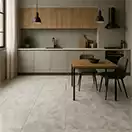
What works: large format porcelain — 80×160 or 120×120cm — in a neutral palette. Light grey if you like the modern look. Warm beige if you want something softer. Ivory if you're going for bright and open. Marble-look tiles with subtle veining for a bit of elegance that doesn't feel like a hotel lobby.
If you have an open-plan layout where the living room flows into the kitchen and dining area, use the same tile throughout. That continuous surface trick makes the whole ground floor feel like one generous space instead of a bunch of separate boxes.
We've written a much deeper guide on living room floor tiles with specific design combos for this year. Worth a read if the living room is your main concern.
Kitchen
Kitchens abuse floors. Oil pops out of the pan. Water splashes from the sink. You drop a glass and there are shards everywhere. Kids run through with sandy feet from the garden. Whatever tile you put in here has to take a beating and still look decent three years later.
Go porcelain. PEI 3 rating minimum — that means it's built for moderate to heavy foot traffic. Avoid anything too smooth; a little texture gives you grip when the floor's wet with cooking splatter. Medium sizes — 60×60 or 60×120cm — actually outperform giant slabs in kitchens because the grout lines add traction.
Here's a design move we've seen work really well lately: neutral tile across the main kitchen floor, then a strip of patterned cement-look or geometric tile under the island or in front of the stove. It gives the kitchen personality without making the whole room visually noisy. Our kitchen ceramic tiles blog gets into material specifics. And if your kitchen is tight on space, the small kitchen tile ideas post has layout tricks that genuinely work.
Bathroom
This is where safety comes before style. Full stop. Your bathroom floor gets wet. Your feet are bare. If that tile doesn't have grip, you're one shower away from a bad fall. Look for R10 slip rating at minimum. R11 is better. Don't even think about putting polished porcelain on a bathroom floor — it turns into a skating rink the moment water hits it.
Now, once you've sorted the safety bit — this is actually the room where you can go bolder with design. Why? Because it's small. A striking pattern that would overwhelm a living room can look brilliant in a 6-square-metre bathroom. Hexagonal tiles in a muted grey-green. Terrazzo-look porcelain with chips of pink and charcoal. Even a bold geometric pattern on the floor with plain white walls — it works because the space is contained.
For shower floors specifically, go small. Mosaic tiles. The extra grout lines = more grip. And triple-check that the tile you're using is actually rated for floors. We see it all the time — someone falls in love with a glossy decorative tile, puts it on the bathroom floor, and within months it's cracking and slippery. It was a wall tile. Wrong application. Our anti slip tiles guide explains the ratings and what to look for.
Bedroom
Bedrooms need to feel warm. That's it. That's the main brief. Nobody wants to step out of bed onto a surface that looks and feels like a hospital corridor.
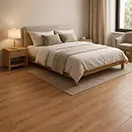
Wood-look porcelain planks dominate bedrooms in the UAE for exactly this reason. Light oak tones, ash, warm walnut — pick something that makes you want to walk around barefoot. Lay them in a running bond pattern and you've got a classic, calming look. If you want more visual punch — herringbone in the master suite, especially if the room is big enough to actually show off the pattern.
Quick colour note: lighter tones make bedrooms feel bigger and calmer. Darker planks can feel cosy and cocooning, which some people love, but you need good natural light and pale walls to stop it from becoming a cave. If you're into creamy, neutral-toned floors, our plain ivory tiles piece explains why that works so well in bedrooms specifically.
Outdoor Areas
Different rules entirely. Your patio, terrace, pool deck, garden path — these tiles cook under the sun from April to October. They get rained on. They get walked on with wet feet. A tile that works perfectly indoors can crack, fade, or become lethal outdoors.
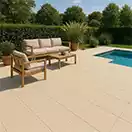
Non-negotiables: porcelain, 20mm thick minimum, R11 slip rating or better, UV-stable finish. That's the baseline. Below that, you're asking for trouble.
For colour, go lighter. Dark tiles absorb heat like crazy — step on a dark outdoor tile in July and you'll understand immediately. Stone-look and sandstone finishes in beige and cream tones stay noticeably cooler.
If you want to do something interesting with the design — and you don't want your patio looking like every other patio in every other villa — take a look at Islamic geometric outdoor tiles. They're patterned tiles rooted in traditional Arabic design, and when used on a courtyard floor or an entrance walkway, they add character that plain square tiles simply can't match.
Laying Patterns — Same Tile, Totally Different Look
Most people pick a tile and then tell the installer "just lay it normally." But the layout changes everything. Same tile, three different patterns, three completely different vibes. Here's what each pattern does and where it tends to work best:
| Pattern | Where It Works | What It Does to the Room |
|---|---|---|
| Straight Grid | Big rooms, open-plan spaces | Clean. Modern. Lets the tile speak for itself. |
| Running Bond | Hallways, wood-look planks | Stretches narrow rooms. Adds a bit of movement. |
| Herringbone | Bedrooms, entryways, living areas | Classic, textured feel. Looks expensive. |
| Chevron | Feature zones, dining rooms | Directional. Modern. Makes a space feel designed. |
| Diagonal | Small bathrooms, compact rooms | Tricks the eye into thinking the room is wider. |
| Versailles | Villa lobbies, grand entryways | Old-world sophistication. Multi-size mix. |
| Basketweave | Bathrooms, utility rooms | Quiet pattern. Adds texture without noise. |
Ask your installer to do a dry-lay before gluing anything down. Seriously. What looks perfect in a Pinterest photo sometimes looks odd once it's in your room with your dimensions and your lighting. A dry run takes 30 minutes and can save you from a layout you'll regret for years.
Getting the Tile Size Right
Wrong size tile in the wrong room throws the whole thing off. It's like wearing a suit that doesn't fit — the fabric might be great but the proportions are off and everyone can tell something's not right.
Under 15 sqm (typical bathrooms, small kitchens): 60×60 or 60×120cm. Don't try to squeeze in oversized slabs — you'll end up cutting most of them down and the proportions will look weird. Plus more cutting means more waste and more cost.
15 to 30 sqm (bedrooms, medium living rooms): Flexible zone. 60×120 gives a modern, elongated feel. 80×80 works for a more traditional square look. You can start going bigger here if you want — 120×120 tiles in a medium room look smart and intentional.
Over 30 sqm (open-plan living, villa halls): Go big. 120×240cm slabs. This is where large format earns its keep. Minimal grout lines, maximum visual impact. The floor reads as a single plane and the room feels twice as expensive.
One stat: 60×60 porcelain is still the single most-sold floor tile size in the UAE residential market. It's the safe pick and it works. But 60×120 is overtaking it in new builds, especially in Dubai — it just looks more current.
Porcelain, Ceramic, or Vitrified — What to Pick and Where
Three materials. Each has its place. Here's the honest version without the marketing fluff:
| Porcelain | Ceramic | Vitrified | |
|---|---|---|---|
| How tough? | Very. Handles everything. | Fine for normal use. Won't survive abuse. | On par with porcelain for hardness. |
| Water absorption | Under 0.5%. Almost nothing. | 3–6%. Okay for most spots. Not outdoors. | Under 0.5%. Same as porcelain. |
| Where to use it | Everywhere. Indoor, outdoor, commercial. | Walls. Light-traffic floors. Budget projects. | Living rooms, corridors, heavy-traffic areas. |
| Cost in UAE | AED 25–120/sqm | AED 15–60/sqm | AED 30–100/sqm |
| Outdoor? | Yes — in 20mm thickness. | No. It'll absorb water and crack. | Not really. Limited options. |
Our types of tiles explained guide breaks down every category. If you want material-specific info, the ceramic tile flooring page covers ceramics in detail, and the vitrified tiles blog explains where vitrified makes sense and where porcelain is the better call.
Bottom line for most UAE homes: porcelain for floors. Ceramic for walls. Done. You can overthink this — but in 9 out of 10 projects, that's what we recommend and that's what performs best long-term.
The Floor Tile Mistakes That Keep Happening
We've watched people make these mistakes for years. Some of them are easy fixes. Others require ripping up what was just installed. Learn from other people's pain.
Picking tiles under showroom lights. Our showroom (and every showroom) uses warm spotlights. Tiles look richer, warmer, more inviting. Then you get the tiles home and under your kitchen's fluorescent tube light, that warm beige looks like hospital yellow. Take. A. Sample. Home. Look at it in your actual room, under your actual lights, at different times of day. We give out samples for free. There's no reason to skip this step.
Wall tiles on floors. This one causes actual damage, not just bad looks. A customer last year bought these beautiful decorative tiles — thin, glossy, designed for a feature wall — and had their contractor lay them across a bathroom floor. Three months later: two cracked tiles and his wife slipped getting out of the shower. Wall tiles aren't rated for foot traffic. They're thinner, they're softer, and they offer zero grip when wet. Always check PEI rating. PEI 3+ for floors. Non-negotiable.
Bright grout with dark tiles. Or the reverse. Either way, mismatched grout turns your floor into a grid. Your eye goes to the lines instead of the tile. Matching the grout to the tile colour — close, not necessarily exact — gives you a clean, unified surface. It's the kind of detail that costs almost nothing extra but changes how the whole room looks.
No slip resistance in wet zones. Pool decks, bathrooms, kitchen entry from the garden — these areas get wet regularly. R10 slip rating minimum. R11 is better. A beautiful glossy tile with zero grip in a bathroom is a lawsuit waiting to happen. Or a hospital visit. Both bad.
Not buying enough. This one hurts the most because it hits after the project's almost done. Cuts produce waste. Herringbone patterns produce more waste than straight lays. Tiles from different production batches can vary slightly in shade. If you run short and reorder, the new batch might not match what's already on your floor. Order 10–15% extra for grid layouts. 15–20% for herringbone or diagonal. Just do it.
What Floor Tiles Actually Cost in the UAE Right Now
Money talk. Here's what the market looks like in 2026. These aren't showroom-specific prices — they're market-average ranges across the UAE:
| What You're Buying | Expect to Pay (AED/sqm) | Context |
|---|---|---|
| Ceramic 60×60 | 15 – 40 | Budget pick. Fine for walls and light floors. |
| Porcelain 60×60 | 25 – 80 | The workhorse. Most homes use this. |
| Porcelain 60×120 | 35 – 100 | Modern rectangle. Catching on fast. |
| Large slab 120×240 | 80 – 180 | Villa-grade. Budget for flat screeding too. |
| Wood-look planks | 30 – 90 | Depends on size and realism level. |
| Marble-look porcelain | 40 – 120 | Bookmatched at the top end. |
| Outdoor 20mm | 50 – 130 | Slip-rated, UV-stable. Worth the premium. |
| Installation | 50 – 90/sqm | Goes up with tile size and pattern complexity. |
These ranges shift based on brand, finish, and how much you're ordering. Bulk orders for villa projects obviously come in lower per square metre than a small bathroom reorder. For exact pricing on tiles we carry, message us or come to the Sharjah showroom. We'll quote you on the spot.
Come See the Tiles in Person
Here's the thing about tiles — photos lie. Or at least, they tell a selective truth. A tile that looks cold and grey in a photo can feel warm and inviting in person. A tile that looks smooth on screen might have a beautiful micro-texture you can only feel with your hand. This stuff matters, and you can't get it from scrolling.
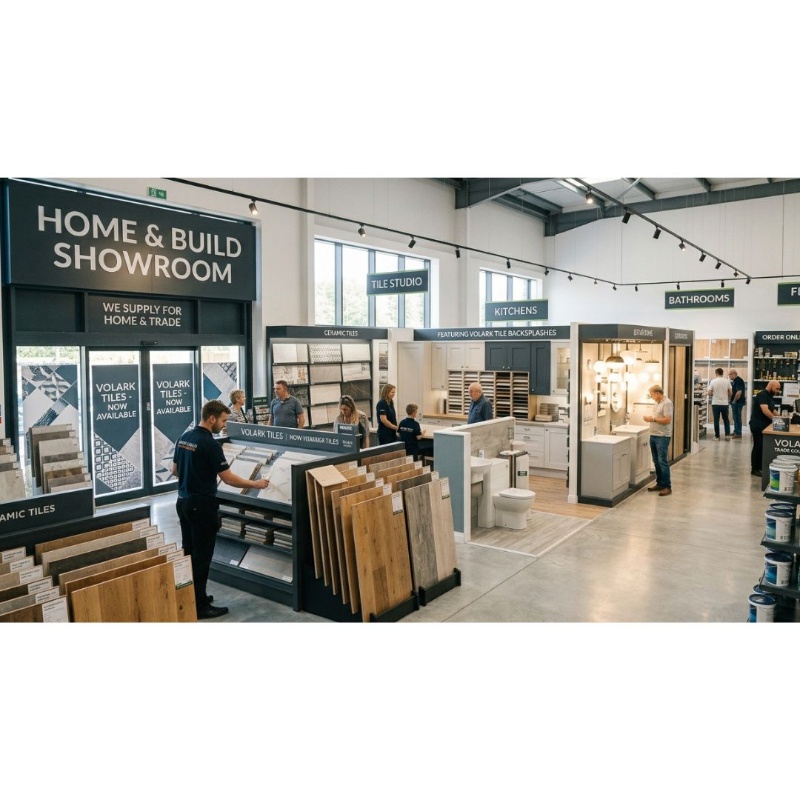
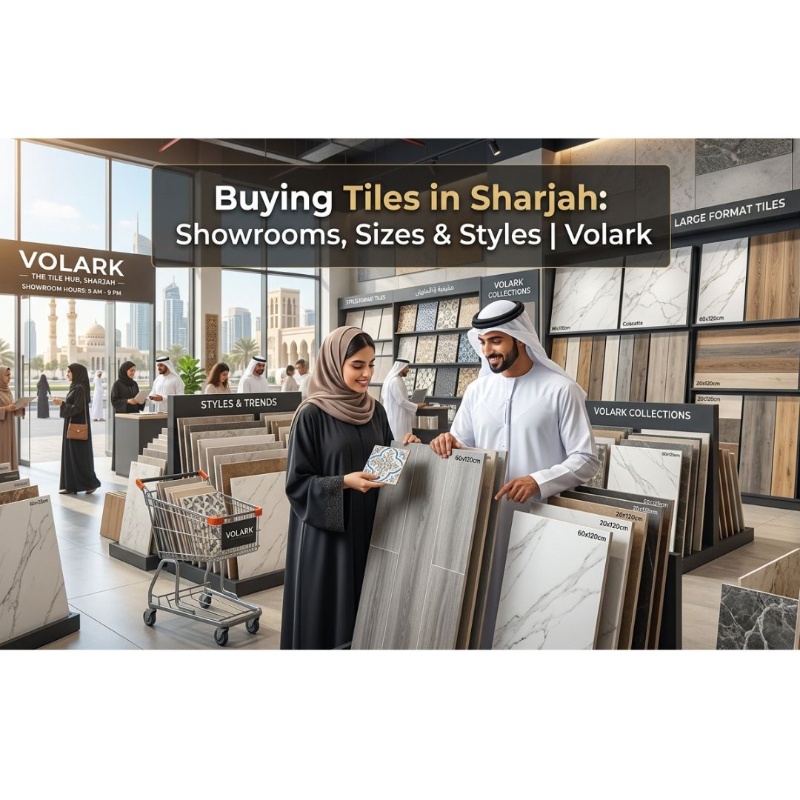
At Volark Tiles, the showroom in Sharjah has full-scale floor and wall installations. Not 10cm sample chips — entire room setups where you can stand on the tile, see it at scale, compare it side-by-side with alternatives. That's how you make a decision you don't regret.
We work with everyone. Families doing a single bathroom. Developers doing 200 apartments. Interior designers who need a tile partner they can trust to have stock when the project timeline gets tight. Contractors who need materials delivered to site on schedule. We deliver across all the Emirates — Dubai, Abu Dhabi, Ajman, Ras Al Khaimah, Umm Al Quwain.
Browse everything at volarktiles.com, message us on WhatsApp for quick pricing, or if you're nearby, just walk in. As a tiles supplier in Dubai and across the UAE, we keep things simple — good tiles, honest advice, no games.
Your Floor Tiles Design Questions — Answered
1.What floor tile design works best in a UAE living room?
Go big and go neutral. Large format porcelain — 80×160 or 120×120cm — in light grey, warm beige, or something in the ivory family. Matte finish. The reason is simple: fewer grout lines means the room reads as one open surface, and matte doesn't throw glare back at you when the sun hits. We've had customers try glossy in a west-facing living room and come back to swap it within a year. Matte just works better here.
2.Can a laying pattern make my small room feel bigger?
Yes, and it doesn't cost extra. Laying tiles on the diagonal makes a tight bathroom or hallway feel wider. If you're using rectangular tiles, run them lengthwise along the longest wall — your eye follows the line and the space stretches. Also: lighter tiles, less grout contrast. Dark tiles with white grout in a 4-square-metre bathroom makes it feel like a cage.
3.Do wood-look tiles actually work in this climate?
Better than real wood, that's for sure. Real hardwood in the UAE swells, shrinks, gets eaten by termites, and stains if water sits on it. Wood-look porcelain gives you the same visual warmth but it's waterproof and basically maintenance-free. The latest generation of these tiles is so realistic that we've literally had visitors to our showroom argue that they're looking at real wood. They're not. It's porcelain. But the point is — you can't tell.
4.What size tile do most people in the UAE go for?
60×60cm is still the default. It's what most builders spec and what most homeowners are used to. But the shift toward 60×120cm is real — it's the go-to now for anyone who wants a slightly more modern look without the hassle of truly oversized slabs. For villas and bigger spaces, 120×240cm is becoming the standard. The larger the tile, the more expensive the installation (because the screed has to be perfect), so keep that in mind.
5.Porcelain or ceramic — which one for my floors?
Porcelain. Almost every time. It's denser, it barely absorbs water (under 0.5%), and it doesn't chip or crack under normal household traffic. Ceramic is totally fine for walls and for floors in rooms nobody uses much — like a guest bedroom that sees action twice a year. But for your kitchen, living room, hallways, bathrooms? Porcelain. It's not even close.
6.I want the same tile inside and on my patio. Can I do that?
You can, but only with outdoor-rated tiles. That means porcelain, 20mm thick, with an R11 slip rating and a UV-resistant surface. Indoor tiles will crack in the heat, fade in the sun, and turn slippery when they get wet from rain or pool splash. Some ranges offer indoor and outdoor versions of the same design — same look, different specs. Ask us about matching pairs if continuity is important to your design.
7. What tile finish should I use in bathrooms?
Matte. Always matte. Or textured. With an R10 anti-slip rating at minimum. Glossy tile in a wet bathroom is not a design choice — it's a safety hazard. For shower floors, smaller tiles like mosaics work best because the grout lines between them give your feet something to grip. It's not glamorous advice, but it's the kind that prevents injuries.
8.Give me a rough idea — what do floor tiles cost in the UAE?
Ranges are wide. Cheap ceramic starts at about AED 15 per square metre. Decent residential porcelain sits between AED 25 and 80. If you want large format slabs or premium marble-look, you're looking at AED 80 to 180. On top of that, installation runs AED 50 to 90 per square metre depending on tile size and pattern. Herringbone costs more to install than a straight grid. Big tiles cost more to install than standard ones. Budget accordingly.
9.What exactly is herringbone?
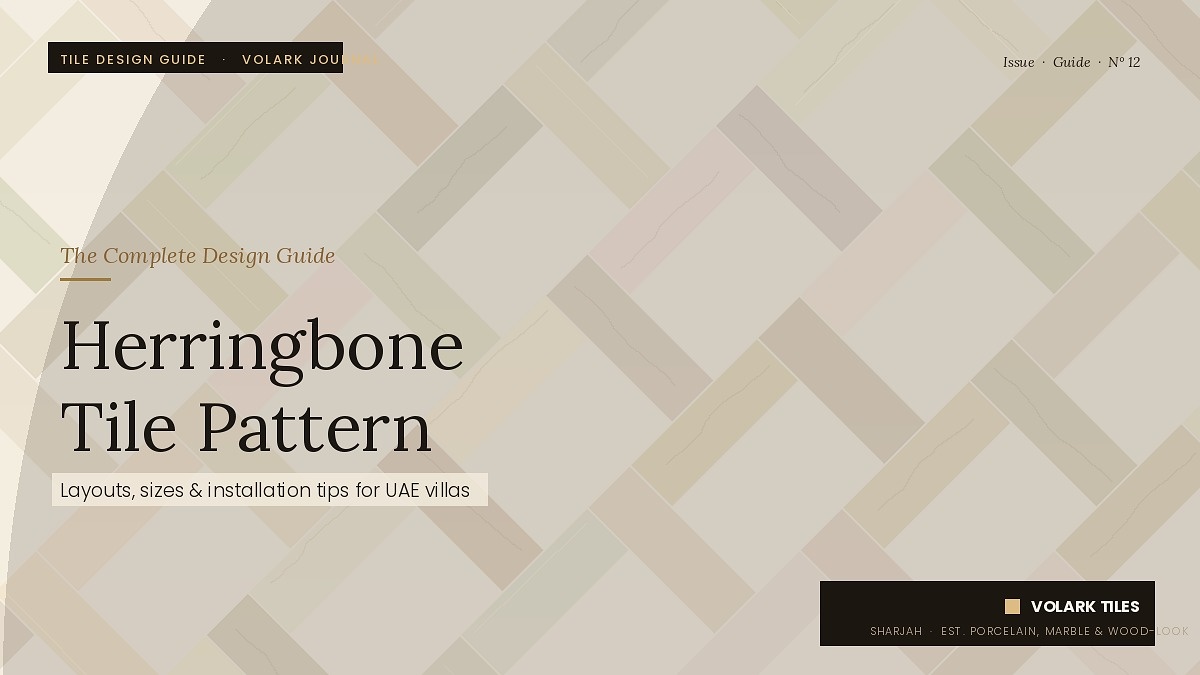
It's a zigzag. Rectangular tiles placed at 45-degree angles so they form a V-shaped pattern — like the bones of a fish, which is where the name comes from. It looks elegant without being fussy, and it adds texture to a floor without needing a patterned tile. Popular in bedrooms, living rooms, and entryways. The downside? It takes longer to install and wastes more tile due to the cuts at the edges. Budget 15–20% extra material.
10.Where can I actually see these tiles before buying?
The Volark Tiles showroom in Sharjah. Not online, not in a catalogue — in person. We've set up full-room installations so you're not squinting at a 10cm sample trying to imagine how it'll look across your living room floor. Walk on it. Feel it. See it under real light. Our team is there to help with design ideas, material recommendations, and pricing for any size project — from a single bathroom to an entire residential tower.