





Custom Tile Requirements for Commercial Projects: What Needs to Be Defined Before Execution
Large commercial projects place very different demands on surfaces compared to residential spaces. Footfall is continuous, cleaning is frequent, and the finish must hold its appearance for years without disruption to operations. Because of this, defining custom tile requirements for commercial projects early in the design stage prevents delays, rework, and inconsistent finishes later.
In retail, hospitality, healthcare, corporate offices, and mixed-use developments, tile decisions are typically driven by performance first, followed by design alignment.
Performance Priorities in High-Traffic Commercial Areas
When teams evaluate custom tile requirements for commercial projects, the discussion usually starts with how the surface will perform under daily use.
Key performance aspects include:
- Abrasion resistance to prevent visible wear in corridors and entrances
- Slip resistance ratings for public zones, wet areas, and service corridors
- Load tolerance where equipment, carts, or furniture movement is frequent
- Moisture resistance in washrooms, kitchens, and semi-outdoor areas
- Stain resistance for hospitality and food service environments
If these factors are not specified clearly, replacement cycles shorten and maintenance costs rise within the first few years.
Key Performance Factors in Commercial Tile Selection
|
Requirement Area |
Why It Matters in Commercial Projects |
Typical Consideration |
|
Abrasion Resistance |
Prevents early surface wear in high-traffic areas |
PEI ratings or equivalent standards |
|
Slip Resistance |
Supports safety in public and wet zones |
Certified anti-slip values |
|
Load Capacity |
Handles equipment, carts, and heavy movement |
Thickness and density of tile body |
|
Moisture Resistance |
Protects against stains and structural damage |
Low water absorption rates |
|
Chemical Resistance |
Important for hospitals, kitchens, and malls |
Surface treatment and glaze quality |
Balancing Design Intent With Functional Needs
Architects and interior designers often begin with a clear visual concept, but commercial environments also involve operational realities. The strongest outcomes happen when brand identity and functional performance are aligned from the start.
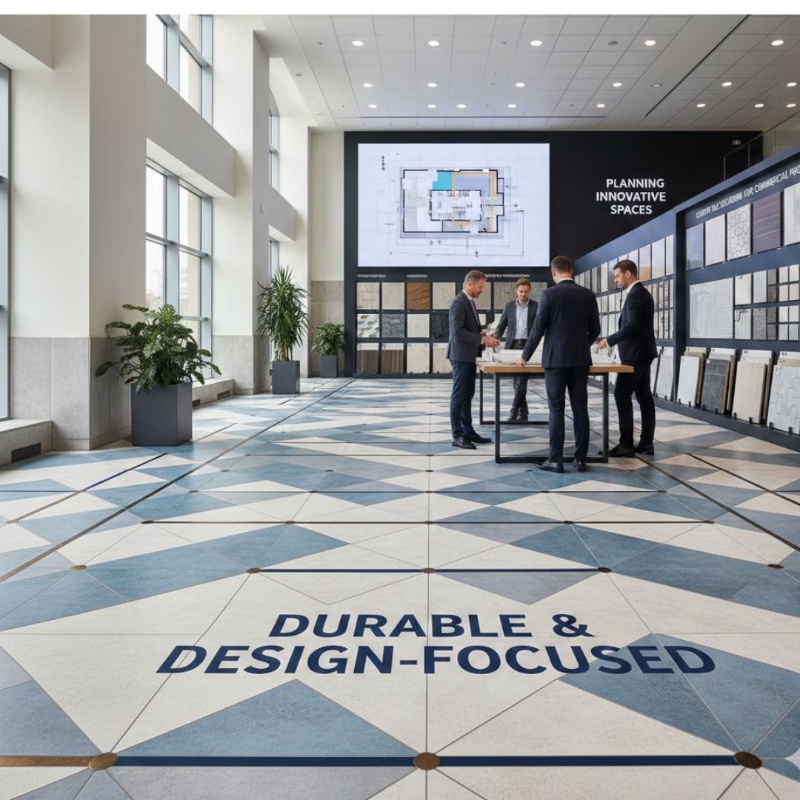
This is where project specific tile solutions become valuable. Instead of adjusting the design to fit standard catalog sizes, tiles can be developed to match exact dimensions, textures, and finishes required for the concept. Large-format surfaces for expansive lobbies, textured finishes for wet zones, or coordinated wall and floor systems can all be achieved without compromising durability.
Planning these elements early reduces the risk of last-minute substitutions that can weaken the overall design language.
Compliance and Safety Considerations
Different sectors operate under different regulatory frameworks. Healthcare and food service environments prioritize hygiene and sanitation, while transportation hubs and public buildings focus heavily on safety and wear resistance.
During the specification stage, custom tile requirements for commercial projects should include compliance with local building codes, fire safety guidelines, and certified slip resistance levels. Tiles used in evacuation routes, kitchens, and public washrooms often require documented performance testing.
Working with manufacturers who provide complete technical sheets and test certifications helps ensure smoother approvals during inspections and final handover.
How to Prepare a Tile Specification Checklist for Tender Documents
In many commercial projects, tile-related issues begin when specifications are unclear during tendering. A structured checklist helps contractors quote accurately, procure the correct materials, and execute finishes without interpretation gaps.
When defining custom tile requirements for commercial projects, the tender documentation should clearly outline both performance expectations and installation conditions.
Key Points to Include
Material and Finish
Tile type (porcelain, ceramic, vitrified, or specialty surface)
Intended application area such as lobby, corridor, or wet zone
Surface finish aligned with safety and usage needs
Dimensions and Technical Parameters
Approved tile sizes and thickness
Edge type and joint expectations
Areas where project specific tile solutions are required to maintain layout consistency
Performance Requirements
Abrasion resistance for high-traffic zones
Slip resistance ratings in public or wet areas
Water absorption and stain resistance values
Installation and Execution Details
Adhesive and grout specifications
Movement joint planning
Substrate preparation requirements
Approval and Quality Control
Sample approval before bulk supply
Mock-ups for large public areas
Shade and batch consistency, especially in projects using bespoke tiles UAE finishes
A concise checklist like this ensures that custom tile requirements for commercial projects are executed as intended, reduces last-minute substitutions, and keeps quality consistent across different zones within the development.
Why Tailored Sizes Improve Installation Efficiency
Commercial layouts rarely follow simple room shapes. Columns, service zones, ramps, and transitions often create unnecessary cutting when standard tile sizes are used.
Custom sizing helps in several practical ways:
- Reduces material wastage
- Improves alignment across large areas
- Speeds up installation timelines
- Minimizes visible joints
- Maintains visual continuity in open spaces
Across premium developments, demand for bespoke tiles UAE continues to grow because developers want distinctive finishes without compromising durability.
Common Mistakes to Avoid When Defining Tile Specifications for Commercial Spaces
Even well-planned commercial projects can face execution issues when tile decisions are rushed or documented too late. Most on-site problems usually trace back to gaps in early-stage specifications.
1. Approving design before confirming performance
Finalizing visuals without checking slip resistance, durability, and compliance often leads to last-minute changes.
2. Depending only on standard sizes
Complex layouts rarely suit off-the-shelf dimensions. Without considering project specific tile solutions, projects face excessive cutting and inconsistent joint lines.
3. Ignoring different traffic zones
Entrances, corridors, and service areas experience varied usage. One uniform specification across all zones can result in faster wear in high-traffic areas.
4. Overlooking substrate and installation planning
Expansion joints, adhesive selection, and base preparation must be defined early to prevent cracking or debonding later.
5. Treating tiles as a late finishing decision
When custom tile requirements for commercial projects are finalized too late, coordination issues arise between architectural, structural, and MEP teams.
6. Not evaluating long-term maintenance needs
Finishes that require intensive upkeep increase operational costs and disrupt routine facility management.
Coordination Between Design, Procurement, and Execution Teams
Commercial outcomes improve when architects, contractors, and suppliers work from the same technical brief.
Early coordination helps with:
- Accurate quantity planning
- Sample and mock-up approvals
- Alignment between structural and finish levels
- Avoiding last-minute substitutions
- Maintaining consistency across phases
This structured approach keeps both performance and design expectations intact through execution.
When projects demand surfaces that can handle heavy use while still reflecting a refined finish, working with a manufacturer that understands both technical performance and design intent becomes important. Volark supports commercial developments with carefully engineered tile solutions tailored to project needs, helping architects, designers, and contractors achieve consistent quality, reliable performance, and design flexibility across large-scale environments where durability and long service life are critical.
FAQs
1. Why are custom tile requirements for commercial projects important during the early planning stage?
Commercial spaces operate under heavy usage and strict safety expectations. Defining requirements early helps ensure the selected materials meet performance needs, reduce redesign risks, and support smoother execution.
2. Do customized tiles always increase project budgets?
Not necessarily. While unit costs may be higher, reduced wastage, faster installation, and longer replacement cycles often improve overall project economics.
3. Can commercial tiles be produced in non-standard sizes?
Yes. Tailored dimensions help align with layout grids, reduce cutting, and maintain visual consistency across large areas..
4. What performance factors should be reviewed when defining custom tile requirements for commercial projects?
Abrasion resistance, slip resistance ratings, load tolerance, moisture resistance, and compliance with local building regulations should all be verified through technical documentation before procurement.
5. When should tile specifications be finalized during a project timeline?
Tile specifications are best confirmed during the design development stage so that procurement, substrate preparation, and installation planning can proceed without delays or last-minute changes.