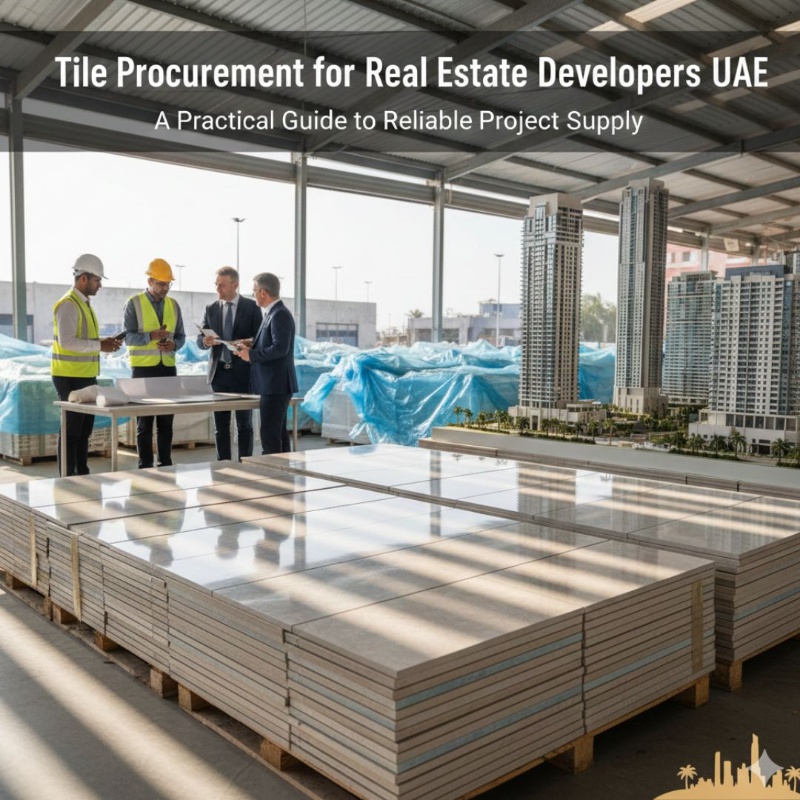







Tile Procurement for Real Estate Developers UAE: A Practical Guide to Reliable Project Supply
In large real estate developments, flooring materials are not purchased as a last-minute requirement. Procurement planning typically begins early because tile availability, batch consistency, and delivery schedules directly influence construction timelines.
The process of tile procurement for real estate developers UAE is closely tied to project phasing. Residential towers, mixed-use complexes, hospitality assets, and retail developments often require coordinated deliveries across multiple stages of construction. Any delay in material availability can affect handover dates and contractor scheduling.
Because tiles cover a significant portion of the built environment, developers evaluate supply reliability with the same level of scrutiny applied to structural materials.
Planning Material Requirements Across Project Phases
Developers rarely procure tiles in a single order. Quantities are usually divided across structural completion, interior fit-out, and final finishing stages.
During tile procurement for real estate developers UAE, teams calculate:
Total floor area by zone
Expected wastage percentages
Future maintenance stock
Variation between public and private spaces
This structured approach ensures that sufficient material is available throughout construction without over-ordering or risking shade variation between batches.
Evaluating Suppliers for Large-Scale Developments
Selecting a supplier involves more than reviewing product brochures or catalogues. Developers typically assess production capacity, consistency across batches, and the ability to maintain uniform shade and calibre over extended delivery schedules.
The process of developer tile sourcing UAE often includes:
- Reviewing manufacturing certifications
- Confirming technical performance data
- Checking past project references
- Evaluating logistics capability for phased supply
Consistency is critical in large projects where tiles may be installed across multiple buildings or levels months apart.
Managing Large Volume Requirements Without Quality Variations
One of the main challenges in commercial developments is maintaining uniform appearance across extensive floor areas. Even minor differences in tone or size become visible when thousands of square metres are installed.
This is why large volume tile supply must be planned with controlled batch production. Developers typically request reserved production runs to avoid colour variation between shipments.
Maintaining consistency across phases reduces the need for rework and prevents visible transitions between installation zones.
Comparison: Local vs Imported Tile Procurement in UAE Projects
|
Factor |
Local Tile Procurement |
Imported Tile Procurement |
|
Lead Time |
Typically shorter delivery cycles with easier coordination during phased construction |
Longer timelines due to manufacturing queues, shipping, and customs clearance |
|
Cost Stability |
More predictable pricing with fewer fluctuations related to freight or currency changes |
Costs may vary depending on shipping rates, exchange rates, and logistics delays |
|
Batch Consistency Risk |
Easier to maintain shade and calibre consistency across multiple project phases |
Higher risk of variation between shipments if production batches differ |
|
Replacement & Maintenance Stock |
Faster access to matching materials for future repairs or extensions |
Matching stock may be difficult to source later if the product line changes |
|
Matching stock may be difficult to source later if the product line changes |
Simplified delivery planning and reduced transport risk |
Requires careful coordination of freight, storage, and handling schedules |
In many UAE developments, procurement teams use a hybrid approach. High-volume circulation areas are often supplied through stable local channels, while imported materials are reserved for feature zones where specific finishes or formats are required.
This evaluation is a standard step within tile procurement for real estate developers UAE, as sourcing strategy directly affects construction timelines and long-term maintenance planning
Logistics and Storage Considerations
Tile procurement is closely linked with site logistics. Deliveries must align with installation schedules to prevent congestion on site or material damage during storage.
In the UAE climate, storage conditions also matter. Tiles should be protected from moisture exposure and handled to avoid edge chipping before installation.
During tile procurement for real estate developers UAE, project teams coordinate:
Delivery sequencing by tower or zone
Storage allocation within the site
Handling procedures for bulk pallets
Access routes for installation teams
Efficient logistics reduce downtime and help contractors maintain installation productivity.
Balancing Cost Control With Long-Term Performance
Developers evaluate tile options not only on unit price but on lifecycle impact. Lower-grade materials may reduce initial procurement cost but often increase replacement and maintenance expenses within a few years.
When reviewing tile procurement for real estate developers UAE, decision makers consider:
Expected lifespan in high-traffic areas
Resistance to staining and wear
Maintenance requirements
Impact on tenant experience
A durable specification helps preserve asset value, particularly in hospitality, retail, and mixed-use developments where appearance influences occupancy rates.
Coordinating With Architects and Consultants
Procurement decisions are aligned with the project’s architectural specification. Any change in tile type, tile thickness, or finish must be approved to ensure it meets design and performance expectations.
The developer tile sourcing UAE process typically involves collaboration between:
Architects
Interior designers
Project managers
Quantity surveyors
Facility management teams
This coordination ensures the selected material supports both the intended visual direction and long-term operational needs.
Ensuring Supply Continuity for Future Maintenance
Large properties require replacement stock for future repairs or refurbishment. Developers often secure additional quantities during initial procurement to avoid mismatched materials later.
Planning reserve stock is a standard part of tile procurement for real estate developers in the UAE, especially in hospitality and commercial assets, where visual consistency must be maintained across years of operation.
Common Procurement Mistakes Developers Face
Even well-planned projects can run into flooring issues when procurement decisions are rushed or made late in the construction cycle. A few challenges appear repeatedly across large developments.
1. Focusing Only on Initial Price
Lower-cost materials may reduce early budgets but often lead to faster wear, higher maintenance, and earlier replacement. Most developers review lifecycle performance before finalising specifications.
2. Skipping Batch Reservation
When large areas are installed across phases, not reserving production batches can cause visible shade variation. During tile procurement for real estate developers UAE, controlled batch planning helps maintain consistency across shipments.
3. Overlooking Logistics and Storage
Bulk deliveries require proper storage and sequencing. Poor handling or site congestion can result in damaged materials and installation delays.
4. Not Securing Maintenance Stock
Without reserve quantities, matching tiles later for repairs or tenant updates can become difficult, especially in hospitality and mixed-use assets.
5. Weak Coordination Between Design and Procurement
Material substitutions without consultant approval may compromise performance or visual consistency. A clear approval process helps avoid costly rework.
Working With Project-Focused Tile Manufacturers
For developments that require dependable timelines and consistent specifications, developers typically partner with manufacturers capable of supporting phased delivery and stable production quality.
Suppliers such as Volark Tiles support large projects by providing technically verified porcelain collections, consistent batch control, and coordinated supply suitable for retail, hospitality, residential, and commercial developments across the region.