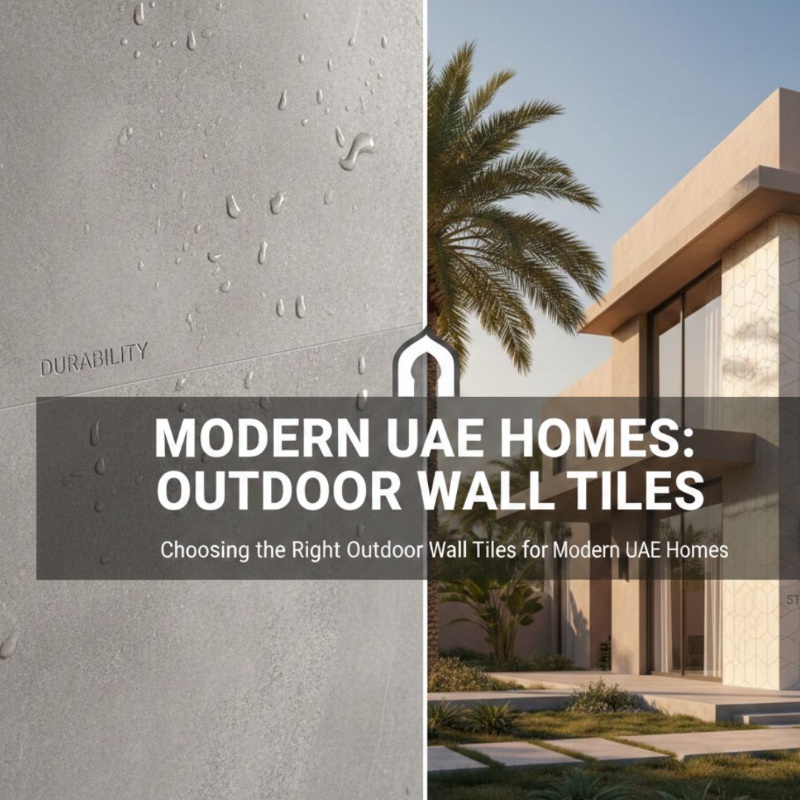



Choosing the Right Outdoor Wall Tiles for Modern UAE Homes
When designing modern villas or contemporary facades, outdoor wall tiles are the first thing people notice. They set the tone for your entire property, expressing your design taste before anyone enters your home. In the UAE, exterior walls are exposed to extreme sunlight, heat fluctuations, dust storms, and humidity. That means choosing the right tile is not only about appearance but mainly about durability, climate resistance, and long-term performance.
The right choice transforms your villa or townhouse into a landmark of modern Arabian luxury. The wrong choice leads to fading, cracking, and costly replacements. This guide will walk you through everything you need to know about selecting outdoor wall tiles for the UAE conditions.
Key Takeaways
- Porcelain is the most reliable material for UAE exterior walls.
- Light colors reduce heat absorption and surface stress.
- Matte or textured finishes prevent glare and improve safety.
- Large-format tiles create seamless, modern facades.
- Proper installation is as important as material selection.
- Climate-resistant tiles reduce maintenance and long-term costs.
Understanding the UAE Climate Challenge
Before selecting the wall tile designs and colour, we have to understand what our outdoor walls endure daily. The UAE climate is uniquely demanding, and your tile selection must consider these stressors.
Extreme Heat and UV Radiation
Summer temperatures regularly exceed 45°C, with surfaces baking in direct sunlight for up to twelve hours a day. This level of exposure degrades inferior materials quickly.
UV-resistant tiles are not a luxury but a necessity. Standard tiles can fade, chalk, or lose their surface integrity within a single season.
High-quality porcelain tiles, however, are formulated to maintain their colour and structure for decades.
Sand, Dust, and Humidity
The UAE experiences frequent sandstorms and a persistent fine dust that acts like sandpaper on building surfaces. Coastal areas like Dubai and Sharjah also contend with high humidity and salt-laden air, which can corrode and stain porous materials.
Your outdoor wall tiles must possess a hard, non-porous surface that resists both abrasion and salt damage.
Thermal Shock and Expansion
Another hidden challenge is the rapid temperature swing between scorching daytime heat and cooler nights, amplified by powerful air conditioning that cools walls from the inside.
This cycle causes materials to expand and contract. Tiles with high density and low water absorption, like porcelain, handle these stresses without cracking.
Start with the Right Material: Porcelain Leads the Way
When researching outdoor tile collections in Dubai, UAE, one material consistently rises to the top: porcelain. It has become the industry standard for exterior applications in hot climates for several compelling reasons.
Porcelain Tiles: The Most Reliable Choice
Porcelain tiles are fired at extremely high temperatures above 1200°C, making them dense and low in water absorption <0.5%. This low porosity prevents moisture penetration and reduces the risk of cracking due to temperature fluctuations.
Some manufacturers now incorporate specialised technologies like KLIMA surface technology, which actively manages heat. Outdoors, these tiles reflect solar radiation to keep surfaces cooler, making them more comfortable for barefoot areas.
They are also highly UV-stable, meaning the color remains consistent even after prolonged sun exposure. For modern UAE homes, porcelain remains the safest long-term investment.
Natural Stone: Premium but Requires Care
Natural stones like travertine, sandstone, and granite offer timeless appeal and natural cooling properties. Their textured surfaces dissipate heat better than some synthetic materials.
However, stone typically requires sealing and periodic maintenance to prevent staining and moisture absorption. For homeowners seeking a rustic or high-end aesthetic, stone can work beautifully, but only with proper maintenance.
Ceramic Tiles: Suitable for Covered Areas
Ceramic tiles can be used on semi-covered balconies or shaded exterior walls. They are budget-friendly and come in versatile designs.
However, for fully exposed facades in harsh climates, ceramic may not offer the same structural strength and UV resistance as porcelain.
Selecting the Right Finish and Colour
Beyond material, the finish and colour of your outdoor wall tiles play a high role in both aesthetics and performance in the UAE climate.
Matte and Textured Finishes for Safety and Style
Glossy finishes may look attractive in showrooms, but outdoors they can create glare and become visually uncomfortable under strong sunlight.
Matte or lightly textured finishes are preferred because they:
- Reduce light reflection
- Provide subtle grip in humid areas
- Hide dust accumulation better
For homes with poolside feature walls, textured finishes also enhance safety
Colour Section
Colour choice directly impacts your home's temperature and energy efficiency.
- Light to Mid-Tones: Shades like beige, cream, warm grey, and sand are ideal. They reflect a significant portion of solar radiation, keeping the wall surface cooler and reducing the heat transferred into the building .
- Earth Tones: Terracotta, soft browns, and muted ochres blend beautifully with the natural landscape and are excellent at hiding the fine dust that accumulates on horizontal and vertical surfaces .
- Dark Colours: While dramatic, dark tiles absorb immense heat. If you prefer a dark aesthetic, ensure the tiles are specifically engineered for high heat resistance and consider providing shading to prevent the wall from becoming a radiant heat source.
Exploring Design Trends for Modern UAE Homes
The market for outdoor tile collections Dubai uae is rich with design possibilities. Here are some of the most compelling trends for contemporary homes.
The Return of Cultural Identity
A beautiful trend is the resurgence of traditional Arabic geometry in outdoor spaces. Mashrabiya-inspired tiles, featuring intricate geometric patterns, are being reimagined in durable porcelain.
These tiles allow homeowners to celebrate cultural heritage in a modern way, perfect for courtyard walls, entrance features, and garden enclosures. They add depth, shadow play, and a sense of place that is both timeless and contemporary.
Large-Format Slabs for Luxury
Large-format porcelain slabs, available in sizes like 120x280 cm or even larger, are highly recommended for creating a sleek, minimalist aesthetic look.
Larger tiles mean fewer grout lines, creating a cleaner facade appearance.
Beyond aesthetics, fewer grout joints also reduce maintenance. Grout is often the weakest point in exterior walls, so minimizing it enhances durability.
These slabs are ideal for modern villas aiming for a sophisticated, hotel-like exterior.
Natural Stone Looks
The demand for natural aesthetics remains strong. Stone-look porcelain continues to dominate, offering the organic texture of travertine, slate, or granite with superior durability and zero need for sealing.
Popular Design Directions
- Concrete Look Porcelain: Ideal for minimalist, industrial-style villas.
- Stone-Look Cladding: Adds texture and dimension to façades.
- Wood-Effect Porcelain: Brings warmth without real wood’s maintenance issues.
- Geometric Feature Panels: Create artistic focal points on accent walls.
Modern design favors subtle texture over overly decorative surfaces.
Key Technical Specifications to Verify
When shopping for tiles, look beyond what you see. Ask your supplier for these technical details to ensure you are getting a product fit for the UAE.
Water Absorption Rate
This is the most critical specification. For outdoor use in the UAE, you need tiles with a water absorption rate of less than 0.5%. This ensures they will not absorb moisture, which can lead to cracking during temperature fluctuations or cause efflorescence.
Slip Resistance - R-Rating
While crucial for flooring, slip resistance is also important for walls in splash zones like those around pools or fountains. Look for a minimum rating of R10 or R11 for safety in these areas.
PEI Wear Rating
The PEI Porcelain Enamel Institute, rating measures surface abrasion resistance. For exterior walls that may be cleaned occasionally or face windblown sand, a PEI rating of 3 or 4 is sufficient and indicates a durable surface that won't scratch easily.
Thickness
While 9mm to 10mm porcelain is common for walls, larger formats or areas prone to impact may benefit from a thicker tile like 20mm for added robustness.
Comparing Wall Tiles Option
Where to Explore Premium Outdoor Tile Options
If you're looking for curated collections designed for UAE conditions, explore Volark Primum Outdoor Tile Collections Online to view climate-resistant options.
High-quality tiles should combine aesthetic versatility with structural reliability. Volark Tiles stands out as a trusted partner for homeowners and designers across the UAE. We offer outdoor wall tiles specifically chosen for their performance in our unique climate.
FAQ
1.What is the single most important feature to look for in outdoor wall tiles in the UAE?
Low water absorption less than 0.5%. This ensures the tile is dense enough to resist moisture, heat damage, and the stresses of thermal expansion, guaranteeing longevity.
2.Will light-coloured tiles really make a difference to my home's temperature?
Yes. Light colours reflect significantly more solar radiation than dark colours. This keeps your wall surfaces cooler and reduces the amount of heat transferred into your home, potentially lowering cooling costs.
3.Can large-format tiles be used outdoors?
Yes, provided they are installed correctly with flexible adhesives and expansion joints.
4.How do I clean outdoor wall tiles without damaging them?
Regular cleaning with a soft brush or low-pressure water to remove dust is usually sufficient. For deeper cleaning, use a mild detergent and water. Avoid harsh acidic or abrasive cleaners that could damage the tile surface or grout