




Slip Resistance Ratings Explained: Choosing Safe Commercial Tiles for Wet Areas
Key Takeaways
- Slip resistance is critical in commercial wet areas
- R rating tiles apply to footwear zones. A/B/C ratings apply to barefoot areas
- R11 is the most common choice for wet commercial spaces
- UAE regulations rely on DIN, ISO, and EN standards
- Choosing the wrong rating carries legal and financial liability in commercial spaces.
- Correct tile selection reduces accidents and compliance risks
Why Slip Resistance Matters More in Commercial Wet Areas
Commercial environments are very different from homes. Foot traffic is heavier, cleaning cycles are frequent, and surfaces are exposed to water, oils, and humidity throughout the day. In places like malls, hotels, hospitals, gyms, and restaurants, flooring must perform consistently, not just look good.
Wet area tiles that lack proper slip resistance can become dangerous within minutes of water exposure. That’s why safety flooring is a requirement tied to user safety and regulatory compliance.
In the UAE, this becomes even more important due to:
- frequent wet cleaning methods
- outdoor-indoor transitions
- pool and spa zones
- high pedestrian volumes
What Are Slip Resistance Ratings? Decoding the Alphabets
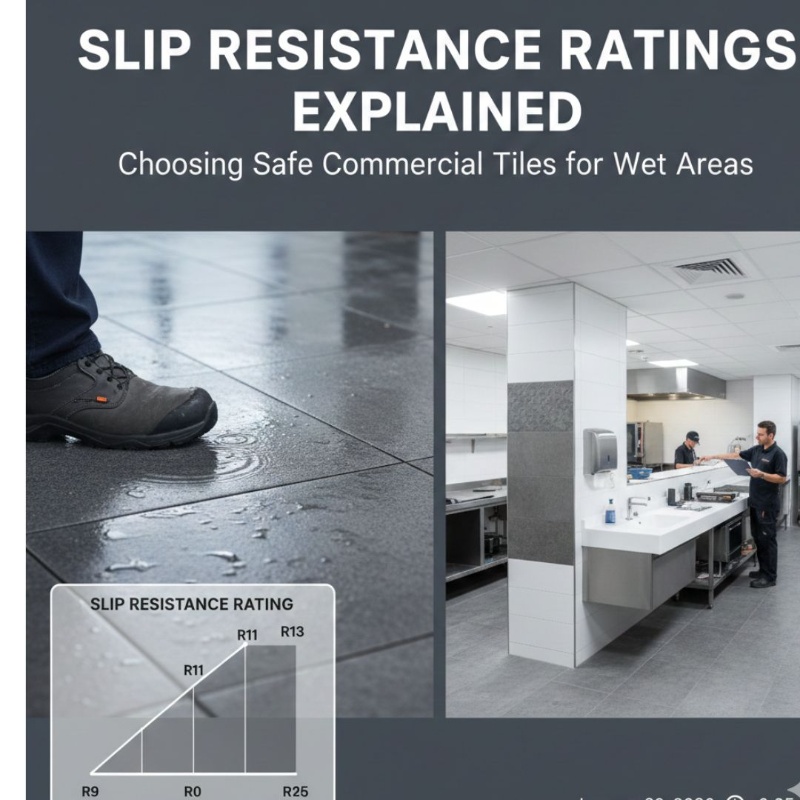
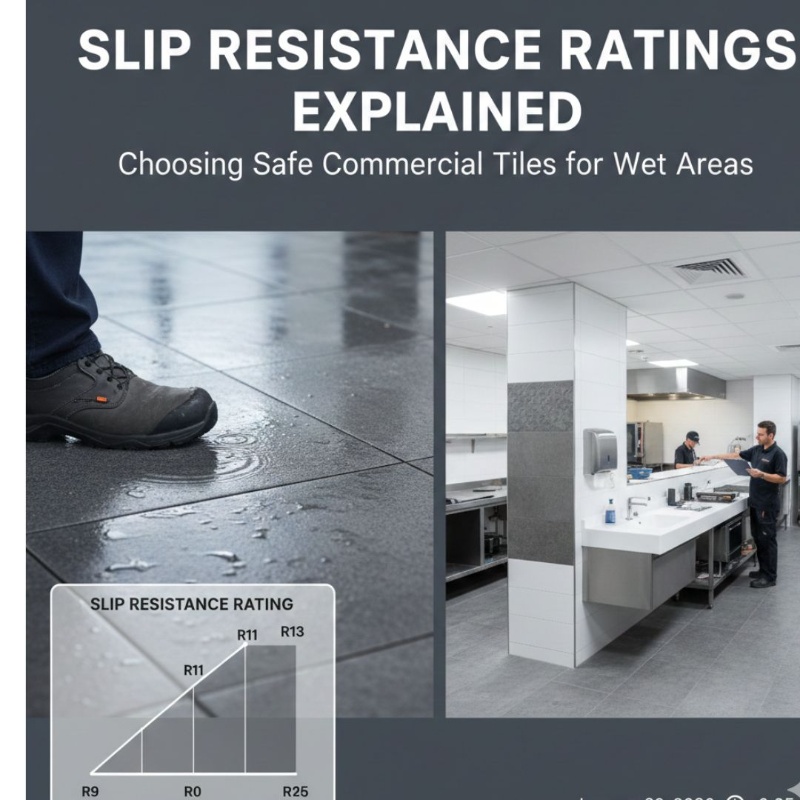
Slip resistance ratings are standardized ways to measure how safe a tile surface is when walked on. These ratings are based on international testing methods and are widely accepted in the UAE.
There are two main systems you need to understand.
R Rating Tiles (DIN 51130) - For Areas with Footwear
The R rating tiles system comes from the German DIN 51130 standard and applies to areas where people wear shoes. Tiles are tested on an oil-coated ramp to see how steep an incline a person can walk on without slipping. The higher the "R" number, the greater the grip.
R9 - Low Slip Resistance
R9 tiles offer basic grip and are suitable only for dry, low-risk areas. They are not recommended for wet commercial zones.
Typical use:
- dry corridors
- offices
- low-traffic indoor spaces
R10 - Moderate Slip Resistance
R10 is often considered the minimum acceptable level for wet indoor areas. It provides a better grip while still being comfortable to walk on.
Typical use:
- commercial bathrooms
- cafe kitchens
- staff wash areas
R11 - High Slip Resistance
R11 tiles are widely used in commercial wet environments where water exposure is frequent. They offer a strong grip without being overly abrasive.
Typical use:
- restaurant kitchens
- pool decks
- outdoor walkways
- laundry areas
R12 / R13 - Very High Slip Resistance
These tiles are designed for extreme conditions. While extremely safe, they can feel rough underfoot and are usually reserved for industrial zones.
Typical use:
- industrial kitchens
- car parks
- ramps with oil or grease exposure
Barefoot Slip Ratings (DIN 51097) For Pool & Spa Areas
For places where people walk barefoot, such as pools and spas, a different standard applies. The DIN 51097 test measures safety on wet surfaces without footwear.
Class A
Basic slip resistance for lightly wet areas. Suitable for changing rooms and areas that might get splashed but are not constantly wet.
Used in:
- Changing rooms
Class B
Higher grip for areas with regular water exposure. Places where people walk with wet, bare feet.
Used in:
- Shower zones
- Pool edges
Class C
Maximum barefoot slip resistance. The highest barefoot safety for submerged areas like pool stairs, ramps, and wet decks, where footing is critical.
Used in:
- Submerged steps
- Sloped pool entries
If you’re selecting wet area tiles for pools, spas, or wellness zones, barefoot ratings matter more than R ratings.
UAE Regulations and Compliance You Should Know
In the UAE, slip resistance standards are influenced by international systems but enforced locally.
Dubai Municipality Requirements
In Dubai, following the Dubai Municipality Building Code for safe flooring is a legal requirement, not just a suggestion. As a commercial property owner, you have a "duty of care" to protect everyone on your premises.
Using tiles with a poor slip resistance rating in wet areas is negligence. This can lead to:
- Severe legal liability
- Costly injury claims
- Soaring insurance costs
The Dubai Municipality Building Code mandates slip-resistant flooring in:
- public spaces
- commercial buildings
- ramps, stairs, and wet zones
Your best defense is clear documentation. Specifying and installing tiles with the correct, certified ratings proves due diligence and protects your business.
Table:
Testing Methods Used in the UAE
Commercial tiles are often evaluated using:
- Pendulum Test - Measures the coefficient of friction
- Oil-Wet Ramp Test - Used for R ratings
A COF (Coefficient of Friction) of 0.5 or above is generally considered safe for wet commercial areas.
Choosing the Right Tile: Top 5 Types for Wet Areas in the UAE
-
Textured Porcelain Tiles Dominate Commercial Wet Areas
The undisputed champion. Modern porcelain can be engineered with incredibly durable, high-grip surfaces that mimic natural stone, wood, or concrete. Most commercial projects in the UAE rely on porcelain tiles, and for below reason.
High-quality porcelain tiles comply with ISO 13006 and EN 14411, meaning they have:
- Water absorption ≤ 0.5%
- High density
- Excellent durability
When combined with textured or anti-slip finishes, porcelain becomes ideal safety flooring for wet and humid environments.
-
Anti-Slip Treated Tiles:
These tiles undergo a specialized treatment that creates a micro-rough surface. The feel is pleasant underfoot, not abrasive, yet it provides excellent anti-slip, perfect for luxury hotels and spas where safety and comfort are equally important.
-
Natural Stone & Slate:
Offers inherent, natural traction. Honed or flamed finishes on granite or limestone increase grip. However, they typically require more sealing and maintenance than porcelain.
-
Unglazed Ceramic & Quarry Tiles:
Dense, through-body tiles with a naturally gritty surface. Highly durable and slip-resistant, often seen in traditional or industrial-style applications.
-
Tactile Paving Tiles:
A non-negotiable for public access routes. These feature standardized, detectable surfaces (blister or bar patterns) to guide the visually impaired. In the UAE, they must also be UV-stable, weatherproof, and, of course, highly slip-resistant.
How to Choose the Right Slip Rating
|
Area Type |
Recommended Rating |
|
Commercial bathrooms |
R10 minimum |
|
Restaurant kitchens |
R11 |
|
Outdoor walkways |
R11/ R12 |
|
Pool decks |
R11 or Class B |
|
Submerged steps |
Class C |
Key Takeaways
- Slip resistance is critical in commercial wet areas
- R rating tiles apply to footwear zones. A/B/C ratings apply to barefoot areas
- R11 is the most common choice for wet commercial spaces
- UAE regulations rely on DIN, ISO, and EN standards
- Choosing the wrong rating carries legal and financial liability in commercial spaces.
- Correct tile selection reduces accidents and compliance risks
Why Slip Resistance Matters More in Commercial Wet Areas
Commercial environments are very different from homes. Foot traffic is heavier, cleaning cycles are frequent, and surfaces are exposed to water, oils, and humidity throughout the day. In places like malls, hotels, hospitals, gyms, and restaurants, flooring must perform consistently, not just look good.
Wet area tiles that lack proper slip resistance can become dangerous within minutes of water exposure. That’s why safety flooring is a requirement tied to user safety and regulatory compliance.
In the UAE, this becomes even more important due to:
- frequent wet cleaning methods
- outdoor-indoor transitions
- pool and spa zones
- high pedestrian volumes
What Are Slip Resistance Ratings? Decoding the Alphabets
Slip resistance ratings are standardized ways to measure how safe a tile surface is when walked on. These ratings are based on international testing methods and are widely accepted in the UAE.
There are two main systems you need to understand.
R Rating Tiles (DIN 51130) - For Areas with Footwear
The R rating tiles system comes from the German DIN 51130 standard and applies to areas where people wear shoes. Tiles are tested on an oil-coated ramp to see how steep an incline a person can walk on without slipping. The higher the "R" number, the greater the grip.
R9 - Low Slip Resistance
R9 tiles offer basic grip and are suitable only for dry, low-risk areas. They are not recommended for wet commercial zones.
Typical use:
- dry corridors
- offices
- low-traffic indoor spaces
R10 - Moderate Slip Resistance
R10 is often considered the minimum acceptable level for wet indoor areas. It provides a better grip while still being comfortable to walk on.
Typical use:
- commercial bathrooms
- cafe kitchens
- staff wash areas
R11 - High Slip Resistance
R11 tiles are widely used in commercial wet environments where water exposure is frequent. They offer a strong grip without being overly abrasive.
Typical use:
- restaurant kitchens
- pool decks
- outdoor walkways
- laundry areas
R12 / R13 - Very High Slip Resistance
These tiles are designed for extreme conditions. While extremely safe, they can feel rough underfoot and are usually reserved for industrial zones.
Typical use:
- industrial kitchens
- car parks
- ramps with oil or grease exposure
Barefoot Slip Ratings (DIN 51097) For Pool & Spa Areas
For places where people walk barefoot, such as pools and spas, a different standard applies. The DIN 51097 test measures safety on wet surfaces without footwear.
Class A
Basic slip resistance for lightly wet areas. Suitable for changing rooms and areas that might get splashed but are not constantly wet.
Used in:
- Changing rooms
Class B
Higher grip for areas with regular water exposure. Places where people walk with wet, bare feet.
Used in:
- Shower zones
- Pool edges
Class C
Maximum barefoot slip resistance. The highest barefoot safety for submerged areas like pool stairs, ramps, and wet decks, where footing is critical.
Used in:
<