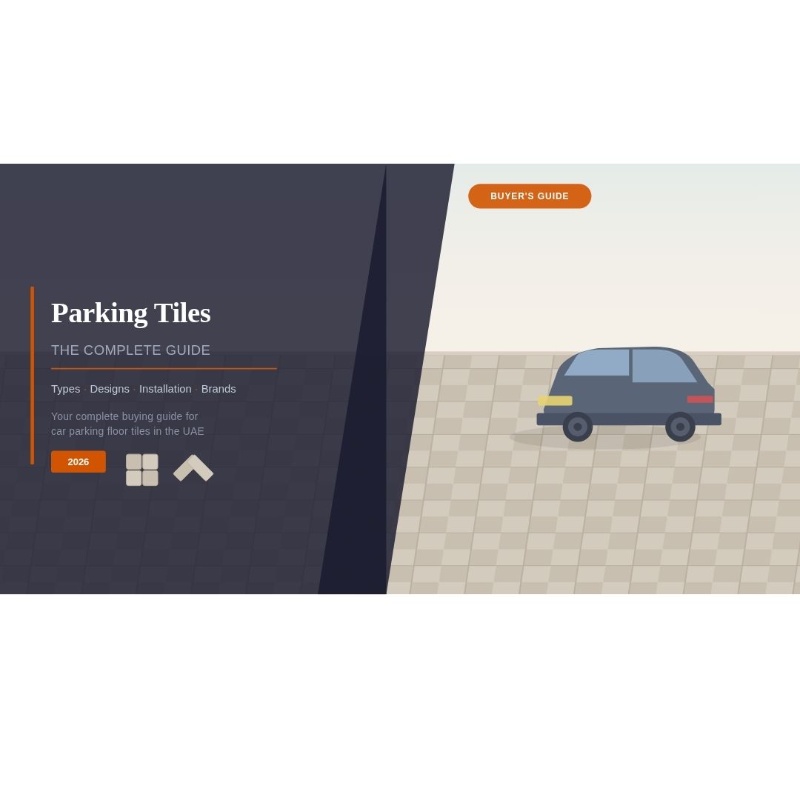






Parking Tiles: The Complete Guide to Types, Designs, Prices & How to Pick the Right One
Everything you need to know before buying car parking tiles — from material types and design patterns to installation and the brands that actually deliver in the UAE.
By Suhail Ahmed Gour Updated April 2026 · 12 min read
- What Are Parking Tiles?
- Why Do You Even Need Parking Tiles?
- Types of Parking Tiles (With Pros & Cons)
- Popular Parking Tile Designs & Patterns
- How to Choose the Right Car Parking Tiles
- Why Climate Matters: Picking Tiles for UAE Heat
- Top Parking Tile Brands Available in the UAE
- Installation Tips That Most People Skip
- How to Maintain Your Parking Tiles
- 5 Mistakes to Avoid When Buying Parking Tiles
- FAQs About Parking Tiles
Let me be honest — most people don't think twice about their parking area flooring. They leave it as bare concrete or asphalt and forget about it. Then a couple of harsh summers later, it's cracked, stained with oil, and looks like it's been through a sandstorm.
That's exactly where parking tiles come in. They're not regular tiles. They're built thicker, tougher, and specifically engineered to handle the weight of vehicles, chemical spills, extreme heat, and constant traffic — all while looking clean and put-together.
I've put together this guide because I've seen too many homeowners and contractors pick the wrong tiles, waste money, and end up replacing everything within two years. Whether you're tiling a villa driveway in Dubai, a residential parking bay in Abu Dhabi, or a commercial lot in Sharjah, this guide covers everything you need to know.
Let's get into it.
What Are Parking Tiles, Really?
Parking tiles are heavy-duty flooring tiles specifically designed for areas that take a beating — driveways, garage floors, open-air parking lots, basements, and covered car parks. Unlike your regular kitchen or bathroom tiles, these are built to handle vehicle weight, tyre friction, oil drips, and extreme weather conditions without cracking or fading.
What makes them different from standard floor tiles? A few things:
First, they're significantly thicker — most quality parking tiles range from 8mm to 20mm, compared to 6–8mm for regular wall or floor tiles. Second, they have textured, anti-skid surfaces that prevent vehicles and pedestrians from slipping. Third, they're made with materials that resist chemical stains from oil, grease, and petrol — something you'll never find in a living room tile.
You'll hear them called car parking tiles, car parking floor tiles, outdoor parking tiles, or simply heavy-duty floor tiles. They all refer to the same category of products, just marketed differently depending on the supplier.
Why Do You Even Need Parking Tiles?
I get this question a lot. "Why can't I just use regular concrete?" You can. But here's what happens with bare concrete over time — especially in the UAE's climate. It cracks under extreme thermal expansion, absorbs oil stains that never come off, becomes dangerously dusty in dry conditions, and starts looking terrible within a year or two.
Parking tiles solve all of these problems, and here's what you actually get:
Serious durability: Good car parking tiles can handle loads well beyond what a standard SUV weighs. We're talking about breaking strength above 1300 Newtons and flexural strength over 35 N/mm². That's engineered to last decades, not years.
Safety that matters: Textured surfaces with anti-skid ratings of R10 or R11 mean your family members aren't slipping — whether it's from a water hose washdown or condensation during humid mornings. This alone is worth the investment.
Kerb appeal: A well-tiled driveway or parking area completely transforms how your property looks from the outside. It's one of the first things visitors notice. And in the UAE's competitive real estate market, it adds real resale value.
Low maintenance costs: Sweep it, mop it once a week with mild detergent, and you're done. Compare that to the cost of repairing cracked concrete every couple of years in 50°C summers.
Ready to upgrade your parking space?
? Buy Parking Tiles NowPremium quality tiles. Delivery available across the UAE.
Types of Parking Tiles (With Pros & Cons)
This is where most people get confused. There are several types of car parking floor tiles available in the market, and each one serves a different purpose. Let me break them down so you know exactly what works for your specific situation.
1. Full-Body Vitrified Tiles (FBVT)
These are the gold standard of parking tiles. Vitrified tiles are made by firing clay at extremely high temperatures, which partially converts the material into glass. The result? A tile that's incredibly dense, hard, and has almost zero water absorption.
The best part about FBVTs is that the colour and texture run through the entire body of the tile. So even if the surface gets scratched by tyres or heavy objects, the damage isn't visible because the inside looks the same as the outside. Many premium brands offer nano-polished FBVT ranges that are practically stain-proof.
Best for: Outdoor parking, commercial lots, high-traffic areas, villa driveways.
2. Ceramic Parking Tiles
Ceramic tiles are the budget-friendly option. They come in a huge range of colours and designs, and they're perfectly fine for light to moderate use. Think residential garages where you park one or two cars, or covered parking areas in apartment buildings.
The catch? They're not as strong as vitrified tiles. Heavy loads over time can crack them, and they absorb more water, which can be a problem in areas that get frequently washed down.
Best for: Residential garages, light-use parking, covered areas.
3. Porcelain Parking Tiles
Porcelain is the premium player here. These tiles offer top-level durability with minimal water absorption, excellent chemical resistance, and they can mimic natural materials like stone, marble, or wood — which means your parking tile design doesn't have to look industrial.
The downside? They cost more than vitrified or ceramic options. But if you're building a premium villa, a luxury residential compound, or a high-end commercial space, the investment pays off in longevity and aesthetics.
Best for: Premium residential, hospitality, upscale commercial parking.
4. Concrete Parking Tiles
Concrete tiles are the workhorse of commercial parking. They're heavy, extremely durable, and can handle everything from delivery trucks to forklifts. They're also the most customisable in terms of shapes — you can get interlocking patterns, hexagonal shapes, and various thicknesses.
Best for: Warehouses, industrial zones, public parking lots, heavy-vehicle areas.
5. Rubber Parking Tiles
A relatively newer option, rubber tiles are great for indoor garages and basement parking. They absorb impact, reduce noise, and offer excellent slip resistance. Many are made from recycled rubber, so they're an eco-friendly choice too — something that aligns well with the UAE's growing sustainability focus.
Best for: Indoor garages, basement parking, eco-conscious projects.
Quick Comparison: Parking Tile Types
| Tile Type | Durability | Water Resistance | Heat Resistance | Best Use |
|---|---|---|---|---|
| Full-Body Vitrified | ????? | Excellent | Excellent | Outdoor, commercial |
| Ceramic | ??? | Moderate | Good | Residential, light use |
| Porcelain | ????? | Excellent | Excellent | Premium spaces |
| Concrete | ????? | Good | Good | Industrial, heavy loads |
| Rubber | ???? | Good | Moderate | Indoor garages, basements |
Popular Parking Tile Designs & Patterns
Gone are the days when parking tile design meant plain grey squares on the ground. Today, the options are genuinely impressive, and a well-chosen design can make your parking area look like an extension of your property's architecture rather than an afterthought.
Here are the most popular patterns you'll find:
Chequered / Checkered Pattern
The classic two-tone checkerboard look. It's timeless, works in both residential and commercial settings, and creates clear visual boundaries. Most commonly seen in grey-white or beige-brown combinations that suit the UAE's sandy landscape.
Herringbone / Zigzag Pattern
Tiles arranged in a V-shape or zigzag pattern. This one looks sophisticated and is excellent for driveways because the interlocking arrangement distributes vehicle weight more evenly across the surface.
Geometric & Modular Patterns
A mix of squares, rectangles, and sometimes hexagons arranged in repeating geometric patterns. These work beautifully in larger commercial spaces and villa compounds where you want the floor to look dynamic without being distracting.
Natural Stone Look
Thanks to digital printing technology, car parking floor tiles can now replicate the exact look of natural granite, sandstone, or travertine. You get the visual elegance of natural stone with the durability and consistency of manufactured tiles — perfect for matching the stone cladding common on UAE villa exteriors.
Wood-Look Parking Tiles
Yes, parking tiles that look like wooden planks are a real thing now. These are purely digital prints on vitrified tiles, so you get the warmth of wood without any of the maintenance headaches. They're increasingly popular in residential driveways and covered porch areas.
How to Choose the Right Car Parking Tiles
Picking the right parking tiles isn't just about what looks good on the showroom floor. There are some practical factors that'll determine whether your tiles last 20 years or start cracking after 20 months.
Figure out the traffic load first. Are you parking a regular sedan? A Land Cruiser? Or commercial vehicles? For standard cars, 10–12mm vitrified or porcelain tiles do the job. For heavy vehicles like trucks or large SUVs, go with 15mm+ tiles or concrete options. Don't guess on this — it's the single most important factor.
Check the slip resistance rating. Look for R10 or R11 rated tiles minimum. Anything below that, and you're risking safety — especially after a car wash or during the occasional UAE rainfall. Anti-skid coatings and grooved surfaces add extra safety on slopes and ramps.
Think about heat resistance. This is huge for the UAE. Outdoor parking tiles are exposed to direct sunlight for most of the year, with surface temperatures easily reaching 60–70°C in summer. You need tiles with UV-resistant coatings that won't fade or develop heat cracks over time.
Check water absorption rates. Even though the UAE doesn't get much rain, parking areas get washed down regularly. Tiles with water absorption below 0.5% won't absorb moisture, chemicals, or stains — keeping them looking clean for years.
Don't ignore the base preparation. Even the best car parking tiles will fail if they're laid on an uneven or poorly prepared substrate. Make sure there's a proper concrete base with adequate drainage slope before any tile goes down.
Why Climate Matters: Picking Tiles for UAE Heat
This section is specifically for those of us living in the Gulf. The UAE's climate is brutal on outdoor surfaces — and parking tiles are no exception. Here's what you need to keep in mind that people in cooler climates don't have to worry about:
Thermal expansion is real. When temperatures swing from 20°C at night to 50°C+ by afternoon, tiles expand and contract constantly. Low-quality tiles crack under this stress within the first summer. Always choose tiles with low thermal expansion coefficients — vitrified and porcelain tiles handle this best.
UV damage fades colours. Direct sunlight for 10+ hours a day, 300+ days a year, will fade cheap tiles until they're unrecognisable. Look for tiles with UV-protective coatings or choose through-body vitrified tiles where the colour doesn't sit on the surface — it runs through the entire tile.
Surface temperature matters. Dark-coloured tiles in an uncovered UAE parking space can get hot enough to damage shoe soles. If your parking area is exposed, lighter shades and heat-reflective tiles make a noticeable difference in surface temperature.
Sand and dust abrasion. Fine desert sand acts like sandpaper under tyres. It slowly wears down tile surfaces over time. High-hardness tiles with a Mohs rating of 6 or above resist this abrasion far better than softer ceramic options.
Humidity in coastal areas. If you're in Abu Dhabi, Dubai Marina, or anywhere along the coast, humidity can cause condensation on tile surfaces in the early morning. Anti-skid textures aren't optional here — they're a safety requirement.
Find the perfect parking tiles for your UAE project
? Shop Parking TilesCompare types, sizes & finishes. Delivery across the Emirates.
Top Parking Tile Brands Available in the UAE
Not all tiles are created equal, and brand matters more than most people think. Here are the brands that are widely available in the UAE and consistently deliver quality parking tiles:
RAK Ceramics: Homegrown UAE brand and one of the world's largest tile manufacturers. Their outdoor and parking tile range is specifically engineered for Gulf climate conditions. Wide availability across all Emirates and excellent after-sales support.
Porcelanosa: Spanish premium brand with a strong presence in the UAE market. Their porcelain parking tile range offers exceptional aesthetics paired with serious durability. Popular choice for luxury villa driveways and high-end commercial projects.
Kajaria Ceramics: One of the largest tile manufacturers globally, with a solid distribution network across the UAE. Their anti-skid outdoor range is well-regarded for both residential driveways and commercial applications.
Johnson Tiles: Known for their full-body vitrified tile range with nano-polished surfaces. Their FBVT line is practically stain-proof and handles heavy traffic exceptionally well. Widely available through UAE tile dealers.
Simpolo Tiles: Premium brand offering full-body tiles with R9 and R10 anti-slip ratings. If aesthetics are as important to you as durability, Simpolo is worth the extra spend.
Emaar Tiles / Local Distributors: Several local UAE distributors carry curated collections from multiple international manufacturers. Visiting tile showrooms in areas like Al Quoz (Dubai), Mussafah (Abu Dhabi), or the RAK industrial area gives you hands-on access to compare options.
Installation Tips That Most People Skip
Here's the thing — you can buy the most expensive parking tiles on the market, and they'll still fail if the installation isn't done properly. I've seen it happen too many times in the UAE. These tips will save you a lot of headaches:
Get the base right. The concrete substrate needs to be properly levelled, compacted, and cured before any tiling begins. An uneven base means uneven stress distribution, which means cracks. No shortcuts here — especially important on sandy UAE soil that can shift if not properly compacted.
Slope for drainage. Your parking area should have a slight slope (roughly 1–2%) directing water towards a drain. Standing water under tiles leads to loosening and eventually, tile pop-outs. This is the number one cause of parking tile failure that nobody talks about.
Use the right adhesive. Cement-based tile adhesives designed for heavy-duty outdoor applications — not regular tile gum. In the UAE's heat, cheap adhesive dries out and loses bonding strength within months. Invest in heat-resistant, flexible adhesives that can handle thermal expansion.
Expansion joints are non-negotiable. This is a UAE-specific must. With temperature swings of 30°C+ in a single day, tiles need room to expand and contract. Install expansion joints every 3–4 metres and along walls. Skip this, and you'll have tiles popping up like popcorn during your first summer.
Leave proper joint gaps. Use spacers for consistent gaps between tiles, then seal the joints to prevent sand ingress and water penetration. Epoxy grout is better than cement grout for parking areas because it's more resistant to oil, chemicals, and the UAE's extreme temperatures.
Wait before driving on them. Let the tiles cure for at least 48–72 hours before allowing any vehicle traffic. In cooler months, curing takes longer. I know it's tempting to park your car sooner, but patience here prevents expensive repairs later.
Hire a professional. Seriously. Parking tile installation is not a weekend DIY project. The precision required for levelling, adhesive application, and drainage setup is worth paying a skilled installer for. Ask for references and check their previous outdoor tiling work before hiring.
How to Maintain Your Parking Tiles
The good news? Car parking floor tiles are genuinely low-maintenance compared to raw concrete or asphalt. But "low maintenance" doesn't mean "zero maintenance." Here's a simple routine that'll keep your tiles looking fresh for years — even in the UAE's harsh conditions:
Weekly: Sweep or blow off sand and dust. Desert sand is the silent killer of parking tiles — those tiny particles act like sandpaper under tyres and slowly wear down even the toughest surfaces. A quick sweep or leaf blower session takes five minutes.
Bi-weekly: Mop with warm water and a mild detergent. Nothing fancy — a regular floor cleaning solution works fine. Avoid acidic cleaners or bleach, which can damage the tile surface and strip away anti-skid coatings.
As needed: Clean oil or grease stains immediately. In the UAE heat, oil bakes into tile surfaces fast. The longer it sits, the harder it is to remove. A specialised tile and grout cleaner works best for stubborn spots. For tyre marks, a soft-bristled brush with soapy water usually does the trick.
Every 6 months: Inspect the grout lines for any cracking or crumbling — heat cycles accelerate grout deterioration in the UAE. Re-seal joints if necessary. Check for any loose tiles and get them re-fixed before the problem spreads to neighbouring tiles.
Annually: Consider a professional deep clean, especially for commercial parking areas. Professional tile cleaning services in the UAE use industrial-grade equipment that removes embedded grime without damaging the tile surface.
5 Mistakes to Avoid When Buying Parking Tiles
I've seen each of these mistakes cost people real money. Don't be that person:
1. Choosing tiles based on looks alone. A glossy marble-look tile might look stunning in the air-conditioned showroom, but it turns into a blinding, slippery hazard under UAE sun. Function first, aesthetics second — especially for outdoor parking tiles.
2. Ignoring the weight rating. Every tile has a specified load-bearing capacity. If you're parking a Land Cruiser or Patrol on tiles rated for foot traffic, you're going to have cracked tiles within months. Always check the breaking strength specification.
3. Skipping base preparation. This is the biggest false economy in tile installation. Saving money on proper substrate work and then spending triple on re-tiling a year later makes no sense. In the UAE, sandy subsoil makes proper compaction even more critical.
4. Forgetting about expansion joints. This is probably the most common UAE-specific mistake. Tiles installed without expansion joints in summer will crack and pop up as soon as temperatures change. It's basic physics, and no tile brand is immune to it.
5. Not buying extra tiles. Always buy 8–10% extra tiles beyond your calculated requirement. You'll need them for cuts, breakage during installation, and future replacements. Finding the exact same batch later is nearly impossible — colour variations between production batches are real.
Frequently Asked Questions About Parking Tiles
Q: Which type of parking tile is best for outdoor use in the UAE?
Full-body vitrified tiles and porcelain tiles work best for outdoor parking in the UAE. They handle extreme heat, UV exposure, heavy vehicle loads, and resist water absorption, stains, and surface scratches. For most residential driveways, FBVTs offer the best balance of performance and value.
Q: What is the ideal thickness for car parking tiles?
For residential parking with standard cars, 10–12mm thickness is sufficient. Commercial or heavy-traffic parking areas should go with 15mm or thicker tiles to handle the additional load. The substrate quality matters just as much as tile thickness, so don't skimp on base preparation.
Q: Are parking tiles slip-resistant?
Quality car parking tiles come with anti-skid surfaces featuring textured finishes. Always look for tiles rated R10 or R11 on the slip resistance scale. Matte and textured finishes provide much better grip than glossy tiles, especially after washdowns or during the UAE's occasional rain.
Q: Can parking tiles handle extreme heat in the UAE?
Absolutely. Vitrified and porcelain parking tiles are engineered to withstand extreme temperatures without cracking, fading, or warping. The key is choosing tiles with UV-resistant coatings, low thermal expansion, and — for uncovered areas — lighter colours that reflect sunlight rather than absorb it.
Q: Should I install parking tiles myself or hire a professional?
Professional installation is strongly recommended. Parking areas need precise levelling, proper drainage slopes, heavy-duty adhesive application, expansion joints, and exact joint spacing — mistakes in any of these areas lead to premature tile failure. The cost of professional installation is far less than the cost of re-doing a bad job.
Q: What size parking tiles should I use?
For residential driveways and smaller spaces, 300×300mm or 400×400mm tiles are popular choices. Larger commercial parking areas benefit from 600×600mm tiles because they cover more surface area faster and have fewer grout lines to maintain. The size choice also affects the visual proportions — bigger tiles make a space feel larger and more modern.
Q: How long do parking tiles last?
With proper installation and basic maintenance, good quality vitrified or porcelain parking tiles can easily last 15–25 years — even in UAE conditions. Concrete tiles can last even longer. The key factors that determine lifespan are installation quality, expansion joint placement, traffic load, and regular maintenance.
Q: Where can I buy parking tiles in the UAE?
Major tile showrooms are concentrated in Al Quoz and?"Umm Ramool (Dubai), Mussafah (Abu Dhabi), and the RAK industrial zone. Brands like RAK Ceramics, Porcelanosa, Kajaria, and Johnson Tiles have dedicated showrooms and authorised dealers across all Emirates. Many also offer online ordering with delivery.
Don't settle for cracked concrete. Upgrade your parking space today.
? Buy Parking Tiles NowBrowse our collection of premium parking tiles. Delivered across the UAE.
Final Thoughts
Look, picking the right parking tiles isn't rocket science, but it does require some thought — especially here in the UAE where the climate adds an extra layer of challenge. The wrong choice costs you money twice — once when you buy, and again when you replace. The right choice gives you a parking area that looks professional, handles any vehicle you throw at it, and lasts for decades with minimal fuss.
Start with understanding your traffic load, pick the right material type from the comparison table above, choose a design that complements your property, and — please — invest in proper professional installation with expansion joints. That's really all there is to it.
If you found this guide helpful, share it with someone who's building or renovating. And if you've got questions I haven't covered, drop them in the comments below — I'll get back to you personally.