



Understanding Vitrified Tiles: Types, Benefits, and Why They’re a Smart Choice for Modern Homes
Flooring can have a big impact on the feel of your home or commercial space. You want something that looks good, can withstand the daily weight and activities, and can remain timeless when design aesthetics change. There are many different types of flooring materials to select from today. One material that growing in popularity with homeowners, architects and designers alike is vitrified tiles.
What is it about vitrified tiles that has made it a standard choice among so many? In this guide we will explain what vitrified tiles are, how the vitrified tile manufacturing process contributes to the uniqueness of the product, and we will explain the differences in types of vitrified tile such as full body vs double charged.
Key Takeaways
- Vitrified tiles are durable, low-porosity, and stylish flooring solutions created through vitrification
- Full body vitrified tiles offer unmatched durability and uniform design, ideal for high-traffic spaces
- Double charged vitrified tiles balance strength with affordability, perfect for homes and offices
- The vitrified tile manufacturing process makes them superior to many other flooring options
- Volark Tiles combines innovative designs, sustainability, and quality to deliver trusted tile solutions
Glazed Vitrified Tiles (GVT)
Glazed vitrified tiles feature a layer of liquid glaze applied on the tile surface before firing. This glaze layer allows manufacturers to digitally print virtually any pattern, texture, or colour onto the tile — from realistic wood grains to intricate marble veining.
Because the design sits on a glazed surface layer rather than running through the body, GVT tiles offer the widest variety of aesthetics at a competitive price point. They work particularly well for:
•Wall cladding and feature walls in living rooms and bedrooms
•Kitchen and bathroom backsplashes where visual variety matters
•Residential flooring in areas with moderate foot traffic
One limitation to note: since the design is surface-level, deep chips may reveal the base clay colour underneath. For high-traffic commercial areas, full body or double charged vitrified tiles remain the better choice.
Polished Glazed Vitrified Tiles (PGVT)
PGVT tiles are essentially GVT tiles that undergo an additional mechanical polishing stage after glazing. This extra step gives them a mirror-like, high-gloss finish that reflects light beautifully across a room.
The polished surface makes spaces appear brighter and larger — a practical advantage in apartments and compact UAE homes. PGVT tiles are
•Living rooms and formal sitting areas (majlis) where a luxurious sheen is desired
•Hotel lobbies and retail showrooms looking for a premium marble-like appearance
•Bedroom flooring where the glossy surface pairs well with soft lighting
Soluble Salt Vitrified Tiles
Soluble salt vitrified tiles are the most budget-friendly option in the vitrified family. The design is printed using soluble salt solution on the tile surface, which absorbs into the top layer during firing.
While they lack the design depth and durability of GVT or double charged tiles, they serve well in low-traffic residential spaces such as guest bedrooms, utility rooms, and storerooms. If budget is a primary concern and the area does not see heavy daily use, soluble salt tiles are a practical starting point.
What are vitrified tiles?
The nomenclature of "vitrified" stems from the process of "vitrification". The manufacturing process exposes silica, clay, feldspar, and quartz to very high temperatures causing a fusion of silica and clay into a glass-like material that makes a tile stronger, denser, and less porous than ceramic materials.
In essence, vitrified tile is a type of ceramic tile that is virtually of stregth, low porosity, and overall stunning. Vitrified tiles also have the ability to combine useful materials along with the aesthetics which modern homeowners desire and this is why they are so widely used.
Vitrified Tiles in the UAE Market
Vitrified tiles have become one of the most commonly specified flooring materials across residential and commercial projects in the UAE. There are several reasons they suit the Gulf market so well.
The UAE’s hot and humid climate — especially during the summer months when temperatures regularly exceed 45°C — demands flooring that stays cool underfoot and does not warp or expand. Vitrified tiles, with their near-zero water absorption rate (typically below 0.5%), handle these conditions without any structural changes over time.
In cities like Dubai and Sharjah, where both luxury villas and modern apartments are being built at pace, vitrified tiles have found a strong following because they offer the polished marble look many homeowners want, without the sealing, re-polishing, and stain anxiety that comes with natural stone.
Popular finishes across UAE showrooms right now include:
•Large-format marble-effect PGVT tiles (800x1600mm and 1200x2400mm) for open-plan living rooms
•Full body vitrified tiles for building lobbies, hotel corridors, and retail spaces
•Wood-look GVT tiles for bedrooms and family areas where a warmer feel is preferred
•Matte-finish vitrified tiles for bathrooms and kitchens where slip resistance matters
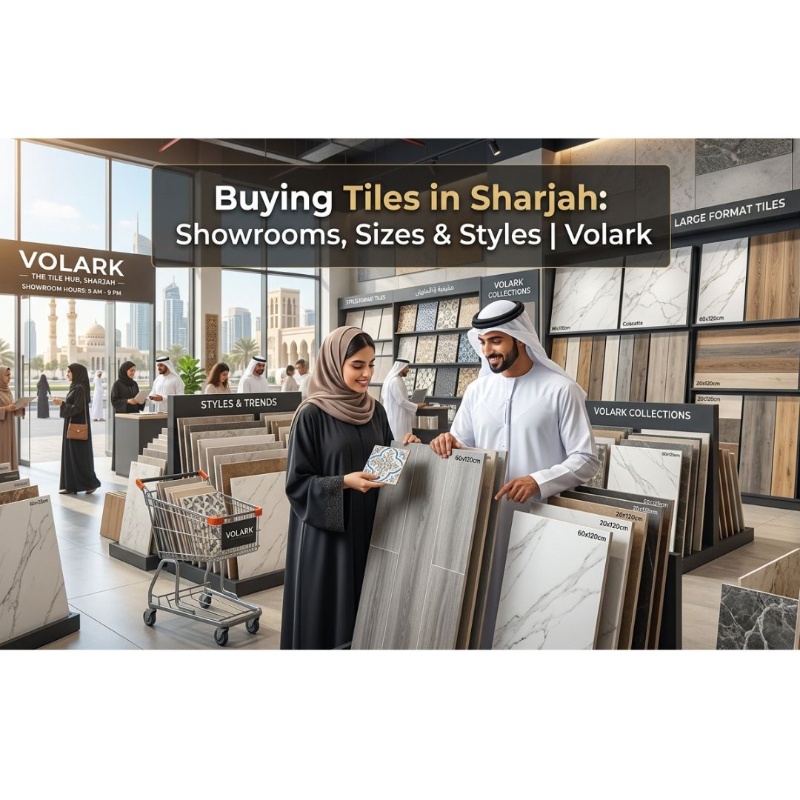
At Volark Tiles, our Sharjah showroom carries a full range of vitrified tile types in finishes suited for the UAE market — from full body and double charged to large-format GVT and PGVT. We deliver across all seven Emirates including Dubai, Abu Dhabi, Ajman, and Ras Al Khaimah.
What Do Vitrified Tiles Cost in the UAE?
Pricing depends on the tile type, size, finish, and brand origin. Here is a general breakdown of vitrified tile costs in the UAE market as of 2026:
| Vitrified Tile Type | Approx. Price Range (AED/sqm) | Best For |
| Soluble Salt | AED 35 – 60 | Guest rooms, utility areas, budget projects |
| Glazed Vitrified (GVT) | AED 55 – 100 | Living rooms, bedrooms, kitchens |
| Double Charged | AED 65 – 120 | Offices, hallways, high-traffic residential |
| Polished Glazed (PGVT) | AED 80 – 150 | Luxury living rooms, hotel lobbies, retail |
| Full Body Vitrified | AED 90 – 180 | Malls, airports, outdoor, commercial |
Note: Prices vary based on tile size (larger formats cost more per sqm), finish quality, and brand origin (Indian vs European). Installation labour in the UAE typically adds AED 25–65 per sqm depending on complexity and location. Sharjah and Ajman tend to offer slightly lower labour rates compared to Dubai and Abu Dhabi.
For current pricing on vitrified tiles at Volark, visit our Sharjah showroom or request a quote through our contact page.
Features that make Vitrified Tiles Unique
- Low Porosity: Low water absorption means you can easily manage stains and damp.
- Extremely Durable: Very tough and durable, suits home and commercial projects alike.
- Stain Resistant & Scratch Resistant: Easy to maintain and clean.
The Vitrified Tile Manufacturing Process
The manufacturing process is what sets vitrified tiles apart from ordinary ceramic tiles. During production:
1. Raw materials like silica, clay, feldspar, and quartz are mixed together
2. The mixture is fired at temperatures above 1200°C
3. A glass-like layer is formed, making the tile strong and almost non-porous
This process results in tiles that outperform many natural stones in terms of strength and longevity.
What are Full Body Vitrified Tiles?
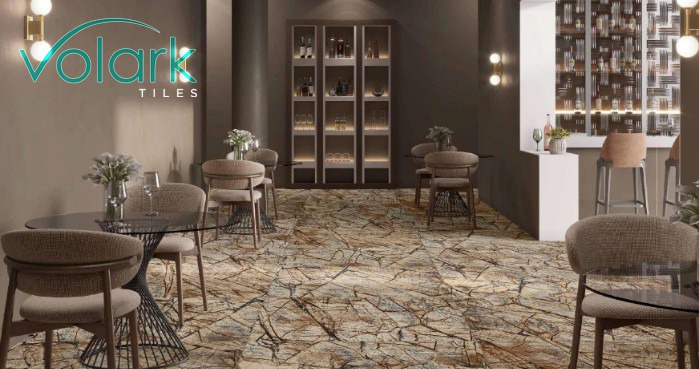
Full-body vitrified tiles are a premium category where the design and color run through the entire thickness of the tile, not just the surface.
Benefits of Full Body Vitrified Tiles
- Uniform Look: chips, scratches will be less visible as the design runs the whole way through the product properties
- Heavy Duty Strength. Properly installed, full body vitrified tile will stand up to heavy footfall traffic. This type of tile is well suited for places like malls, airports and outdoor spaces.
- Premium Aesthetics. Full body tiles have a uniform color and finish that gives it that high-end luxury feel.
- Long Lasting Durability. A full body vitrified tile is equipped to withstand exposure to the wear and tear found in high-traffic environments and spaces.
These tiles are perfect for commercial and industrial spaces where strength cannot be compromised.
Best Vitrified Tiles for Villa Flooring in the UAE
Villas across Dubai, Sharjah, and Abu Dhabi often feature expansive open-plan layouts with connected living, dining, and kitchen areas. This layout demands flooring that can run seamlessly across large spaces without visible breaks or mismatched tones.
For villa projects, here is what works well:
•Entrance halls and lobbies: Full body vitrified tiles (600x1200mm or larger) in neutral stone-effect finishes. These handle trolley wheels, shoe traffic, and sand tracking without showing wear.
•Living and dining areas: Large-format PGVT tiles in marble-look finishes (800x1600mm or 1200x2400mm). Fewer grout lines create a seamless, high-end appearance.
•Bedrooms: Wood-look GVT tiles (200x1200mm plank format) offer the warmth of timber flooring without the expansion and termite risks common in Gulf climates.
•Outdoor terraces and pool surrounds: Full body vitrified tiles with anti-slip (R11 rating) finishes. These are thick enough (10–12mm) to handle direct sunlight exposure and temperature swings.
Browse our floor tiles collection or visit our Sharjah showroom to see villa-ready vitrified tile samples in person.
What are Double Charged Vitrified Tiles?
Another widely used type is the double charged vitrified tile. They are produced by pressing two layers of pigments on the surface during manufacturing, creating a thick top layer (about 3–4 mm).
Things to Keep in Mind Before Choosing Vitrified Tiles
Vitrified tiles are an excellent all-round choice, but it helps to be aware of a few practical considerations:
•Slippery when wet: Polished and glossy vitrified tiles can become slippery in wet conditions. For bathrooms, kitchens, and outdoor areas, opt for matte or anti-slip finishes with an R10 or R11 slip resistance rating.
•Difficult to repair: If a vitrified tile cracks or chips, it cannot be patched — the entire tile needs to be replaced. Always order 5–10% extra tiles at the time of purchase to keep spares for the future. Matching the exact shade years later is often not possible.
•Cold underfoot: In air-conditioned UAE interiors, vitrified tiles can feel cold, especially in bedrooms. Pairing them with area rugs or considering wood-look GVT tiles can help add warmth.
•Professional installation required: The precision of vitrified tile joints (especially for large-format tiles) demands experienced tilers. Improper installation can lead to lippage, uneven surfaces, and voided warranties.
Benefits of Double Charged Vitrified Tiles
1. Extra Durability: Stronger top layer makes them highly resistant to scratches
2. Low Maintenance: Easy to clean, with resistance against stains and spills
3. Affordable Luxury: Mimics marble or stone at a fraction of the cost
4. Wide Variety: Available in different colors and patterns for versatile applications
These tiles are a popular choice for living rooms, bedrooms, and offices where elegance and strength are equally important.
Vitrified Tiles vs Ceramic Tiles
Many homeowners often ask about vitrified tile vs ceramic tile comparisons. While both belong to the same family, vitrified tiles have distinct advantages.
|
Feature |
Vitrified Tiles |
Ceramic Tiles |
| Porosity |
Very low, almost non-porous |
Higher water absorption |
| Durability | Strong and long-lasting |
Less durable |
| Maintenance |
Easy to clean, resistant to stains |
Requires more upkeep |
| Design Options |
Wide variety, stone and marble looks |
Limited compared to vitrified |
| Cost | Slightly higher but long-term value |
More affordable initially |
This comparison clearly highlights the advantages of vitrified tiles in terms of performance and aesthetics.
In the UAE climate specifically, vitrified tiles have a clear edge. The near-zero porosity means they handle the humidity cycles during summer months without any moisture-related damage — something standard ceramic tiles can struggle with over time, particularly in bathrooms and poorly ventilated spaces. For outdoor applications like terraces and balconies, vitrified tiles resist the thermal expansion caused by extreme heat far better than ceramic alternatives. If you are comparing these two materials for a UAE home, read our detailed ceramic tile flooring guide for more perspective on where ceramic works best.
Applications of Vitrified Tiles
Vitrified tiles are incredibly versatile, making them suitable for multiple applications:
- Living Rooms: Sleek designs for modern interiors
- Bedrooms: Warm tones for cozy ambiance
- Bathrooms: Water-resistant properties for long-term durability
- Kitchens: Easy-to-clean surfaces for spills and stains
- Outdoor Spaces: Full body tiles that can handle weather conditions
- Commercial Spaces: Heavy-duty solutions for high foot traffic
Maintenance Tips for Vitrified Tiles
While vitrified tiles are low-maintenance, a few simple practices can keep them looking brand new:
- Clean with mild detergents instead of harsh chemicals
- Use a soft mop to prevent scratches
- Wipe spills immediately
- Avoid dragging heavy furniture across tile floors
Why Choose Volark Tiles?
With countless tile brands available, Volark Tiles stands out for its commitment to quality, design, and customer trust.
What Makes Volark Unique
- Product Range: We offer a wide range from 3mm thick Body Tiles to Double Charged Vitrified Tiles.
- Technology: Current manufacturing processes allow precision production, ensuring an improved finish and longevity.
- Sustainable Production: We all need to think green, so we're keeping our footprint to a minimum.
- Modern Designs: Our collections come from nature, architecture, and designers from all around the world.
- Reputation: Our trusted product speaks for itself among Professional Architects, Developers and Homeowners.
FAQs
1. How is a vitrified tile different from a ceramic tile?
Vitrified tiles are denser, more durable and more dense and less porous than ceramic tiles which make them more suitable for long-term use.
2. What are the major features of vitrified tiles?
The main features of vitrified tiles are low porosity, high strength, low maintenance and modern designs.
3. Are full body vitrified tiles worth the money?
Yes, they are incredibly durable and aesthetic match, which is helpful in commercial and industry applications.
4. Can vitrified tiles be used in outdoor applications?
Yes, full body vitrified tiles can withstand changing weather and heavy usage.
5. Why choose Volark Tiles?
Volark Tiles combines modern design, durability and socially responsible manufacturing. The tile is preferred by professional builders and homeowners alike.
6. Are vitrified tiles a good choice for UAE weather conditions?
Yes. Vitrified tiles have a water absorption rate below 0.5%, which makes them resistant to the humidity, heat, and occasional rain that characterise the UAE climate. They do not expand, warp, or discolour even when exposed to temperatures above 45°C, making them suitable for both indoor and covered outdoor areas across Dubai, Sharjah, and all Emirates.
7. What is the difference between GVT and PGVT vitrified tiles?
GVT (Glazed Vitrified Tiles) have a printed glaze layer that allows for a wide variety of designs — from marble to wood to stone looks. PGVT (Polished Glazed Vitrified Tiles) are GVT tiles that go through an additional polishing process, giving them a high-gloss, reflective surface. PGVT tiles look more premium and are popular for living rooms and formal spaces, while GVT tiles are more versatile across different rooms.
8. How much do vitrified tiles cost in the UAE?
Vitrified tile prices in the UAE range from approximately AED 35 per sqm for basic soluble salt tiles to AED 180 per sqm for premium full body vitrified tiles. GVT tiles typically cost AED 55–100/sqm, double charged tiles AED 65–120/sqm, and PGVT tiles AED 80–150/sqm. Installation labour adds AED 25–65/sqm depending on the project location and complexity.