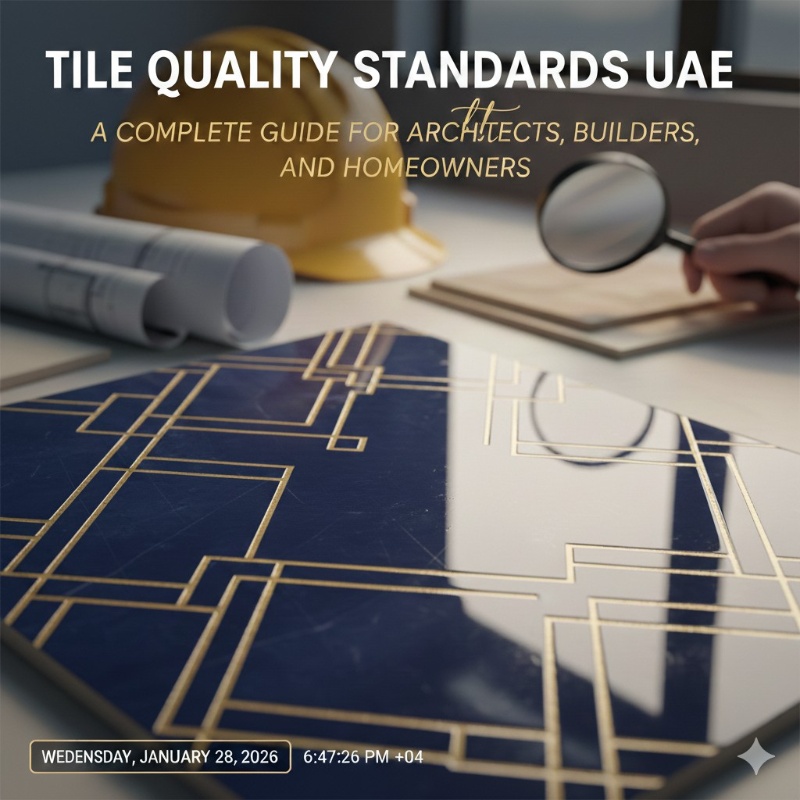







Tile Quality Standards UAE: A Complete Guide for Architects, Builders, and Homeowners
In the UAE construction and interior design market, tile selection is not just a visual decision, it is a technical, regulatory, and performance-driven choice. With large-scale residential, commercial, and hospitality projects demanding durability, safety, and long-term value, understanding tile quality standards of the UAE has become essential for developers, architects, contractors, and property owners alike.
This guide explains how tile quality is evaluated in the UAE, which standards matter most, how tiles are tested, and why compliance is critical for project success.
Why Tile Quality Standards Matter in the UAE Market
The UAE experiences extreme climate conditions, including high temperatures, humidity, and heavy foot traffic in both residential and commercial environments. Tiles used in this region must withstand:
- Thermal expansion and contraction
- Moisture exposure
- Heavy loads and constant wear
- Strict safety and building regulations
Because of this, tile quality standards UAE are enforced to ensure tiles meet minimum performance, durability, and safety requirements before being approved for use in projects.
Using tiles that do not meet approved standards can lead to premature cracking, water seepage, surface wear, and costly replacements especially in large developments.
Key Tile Quality Standards Followed in the UAE
ISO Tile Standards and International Compliance
Most reputable tile manufacturers supplying the UAE comply with ISO tile standards, which define requirements for:
- Dimensional accuracy
- Mechanical strength
- Surface abrasion resistance
- Chemical resistance
- Moisture performance
ISO standards provide global consistency, making them particularly important for international projects and government-regulated developments.
Project Tile Standards for Commercial and Large-Scale Developments
In large residential towers, hotels, malls, and public infrastructure projects, project tile standards are often more stringent than retail requirements. These standards typically specify:
- Minimum breaking strength
- Slip resistance classification
- Thickness tolerances
- Long-term wear resistance
Developers and consultants often require documented test reports before tiles are approved for installation.
Tile Quality Testing UAE: How Performance Is Verified
Mechanical and Durability Testing
Tile quality testing in the UAE involves laboratory-based evaluations to ensure tiles perform under real-world conditions. Common tests include:
- Breaking strength tests to measure load-bearing capacity
- Surface abrasion tests to assess wear over time
- Scratch resistance testing for glazed tiles
These tests help determine whether tiles are suitable for high-traffic areas such as corridors, retail spaces, and lobbies.
Water Absorption and Moisture Resistance
One of the most critical performance indicators in tile selection is water absorption tiles classification. Water absorption directly impacts:
- Structural integrity
- Resistance to staining and moisture damage
- Suitability for wet areas such as bathrooms and kitchens
Low water absorption tiles are generally recommended for the UAE climate, especially in humid environments or areas exposed to frequent cleaning.
Understanding Water Absorption Classes in Tiles
Water absorption levels are classified based on the percentage of water a tile absorbs. These classifications help determine appropriate usage:
|
Water Absorption Level |
Tile Type |
Common Applications |
|
< 0.5% |
Porcelain tiles |
Commercial, outdoor, high-traffic |
|
0.5% – 3% |
Glazed porcelain |
Residential floors, walls |
|
> 3% |
Ceramic tiles |
Interior wall applications |
Selecting the correct water absorption tiles category ensures long-term durability and prevents moisture-related failures.
Benefits of Using Tiles That Meet UAE Quality Standards
Long-Term Performance and Cost Efficiency
Tiles that comply with tile quality standards UAE reduce maintenance costs, minimize replacements, and extend lifecycle performance. While compliant tiles may appear costlier upfront, they significantly lower long-term project expenses.
Safety and Regulatory Compliance
Approved tiles meet safety benchmarks related to strength, stability, and environmental exposure. This is especially important for projects requiring inspections and certifications before handover.
Consistent Visual and Dimensional Quality
Quality standards also ensure uniformity in tile size, thickness, and finish critical for achieving clean installations and professional aesthetics in large projects.
Common Mistakes When Evaluating Tile Quality
Despite clear standards, some buyers still make avoidable errors:
- Choosing tiles based solely on appearance
- Ignoring test certifications and technical data sheets
- Using wall-grade tiles for floor applications
- Overlooking water absorption ratings
These mistakes often lead to performance issues that only become visible after installation.
How to Choose the Right Tiles for UAE Projects
When selecting tiles for residential or commercial use in the UAE, decision-makers should:
- Request laboratory test reports
- Confirm compliance with ISO and regional standards
- Match tile specifications with application requirements
- Consider climate and usage conditions
This structured approach ensures alignment with tile quality standards UAE and protects the overall investment.
Why Standards Matter More Than Ever in Modern UAE Construction
With increasing emphasis on sustainable construction, durability, and quality assurance, compliance with tile quality standards UAE is no longer optional. Developers, consultants, and homeowners are prioritizing tested and certified materials to avoid future liabilities and ensure project longevity.
Final Perspective for UAE Buyers and Project Planners
Understanding tile quality standards UAE is essential for making informed decisions that balance aesthetics, performance, and regulatory compliance. From tile quality testing UAE to ISO tile standards and water absorption classifications, each parameter plays a critical role in determining whether tiles are suitable for demanding UAE environments.
For businesses and homeowners seeking high-quality tile solutions aligned with international and regional standards, Volark Tiles offers curated tile collections designed to meet performance expectations while maintaining refined aesthetics. Their focus on quality compliance ensures tiles are suitable for both residential and commercial applications across the UAE.
Frequently Asked Questions (FAQs)
1. What are the most important tile quality standards UAE projects must follow?
The most important tile quality standards UAE focus on durability, safety, and long-term performance. These include dimensional accuracy, breaking strength, surface wear resistance, slip resistance, and water absorption limits. Compliance with these standards ensures tiles can withstand the UAE’s climate, heavy foot traffic, and regulatory inspections for residential and commercial projects.
2. How does UAE tile quality testing ensure long-term tile performance?
Tile quality testing in the UAE involves laboratory testing to verify mechanical strength, abrasion resistance, moisture behavior, and dimensional stability. These tests simulate real-world conditions, helping project planners confirm that tiles will not crack, warp, or degrade prematurely after installation.
3. Why are ISO tile standards important for UAE construction projects?
ISO tile standards provide internationally recognized benchmarks for tile performance and quality consistency. In the UAE, ISO compliance is especially important for large-scale developments, hospitality projects, and government-regulated construction, as it ensures materials meet global safety and durability expectations.
4. How do water absorption tiles affect durability in the UAE climate?
Water absorption tiles play a critical role in moisture resistance and structural stability. Tiles with low water absorption are better suited for humid environments, wet areas, and high-traffic zones common in the UAE. Higher absorption tiles are typically limited to interior wall applications where moisture exposure is minimal.
5. What role do project tile standards play in commercial developments?
Project tile standards define stricter performance requirements tailored to specific applications such as malls, hotels, offices, and residential towers. These standards often exceed basic retail requirements and help ensure tiles meet load-bearing, wear resistance, and safety criteria required for long-term commercial use.