


Calacatta Tiles: Why Some Floors Instantly Feel Expensive (Even Before the Furniture Arrives)
There’s a moment during renovations that people don’t talk about much. It’s when the floors go in, before the couch, before the art, before the lamps and suddenly the space already feels finished.
That’s often the moment people realise they made the right choice with Calacatta tiles.
No styling tricks. No decoration doing the heavy lifting. Just the floor quietly setting the tone.
It’s Not About White, It’s About Contrast
A lot of people assume Calacatta is just another white tile. It isn’t. What makes it stand out is contrast, the bold veining against a clean, bright base.
That contrast does something interesting in real homes. It adds movement without clutter. You notice it, but it doesn’t overwhelm you. The eye has something to follow, something to rest on.
That’s why Calacatta tiles tend to work so well in spaces that want presence without noise living rooms, open kitchens, long hallways that would otherwise feel flat.
How Calacatta Changes the Way Light Behaves
This is something you only really notice after living with it for a while.
Light behaves differently on Calacatta. Morning light softens across the surface. Evening light becomes warmer, more layered. Rooms feel brighter, even when the walls haven’t changed.
This is especially true with polished Calacatta tiles, where the finish gently reflects light instead of absorbing it. In apartments or homes that rely heavily on artificial lighting, that reflection can make a space feel noticeably more open.
It’s not dramatic. Just… better.
Why People Stop Second-Guessing Their Choice
Every renovation has that phase where doubt creeps in.
“Should we have gone darker?”
“Will this feel too bold?”
“Is it too much?”
With Calacatta, that phase doesn’t last long.
Once furniture is in place, most people realise the floor isn’t competing with anything. It’s anchoring the room. The veining gives character, but it doesn’t lock you into one style. Timber works. Neutral fabrics work. Even darker accents don’t clash.
That adaptability is one of the quiet strengths of Calacatta tiles, they don’t force design decisions later.
Living With Calacatta (Not Just Looking at It)
Here’s the honest part.
Calacatta looks luxurious, but it doesn’t behave like something fragile. Day-to-day dust doesn’t scream for attention. Small marks don’t instantly ruin the look. The natural variation actually helps hide the little signs of life that happen in real homes.
People often worry about maintenance, especially with lighter tiles. But most find that regular sweeping and gentle cleaning are enough. And because the pattern isn’t uniform, the floor never feels clinical.
That’s why polished Calacatta tiles, when used thoughtfully, feel more livable than people expect.
Why Calacatta Hasn’t Been Replaced by “The Next Big Thing”
Trends move fast. Very fast.
But Calacatta hasn’t disappeared not because it’s trendy, but because it’s adaptable. Pair it with modern furniture and it feels contemporary. Pair it with classic pieces and it feels timeless. Change the room around it, and the floor still makes sense.
That’s why Calacatta tiles tend to be chosen by people thinking long-term. Not just for the next photo, but for the next phase of the home.
Who Calacatta Is (and Isn’t) For
Calacatta isn’t subtle. If you prefer completely uniform surfaces or barely-there patterns, it might not be your style. But if you like floors that quietly contribute character without needing decoration to justify them, it’s a strong choice.
Homes that benefit most from Calacatta usually want clarity, light, and confidence rather than drama.
Calacatta Tile Sizes & Types (Because These Things Actually Matter)
One thing people don’t always think about until they’re standing in a tile shop is size, and with Calacatta tiles, size really changes the mood of a room.
Here’s the simple, real-life version of what you need to know:
Common Sizes You’ll Actually See in Homes
-
600×600 mm
The “safe” size. Works almost anywhere without feeling too bold. -
600×1200 mm
A favourite for modern homes. Fewer grout lines, a cleaner look, and the veining stretches more naturally. -
750×1500 mm or 800×1600 mm
Larger, more dramatic slabs. Perfect when you want that seamless, luxury feel without committing to real marble. -
Full slabs / 1200×2400 mm
These make a room feel architectural. Great for feature walls, kitchen splashbacks, or bathrooms that want a calm “spa” style.
Larger sizes tend to show the full beauty of Calacatta veining, especially when the pattern flows from one tile to the next. Smaller sizes feel more practical and grounded, nothing wrong with that either. (Whether you're working out floor tiles or wall tiles, our tiles calculator gives you instant results in both square feet and square metres.)
If You’re Still Comparing Calacatta Options
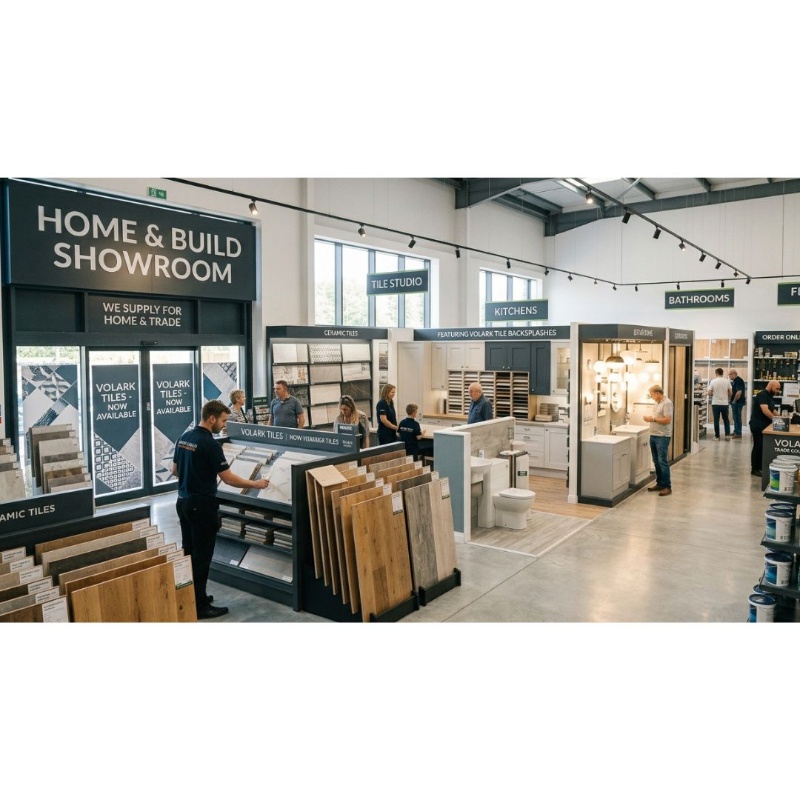
If you’re browsing and comparing finishes, you may come across Volark Tiles during your search. They’re known for focusing on marble-inspired designs with balanced veining, which can be helpful when you want to see how Calacatta actually translates beyond catalog images.
Sometimes seeing the right tile in person answers more questions than any description can.
FAQs
1. Do Calacatta tiles scratch easily?
Not easily, no. But like most hard surfaces, they’re not immune to everything. Dragging heavy furniture without protection will leave marks. The upside? Because Calacatta has natural veining, small scratches tend to blend in rather than stand out like they do on plain, glossy tiles.
2. Are Calacatta tiles hard to keep clean?
They look high-maintenance, but in daily life they’re fairly relaxed. Regular sweeping and a gentle mop usually do the trick. Dust doesn’t dominate the surface, and minor marks don’t immediately ruin the look.
3. Are polished Calacatta tiles slippery?
They can be, especially when wet. That doesn’t mean they’re a bad choice, it just means placement matters. Many people use polished finishes in living areas and switch to more textured options in bathrooms or outdoor spaces.
4. Do Calacatta tiles make rooms feel cold?
Visually, most people find the opposite. The white base brightens the space, while the veining adds warmth and depth. When paired with timber, soft furnishings, or warm lighting, the room usually feels balanced rather than stark.
5. Will Calacatta tiles go out of style?
Unlikely. Marble-inspired surfaces have been around for centuries, and Calacatta sits in that timeless category. It adapts as interiors change, which is why it doesn’t feel dated even as trends move on.
6. Are Calacatta tiles better for large spaces or small ones?
Both, but for different reasons. In large areas, the veining adds interest and movement. In smaller spaces, it reflects light and prevents the room from feeling boxed in. It really comes down to how bold you want the floor to feel.